
If you own property along the Texas Gulf Coast, there is a good chance your standard homeowners insurance does not cover wind damage. Many coastal homeowners discover this gap only after a hurricane or tropical storm strikes. A wind-only policy is a standalone insurance product that covers property damage caused exclusively by wind and hail. Understanding whether your home requires one can mean the difference between full financial recovery and paying tens of thousands of dollars out of pocket. Below, we walk you through exactly how to determine if your property needs separate windstorm coverage and what steps to take next.
What Is a Wind-Only Policy?
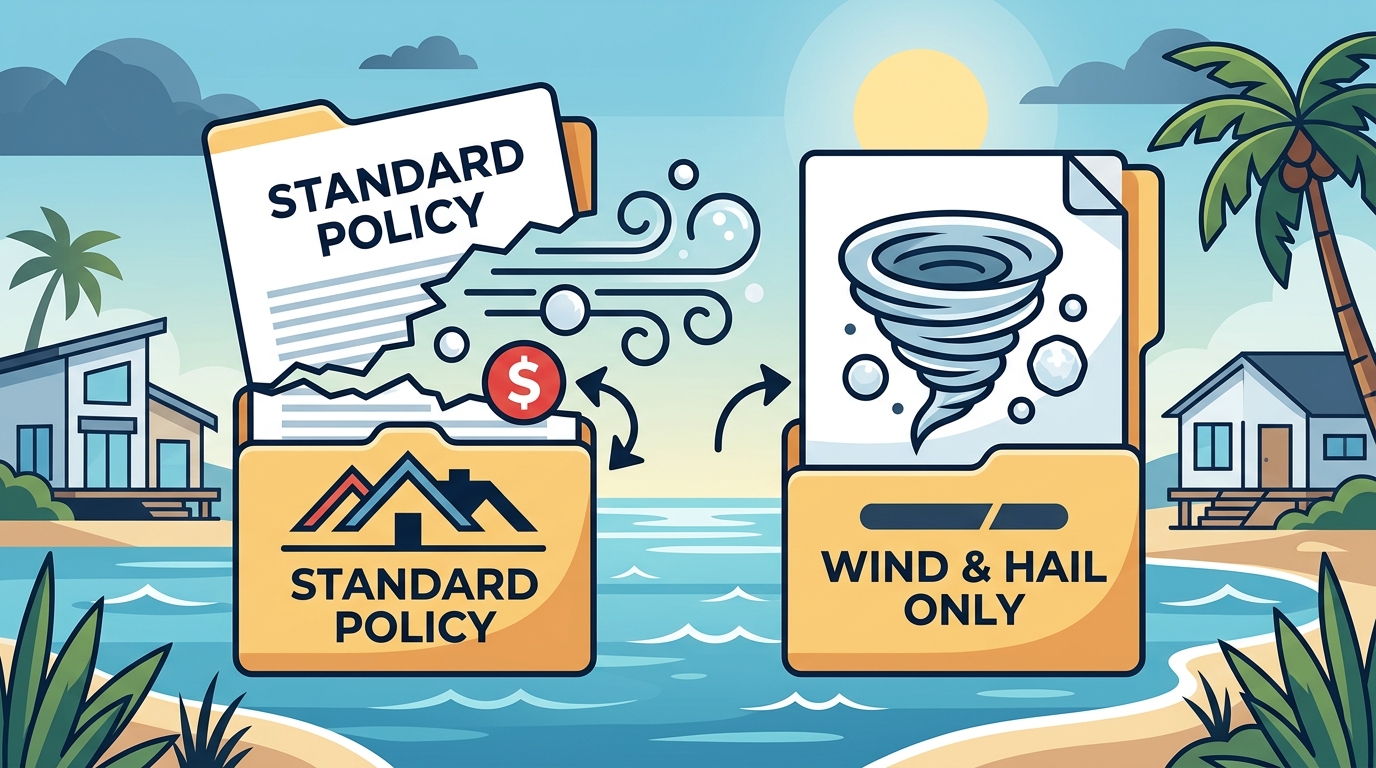
A wind-only policy is a type of property insurance that covers damage caused specifically by high winds, hurricanes, hail, and tornadoes. It does not cover flooding, fire, theft, or other perils. This policy exists because many insurers in high-risk coastal zones exclude wind and hail from standard homeowners (HO3) policies.
Homeowners who carry a wind-only policy pair it with their standard home insurance to create a complete protection plan. As Brad Spurgeon Insurance Agency explains, windstorm insurance can be layered with other types of coverage for comprehensive protection.
Why Wind Coverage Gets Excluded on the Gulf Coast
Insurance carriers assess risk by geography. The Federal Emergency Management Agency (FEMA) considers the entire Texas coastline high risk for wind damage. Because the probability of a hurricane making landfall is significantly higher in coastal counties, many private insurers simply refuse to include wind coverage in standard policies sold there.
Texas City sits in Galveston County, one of the 14 first-tier coastal counties designated by the Texas Commissioner of Insurance as high-risk areas. If your property is in one of these counties, your hazard policy almost certainly excludes wind and hail. Inland homeowners, by contrast, usually have wind coverage built into their standard HO3 policy.
Steps to Determine If You Need Separate Windstorm Coverage
Step 1: Review Your Declarations Page
Your homeowners policy declarations page (also called the "dec page") lists every covered and excluded peril. Look for language such as "wind and hail excluded" or "windstorm exclusion applies." If you see either phrase, you need a separate wind-only policy to fill the gap.
Step 2: Check Your County Designation
The Texas Department of Insurance (TDI) maintains a map of Designated Catastrophe Areas. Properties in the following 14 first-tier coastal counties are most likely to need a separate policy: Aransas, Brazoria, Calhoun, Cameron, Chambers, Galveston, Jefferson, Kenedy, Kleberg, Matagorda, Nueces, Refugio, San Patricio, and Willacy. Parts of Harris County east of Highway 146 are also included.
Step 3: Ask Your Mortgage Lender
Even if Texas law does not mandate windstorm insurance, mortgage lenders in coastal areas almost always require it. If your lender requires full hazard coverage and your standard policy excludes wind, you will need a wind-only policy to satisfy the loan agreement.
TWIA vs. Private Windstorm Insurance
The Texas Windstorm Insurance Association (TWIA) is a state-managed insurer of last resort created after Hurricane Celia struck Corpus Christi in 1970. For roughly 20 years, TWIA was the only option for Gulf Coast windstorm coverage. Today, private companies also offer windstorm coverage, giving homeowners more choices.
| Feature | TWIA | Private Windstorm |
|---|---|---|
| Eligibility | Must be denied by at least one private insurer | Open to eligible coastal properties |
| Average Annual Cost | Approximately $2,000 - $2,480 | Varies by carrier and risk profile |
| Deductible Options | 1% to 5% of dwelling coverage | Flexible; varies by insurer |
| Certification Required | Yes, WPI-8 from TDI | Depends on carrier |
| Flood Insurance Required | Yes, if in V/VE flood zone (post-2009 construction) | Varies |
| Coverage Scope | Wind and hail only | Wind and hail; some offer broader endorsements |
Private windstorm options often provide more flexibility on deductibles and may not require a prior denial from another carrier. Contact Brad Spurgeon Insurance Agency to compare both options side by side.
Cost Factors and Deductible Structures
Windstorm insurance premiums depend on your home's construction type, roof age, coverage amount, and deductible selection. A higher deductible generally lowers your annual premium. According to Bankrate, the average TWIA policy costs about $2,387 per year, though a 2024 actuarial analysis suggested rates may need to increase significantly in future years.
Windstorm deductibles are typically percentage-based, ranging from 1% to 5% of your dwelling coverage limit. For a home insured at $250,000, a 2% deductible means you would pay the first $5,000 of any wind-damage claim out of pocket. Understanding how windstorm deductibles work is critical before choosing a policy.
Windstorm Certification Requirements
A Windstorm Certificate of Compliance is a document issued by TDI confirming that your property meets state building code standards for wind resistance. To qualify for TWIA coverage, your home must hold a valid certificate. As of April 1, 2026, new construction must comply with the 2024 International Residential Code (IRC) or 2024 International Building Code (IBC).
Common certificate types include the WPI-8 (issued by TDI for new and ongoing improvements) and the WPI-2-BC series for commercial and multi-family structures. Homes built before 1988 that were previously insured may qualify under simplified inspection rules. A windstorm inspection by a licensed engineer or qualified inspector is typically required.
Key Takeaways
- A wind-only policy covers damage from wind and hail exclusively and must be paired with a standard homeowners policy for complete protection.
- Most homeowners in Texas's 14 first-tier coastal counties, including Galveston County (Texas City), need a separate windstorm policy.
- Check your declarations page for a "wind and hail excluded" notation to confirm whether your current policy has this gap.
- TWIA is a last-resort option; private windstorm insurers now offer competitive alternatives with flexible deductibles.
- Windstorm deductibles are percentage-based, typically 1% to 5% of your dwelling coverage limit.
- A valid Windstorm Certificate of Compliance from TDI is required for TWIA eligibility and may be required by private carriers.
- Mortgage lenders in coastal areas almost always require wind coverage, even though Texas state law does not mandate it.
Frequently Asked Questions
Does my standard homeowners insurance cover wind damage in Texas?
It depends on your location. Inland Texas homeowners usually have wind coverage included. However, if you live in one of the 14 first-tier coastal counties or parts of Harris County east of Highway 146, your standard policy likely excludes wind and hail damage.
What is TWIA?
The Texas Windstorm Insurance Association (TWIA) is a state-managed program that provides wind and hail coverage to coastal residents who cannot obtain it from private insurers. It was created by the Texas Legislature after Hurricane Celia in 1970.
How much does a wind-only policy cost in Texas?
The average TWIA policy costs approximately $2,000 to $2,480 per year. Private windstorm policies vary based on your home's risk profile, construction type, and chosen deductible.
Do I need a windstorm certificate to get coverage?
Yes, for TWIA eligibility your property must have a Windstorm Certificate of Compliance from the Texas Department of Insurance. Some private carriers may also require certification.
Can I bundle windstorm and flood insurance?
Windstorm and flood are separate policies covering different perils. However, you can coordinate them through a single agency for streamlined management. Brad Spurgeon Insurance Agency offers both windstorm and flood insurance to simplify your coverage.
Is windstorm insurance legally required in Texas?
Texas does not legally require windstorm insurance. However, most mortgage lenders in high-risk coastal areas require it as a condition of the loan.
What happens if I skip windstorm coverage?
Without a wind-only policy, you would be personally responsible for all repair costs from wind, hail, or hurricane damage. For a coastal home, this could easily reach tens of thousands of dollars or more after a single storm.
What is the difference between TWIA and private windstorm insurance?
TWIA is a last-resort insurer requiring proof of denial from a private carrier. Private windstorm insurers may offer broader coverage options, flexible deductibles, and do not always require a prior denial. Compare both options with a local insurance professional.
Get the Right Coverage Today
Determining whether your property needs a separate wind-only policy starts with reading your current declarations page and understanding your county's risk designation. If you are in a coastal area like Texas City, TX, the answer is almost certainly yes. Brad Spurgeon Insurance Agency has over 20 years of experience helping Gulf Coast homeowners find the right windstorm coverage at competitive rates. Request a free consultation today by calling (409) 945-4746 or visiting our office at 1118 14th Street North, Texas City, Texas 77590.