
If you own property along the Texas Gulf Coast, there is a good chance your standard homeowners insurance does not cover wind damage. Many coastal homeowners discover this gap only after a hurricane or tropical storm leaves them with tens of thousands of dollars in uninsured repairs. A wind-only policy is a standalone insurance policy that covers damage caused exclusively by wind and hail events, separate from your standard hazard insurance. Understanding whether your property requires one could be the difference between a smooth recovery and financial hardship. Below, we walk you through exactly how to figure out if you need this critical coverage.
What Is a Wind-Only Policy?
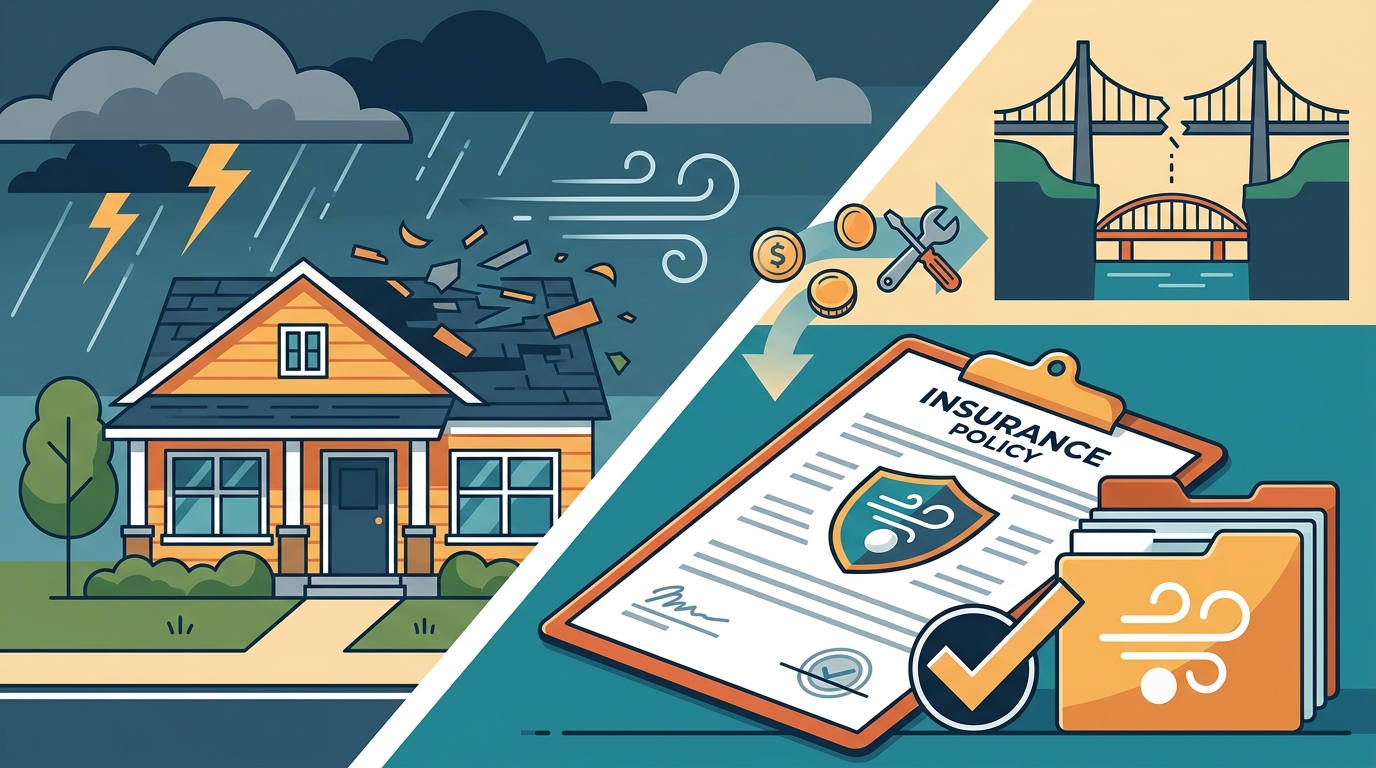
A wind-only policy is a type of property and casualty insurance designed specifically to cover damages caused by high winds, hurricanes, hail, and other wind-related events. Standard homeowners insurance policies in many coastal areas of Texas exclude wind damage entirely, which means you could be left unprotected during the storms that matter most.
Windstorm insurance is a specialized property insurance that can be added to your existing policy or obtained as a separate policy. It typically covers structural damage to your home, personal belongings, and detached structures like garages and sheds. However, it does not cover flood or rising water damage, which requires a separate flood insurance policy.
Step 1: Check Your Current Homeowners Policy
The first thing you should do is review your homeowners insurance declarations page. Look for any language that excludes or limits wind and hail coverage. Pay close attention to your deductible schedule, as coastal homeowners in Texas often have a separate windstorm or hurricane deductible, sometimes calculated as a percentage of the dwelling coverage limit (for example, 2% of a $300,000 home equals $6,000 out of pocket).
If your policy explicitly excludes wind damage, you will need a separate wind-only policy. If wind is included but with a very high deductible, you may want to compare the cost of a standalone policy to determine which option offers better value.
What to Look For
- "Wind and Hail Exclusion" language in the perils section
- A separate windstorm deductible (percentage-based or flat dollar)
- Coverage limits that seem insufficient for full roof or structural replacement
Step 2: Determine Your Geographic Risk Zone
Your property's location is the single biggest factor. The Texas Windstorm Insurance Association (TWIA) designates 14 first-tier coastal counties as high-risk areas where standard insurers commonly exclude wind coverage. These counties include Aransas, Brazoria, Calhoun, Cameron, Chambers, Galveston, Jefferson, Kenedy, Kleberg, Matagorda, Nueces, Refugio, San Patricio, and Willacy, plus parts of Harris County east of Highway 146.
Texas City sits in Galveston County, which is firmly in the TWIA-designated zone. If your property is here, it is highly likely your homeowners policy excludes wind. The TWIA eligibility page confirms that properties must be located in these designated areas to qualify for their coverage.
| Factor | Inland Texas Properties | Coastal (Tier 1) Properties |
|---|---|---|
| Wind included in standard policy? | Usually yes | Usually excluded |
| Separate wind policy needed? | Rarely | Almost always |
| TWIA eligible? | No | Yes (if in designated counties) |
| Lender likely to require wind policy? | Uncommon | Very common |
| Average TWIA annual premium | N/A | Approximately $2,480 |
Step 3: Understand TWIA Eligibility Requirements
TWIA is a not-for-profit, state-backed insurance association that serves as a last resort for Texas coastal property owners who cannot obtain wind coverage from private carriers. To qualify for a TWIA policy, you must meet several criteria outlined in Texas Insurance Code Chapter 2210.
TWIA Requirements at a Glance
- Your property must be in one of the 14 designated coastal counties (or eligible portions of Harris County).
- You must show proof that at least one private insurer has denied you wind coverage.
- Your home must hold a valid Windstorm Certificate of Compliance (WPI-8) from the Texas Department of Insurance, confirming it meets applicable building codes.
- If your property is in flood zones V, VE, or V1-30 and was built or altered after September 1, 2009, you must carry an NFIP flood insurance policy.
For the 2025 hurricane season, TWIA has access to funding totaling $6.227 billion, providing significant financial backing for policyholders.
Private Windstorm Insurance vs. TWIA
TWIA is not your only option. Private windstorm insurance is coverage offered by commercial insurers that may provide more flexible terms, broader coverage options, and potentially lower premiums. Unlike TWIA, private carriers do not require proof of prior denial, and they may not demand a WPI-8 certificate.
If you live near Texas City and need windstorm coverage, comparing both private and TWIA options is a smart move. Private policies are underwritten by individual companies rather than the state pool, which can mean faster claims processing and customizable deductibles.
When to Choose Private Over TWIA
Consider private windstorm insurance when your home already has strong wind-resistant features (newer roof, hurricane clips, impact-resistant windows) that may earn you premium discounts. If your home does not yet have a WPI-8 certificate, a private carrier may still write your wind policy while you work toward certification.
Mortgage Lender Requirements
There is no Texas state law mandating that homeowners carry separate windstorm insurance. However, if you have a mortgage on a property in a Tier 1 coastal county, your lender will almost certainly require proof of wind coverage for the duration of the loan. Without it, the lender may force-place a policy at a much higher premium.
Before closing on a home in Texas City or the surrounding area, ask your lender specifically whether a wind-only policy is required. Getting ahead of this requirement can save you from costly last-minute coverage gaps. For a comprehensive look at how your windstorm inspection works, review your options early in the buying process.
Key Takeaways
- Most standard homeowners policies in coastal Texas counties exclude wind and hail damage, requiring a separate wind-only policy.
- Texas City is in Galveston County, one of 14 TWIA-designated first-tier coastal counties.
- Review your declarations page carefully for wind exclusion language and separate windstorm deductibles.
- TWIA requires a WPI-8 Certificate of Compliance, proof of private carrier denial, and in some cases an NFIP flood policy.
- Private windstorm insurers may offer more flexibility, faster claims, and competitive pricing compared to TWIA.
- Mortgage lenders in high-risk counties typically require wind coverage even though the state does not legally mandate it.
- Contact a local insurance agent before storm season to identify and close any coverage gaps.
Frequently Asked Questions
Is windstorm insurance legally required in Texas?
No. Texas does not legally require homeowners to carry windstorm insurance. However, mortgage lenders in coastal counties frequently require it as a condition of the loan, especially in Tier 1 high-risk areas like Galveston County.
How do I know if my homeowners policy excludes wind damage?
Check your policy's declarations page and the perils section. Look for exclusions related to "wind," "hail," or "named storms." If you are unsure, ask your insurance agent to clarify exactly what is and is not covered.
What is the TWIA WPI-8 certificate?
A WPI-8 is a Windstorm Certificate of Compliance issued by the Texas Department of Insurance. It verifies that your home was built or modified to meet windstorm building codes. It is required for TWIA eligibility on structures built or altered after January 1, 1988.
How much does a TWIA windstorm policy cost?
TWIA premiums vary based on your home's construction type, coverage amount, and deductible selection. Industry estimates place the average cost at roughly $2,480 per year, though your actual premium may be higher or lower.
Can I get windstorm insurance from a private company instead of TWIA?
Yes. Several private insurers write wind-only policies in Texas coastal areas. In many cases, private policies offer broader coverage and competitive pricing. TWIA is designed as a last resort for homeowners who have been denied by at least one private carrier.
Does windstorm insurance cover flood damage?
No. Windstorm insurance covers damage caused by wind and hail only. Flood damage from rising water or storm surge requires a separate flood insurance policy. Learn more about your flood insurance options to ensure full protection.
What happens if I do not have windstorm insurance and a hurricane hits?
Without windstorm coverage, you would be personally responsible for all wind-related repair costs. Depending on the severity of the storm, this could mean tens or even hundreds of thousands of dollars in out-of-pocket expenses for roof, siding, window, and structural repairs.
When should I purchase windstorm insurance?
Buy windstorm insurance well before hurricane season begins on June 1. Most policies have waiting periods or binding restrictions once a named storm enters the Gulf of Mexico. Acting early ensures you are covered when it matters most.
Protect Your Home Before the Next Storm
Do not wait until a hurricane is in the forecast to discover your home is unprotected. Brad Spurgeon Insurance Agency in Texas City specializes in helping coastal homeowners find the right windstorm, home, and flood coverage. Request your free windstorm insurance quote today or call (409) 945-4746 to speak with a local agent who understands the unique risks of living on the Texas Gulf Coast.