
If you own property along the Texas Gulf Coast, there is a good chance your standard homeowners insurance excludes wind and hail damage. That exclusion leaves you financially exposed every hurricane season. A wind-only policy is a separate insurance contract that covers damage caused exclusively by wind and hail events. Knowing whether your property requires one is not optional; it is the difference between a manageable claim and a catastrophic out-of-pocket loss. Below, we walk you through every factor that determines whether you need a separate wind-only policy in addition to your standard hazard insurance.
What Is a Wind-Only Policy?
A wind-only policy is a property insurance contract that covers structural damage caused by wind, hail, hurricanes, and tornadoes. It does not cover flooding, fire, theft, or liability. In coastal Texas, this policy exists because many standard homeowners carriers refuse to include wind and hail perils in areas with elevated hurricane risk.
The benefits and coverage details of windstorm insurance are important to understand before you purchase. Windstorm coverage typically pays for repairs to your roof, walls, windows, and detached structures like garages or sheds damaged by high winds.
Why Standard Hazard Insurance Excludes Wind
Hazard insurance is the portion of a homeowners policy that protects the physical structure against covered perils. Along the Gulf Coast, insurers frequently exclude wind and hail from that list because hurricane exposure makes the risk too costly to bundle. According to Bankrate, in some high-risk areas of Texas, wind damage is excluded from standard home insurance coverage entirely.
This means your HO-3 policy may cover fire, lightning, and even volcanic eruption, but a Category 1 hurricane could leave you with zero coverage for roof and siding damage. As the differences between home and windstorm insurance illustrate, homeowners often need to layer multiple policies to be fully protected.
Check Whether You Are in a Designated Catastrophe Area
The single fastest way to determine if you need a separate wind-only policy is to confirm whether your property sits inside a Texas Department of Insurance (TDI) Designated Catastrophe Area. According to TDI, except for Harris County, the entire county of each first-tier coastal county is part of the windstorm program. In Harris County, the structure must be located east of Highway 146 and within specific city limits.
Texas City, TX, falls within Galveston County, which is a fully designated catastrophe area. If your property is here, your standard homeowners policy almost certainly excludes wind, and a separate wind-only policy is required to close that gap. You can verify your property's status through the home insurance resource page or by calling a local agent.
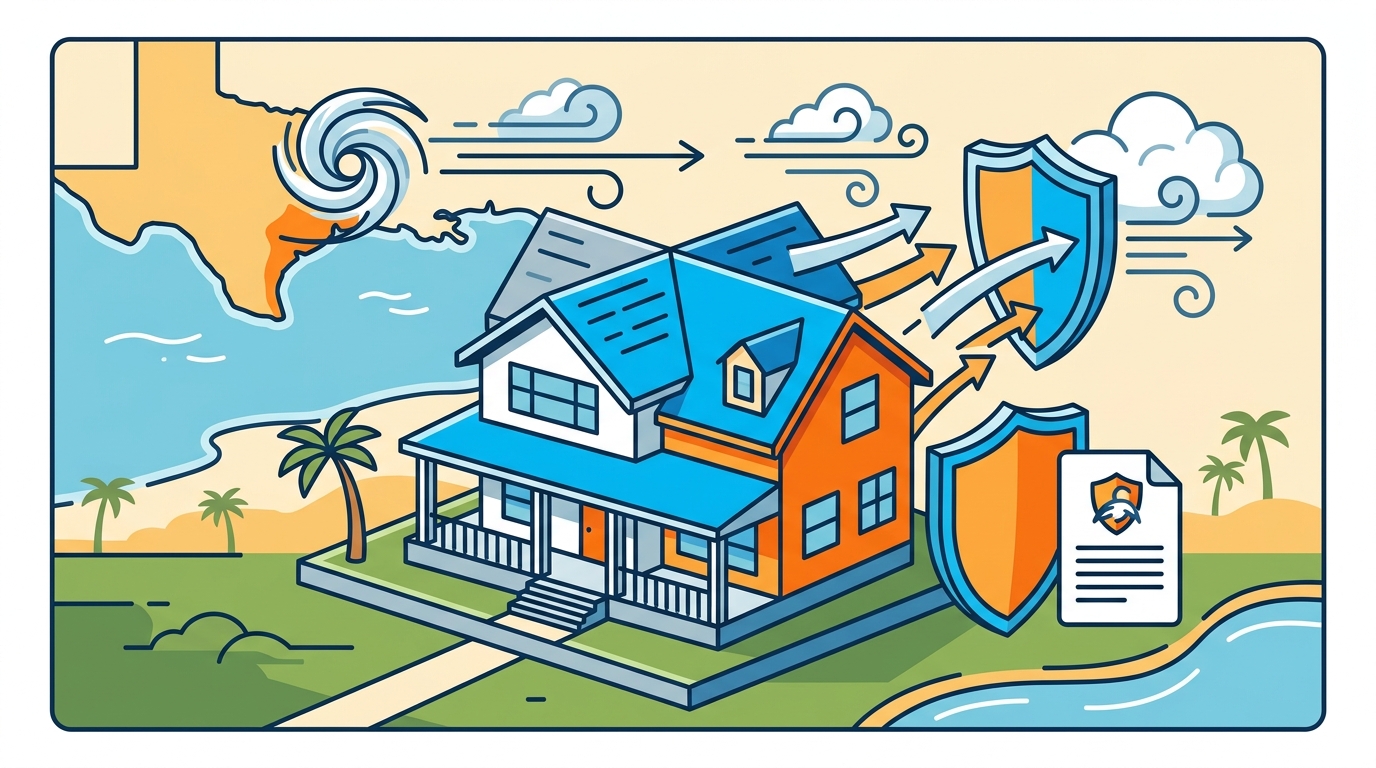
Counties in the TWIA Territory
| County | Full County Eligible? | Notes |
|---|---|---|
| Galveston | Yes | Includes Texas City, Galveston Island |
| Harris | Partial | East of Hwy 146, select cities only |
| Brazoria | Yes | Entire county |
| Chambers | Yes | Entire county |
| Jefferson | Yes | Entire county |
| Nueces | Yes | Includes Corpus Christi |
| Cameron | Yes | Entire county |
There are 15 eligible coastal counties in total. If your property is in one, you likely need a wind-only policy.
How to Review Your Current Policy for Wind Exclusions
Pull out your declarations page and look for language referencing "wind and hail excluded" or "windstorm excluded." Your homeowners policy covers general perils like fire, theft, and water leaks but often excludes wind or hail damage if you live near the coast. If that exclusion exists, you have a coverage gap that only a separate wind-only policy can fill.
Steps to Audit Your Coverage
- Locate your declarations page (the summary at the front of your policy).
- Search for any wind or hail exclusion endorsement.
- Check whether your lender requires windstorm coverage as a condition of your mortgage.
- Compare your dwelling limit on the homeowners policy with the coverage you would need on a wind-only policy.
- Contact Brad Spurgeon Insurance Agency's service team for a no-cost policy review.
Many lenders require borrowers to carry wind coverage to protect their investment. If your mortgage servicer has sent a notice about windstorm insurance, that is a clear signal you need a separate policy.
TWIA vs. Private Windstorm Coverage
The Texas Windstorm Insurance Association (TWIA) is a state-managed insurer of last resort that writes wind and hail policies for eligible coastal properties. A TWIA policy is available when you have been denied coverage by at least one private insurer and your property meets building code certification requirements.
However, TWIA is not the only option. Brad Spurgeon Insurance Agency now offers windstorm coverage with two private companies in addition to TWIA, giving homeowners more flexibility on pricing and deductible structures.
TWIA vs. Private Wind Coverage Comparison
| Feature | TWIA | Private Wind-Only |
|---|---|---|
| Eligibility | Must be denied by one private insurer | Open to eligible properties |
| Avg. Annual Cost | ~$2,000 - $2,387 | Varies by carrier |
| Deductible Options | 1%, 2%, or 5% of dwelling limit | Fixed dollar or percentage |
| WPI-8 Certification | Required | May be required |
| Dwelling Cap | $1,773,000 | Higher limits available |
Hurricane Beryl in 2024 produced $462.7 million in TWIA claims and fully depleted the Catastrophe Reserve Trust Fund. That event underscored why comparing TWIA and private options is essential before storm season.
Cost Factors and Deductible Options
A windstorm deductible is the amount you pay out of pocket before your wind-only policy begins paying a claim. TWIA policies typically offer percentage-based deductibles of 1%, 2%, or 5% of the dwelling coverage limit. Choosing a higher deductible lowers your annual premium but increases your financial risk after a storm.
The average TWIA policy costs about $2,387 per year according to Bankrate, though rates depend on construction type, deductible selection, and coverage endorsements. To be fully protected, many coastal homeowners carry three policies: a homeowners policy with wind excluded, a wind-only policy, and a flood insurance policy.
Key Takeaways
- A wind-only policy covers damage from wind and hail that your standard homeowners insurance excludes.
- Properties in any of Texas's 15 designated catastrophe area counties almost always need a separate wind-only policy.
- Texas City, TX, is in Galveston County and is fully within the TWIA-eligible zone.
- Review your declarations page for a "wind and hail excluded" endorsement to confirm your coverage gap.
- TWIA is the insurer of last resort, but private windstorm carriers may offer more competitive rates and higher limits.
- Hurricane Beryl (2024) depleted TWIA's $451 million reserve fund, highlighting the importance of adequate wind coverage.
- Most mortgage lenders require wind coverage for properties in high-risk coastal areas.
Frequently Asked Questions
What is a wind-only policy?
A wind-only policy is a standalone insurance contract that covers property damage caused exclusively by wind and hail. It does not cover flooding, fire, or theft and is typically required in coastal Texas where standard homeowners policies exclude wind perils.
How do I know if my homeowners insurance excludes wind?
Check your declarations page for an endorsement labeled "wind and hail excluded" or "windstorm excluded." If you see that language, your standard policy does not cover wind damage and you need a separate wind-only policy.
What is the TWIA?
The Texas Windstorm Insurance Association is a state-created insurer of last resort that provides wind and hail coverage to eligible properties in 15 designated coastal counties. You must be denied by at least one private insurer to qualify.
Does my property in Texas City need a wind-only policy?
Almost certainly yes. Texas City is in Galveston County, which is entirely within TDI's Designated Catastrophe Area. Most standard homeowners policies here exclude wind and hail damage.
How much does a wind-only policy cost in Texas?
The average TWIA wind-only policy costs roughly $2,000 to $2,387 per year. Private wind-only policies vary by carrier and may offer different pricing depending on your home's construction and deductible selection.
What is a WPI-8 certificate?
A WPI-8 is a Windstorm Certificate of Compliance issued by the Texas Department of Insurance. It verifies that your home meets the windstorm building code standards required for TWIA eligibility.
Can I get private windstorm insurance instead of TWIA?
Yes. Several private carriers now write wind-only policies in coastal Texas. Brad Spurgeon Insurance Agency offers windstorm coverage through two private companies as well as TWIA, giving homeowners more options.
Do I also need flood insurance if I have a wind-only policy?
Yes. A wind-only policy does not cover flood damage or storm surge. Flood damage requires a separate policy through the National Flood Insurance Program (NFIP) or a private flood insurer.
Get Your Free Wind Coverage Review
Do not wait until a storm is in the Gulf to find out you have a coverage gap. Contact Brad Spurgeon Insurance Agency at (409) 945-4746 for a free policy review. Our team in Texas City, TX, will examine your current homeowners policy, identify any wind exclusion, and walk you through TWIA and private windstorm options so you can protect your home before the next hurricane season.