
How to Qualify for Windstorm Insurance After Being Rejected
Getting rejected by multiple insurance providers for windstorm coverage can feel overwhelming, especially when you live on the Texas Gulf Coast and hurricane season is approaching. The good news is that rejection does not mean you are out of options. Texas has a structured safety net, including private carriers and the Texas Windstorm Insurance Association (TWIA), designed to keep coastal homeowners protected. In this guide, Brad Spurgeon Insurance Agency walks you through the exact steps to qualify for a windstorm policy after denial, so you can safeguard your home and family in Texas City and beyond.
Why Windstorm Applications Get Rejected
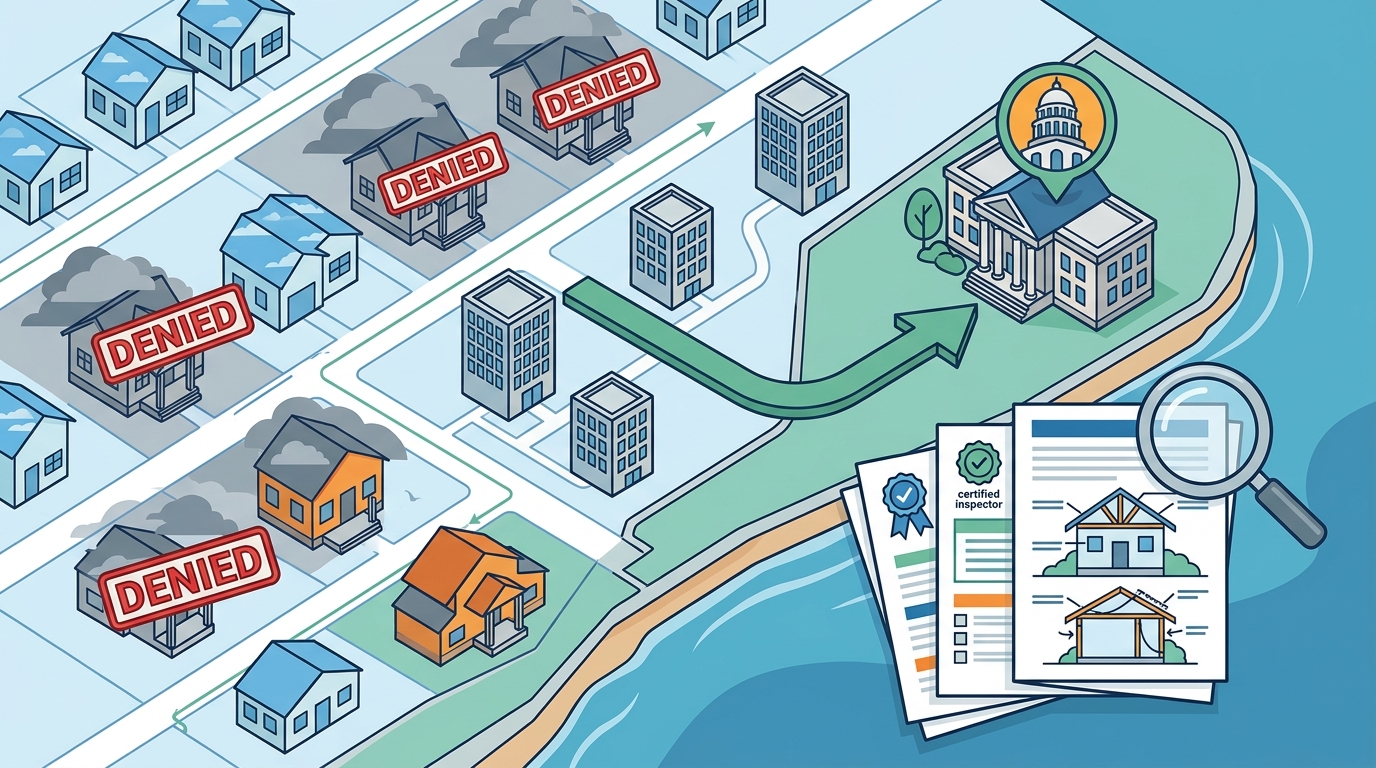
Understanding why insurers decline your application is the critical first step. Common reasons include non-compliance with building codes, lack of a windstorm certificate, existing unrepaired damage, and the property's location in a high-risk coastal zone.
Building Code Non-Compliance
Properties that do not meet Texas Department of Insurance (TDI) windstorm building standards are routinely denied. Older roofs and outdated construction are the most frequent culprits.
Property Condition Problems
Unrepaired storm damage, hazardous conditions, or deferred maintenance can disqualify a home. Insurers inspect for these issues before issuing coverage, and TWIA can cancel policies if problems are discovered later.
Location-Based Exclusions
Standard homeowners policies in Texas's 14 first-tier coastal counties typically exclude wind and hail damage. If your property sits in Galveston, Brazoria, or Chambers County, you likely need a separate windstorm policy. Learn more about the differences between home and windstorm insurance to see how these exclusions work.
Understand TWIA and the Last-Resort Safety Net
The Texas Windstorm Insurance Association (TWIA) is a residual market insurer created by the Texas Legislature in 1971 to provide wind and hail coverage in the state's seacoast territory. It serves as the insurer of last resort for homeowners who cannot obtain coverage from private companies. As of December 31, 2025, TWIA insured over 284,000 properties with roughly $126.5 billion in total insured value.
TWIA is a monoline provider, meaning it covers only wind and hail perils. You still need a separate homeowners policy for fire, theft, and liability, and a comprehensive home insurance plan to round out your protection.
Step 1: Document Your Declinations Properly
A declination is a formal refusal from an authorized insurer to write windstorm and hail coverage on your property. To qualify for TWIA, you must prove at least one declination from an insurer authorized to do business in Texas's first-tier coastal counties. Surplus lines companies do not count.
When documenting your declination, record the name of the insurer and the date of the refusal. If coverage was offered but with terms more restrictive than TWIA (for example, a higher deductible or no replacement cost), that also qualifies as a declination. Use TWIA's Proof of Declination form to confirm compliance. One declination is required for new coverage, and a fresh declination is needed every three years for renewals.
Step 2: Obtain a WPI-8 Certificate of Compliance
A WPI-8 is a Certificate of Compliance issued by the Texas Department of Insurance that proves your property was built or repaired to applicable windstorm building codes. Without this document, TWIA will not issue a policy.
| Certificate Type | When It Applies | Issued By |
|---|---|---|
| WPI-8 | New construction or repairs inspected during the build | TDI (since June 1, 2020) |
| WPI-8-E | Completed improvements later certified by a professional engineer | TDI |
| WPI-8-C | Completed construction not inspected during the build | TWIA |
If you replaced your roof without a TDI-qualified inspector present during construction, you may need a WPI-8-C through a costly retroactive certification process. Always request an inspection before or during any structural work on your home.
Step 3: Address Property Condition Issues
TWIA regularly inspects properties, either physically or using aerial imagery, to verify insurability. Your home must be in good repair with no unrepaired damage or hazardous conditions. Before applying, walk your property and fix these common issues:
- Patch or replace damaged roofing materials
- Repair broken windows, loose siding, and compromised fascia boards
- Remove dead trees or heavy branches near the structure
- Correct any code violations flagged in prior inspections
If TWIA denies your application due to property conditions, you can address the cited issues and reapply. Review our windstorm risk assessment guide for help evaluating your home's vulnerability.
Step 4: Explore Private Windstorm Carriers
TWIA is not your only path. Private windstorm insurance is coverage offered by non-government carriers that may compete with TWIA on price and flexibility. Brad Spurgeon Insurance Agency now offers windstorm coverage through two private companies, in addition to home policies that include windstorm protection. For the past 20 years, the only option on the Gulf Coast was the state wind pool, but the market has expanded significantly.
Private carriers may have different underwriting standards than TWIA, which means a property that was rejected by one insurer could be accepted by another. Get a free windstorm insurance quote to compare options side by side.
Step 5: Work With a Licensed Windstorm Agent
TWIA does not sell policies directly. You must purchase coverage through a licensed insurance agent appointed to write TWIA policies. An experienced agent familiar with coastal Texas can guide you through the declination process, help you secure your WPI-8, and identify the best coverage match for your budget.
At Brad Spurgeon Insurance Agency in Texas City, our team handles windstorm applications daily and can spot issues before they cause a denial. Explore our full range of insurance products or call us at (409) 945-4746.
Key Takeaways
- Rejection by one or more insurers does not end your options. TWIA exists specifically for this situation.
- You need at least one documented declination from an authorized insurer to apply for TWIA coverage.
- A WPI-8 Certificate of Compliance is required to prove your property meets windstorm building codes.
- Unrepaired damage, hazardous conditions, and deferred maintenance are leading causes of denial.
- Private windstorm carriers now compete with TWIA and may accept properties the state pool does not.
- Declinations must be renewed every three years for TWIA policy renewals.
- Working with a licensed agent experienced in coastal insurance dramatically improves your approval odds.
Frequently Asked Questions
What is TWIA?
TWIA is the Texas Windstorm Insurance Association, a residual market insurer created by the Texas Legislature to provide wind and hail coverage in designated coastal areas when private market coverage is unavailable.
How many declinations do I need to qualify for TWIA?
You need at least one declination from an authorized insurer actively writing windstorm and hail coverage in the first-tier coastal counties. Surplus lines companies do not qualify.
What is a WPI-8 certificate?
A WPI-8 is a Certificate of Compliance issued by the Texas Department of Insurance. It verifies that your property was built or repaired to meet applicable windstorm building codes, such as withstanding wind speeds of 130 mph in Galveston.
Can I get windstorm insurance without a WPI-8?
Generally, no. Without a valid certificate, TWIA will not issue coverage. You may need to pursue a WPI-8-C retroactive certification, which involves a professional engineer inspecting your completed construction.
What counties does TWIA cover?
TWIA operates in 14 first-tier coastal counties: Aransas, Brazoria, Calhoun, Cameron, Chambers, Galveston, Jefferson, Kenedy, Kleberg, Matagorda, Nueces, Refugio, San Patricio, and Willacy, plus portions of Harris County east of Highway 146.
Does windstorm insurance cover flooding?
No. Windstorm insurance covers only wind and hail damage. Flood damage from rising water requires a separate flood insurance policy, typically through the National Flood Insurance Program (NFIP).
Are there private alternatives to TWIA?
Yes. Several private carriers now offer windstorm coverage on the Texas Gulf Coast. Brad Spurgeon Insurance Agency works with two private windstorm companies and can help you compare rates against TWIA.
How long does the TWIA application process take?
Once you have your declination, WPI-8, and property in insurable condition, your agent can bind coverage relatively quickly. However, TWIA policies cannot be purchased or modified once a hurricane enters the Gulf of Mexico, so applying early in the season is critical.
Protect Your Home Before Hurricane Season
Do not wait until a storm is in the Gulf. Contact Brad Spurgeon Insurance Agency today at (409) 945-4746 or request your free windstorm insurance quote online. Our team in Texas City will walk you through every step, from documenting declinations to securing your WPI-8, so you get the coverage you need.