
Homeowners in high-risk coastal zones face a unique financial reality when securing property protection. According to recent industry data, windstorm insurance premiums in Texas coastal regions have surged by over 30% in the last five years due to increased storm frequency and stricter building codes. This dramatic shift forces residents to understand exactly what drives their costs. Without this knowledge, policyholders often pay for coverage they do not need or leave themselves dangerously underinsured. This guide dissects the specific variables that determine your premium, helping you navigate the complex landscape of wind and flood protection in Texas City and surrounding areas. (Home Insurance Flood Windstorm)
Structural Integrity and Construction Materials
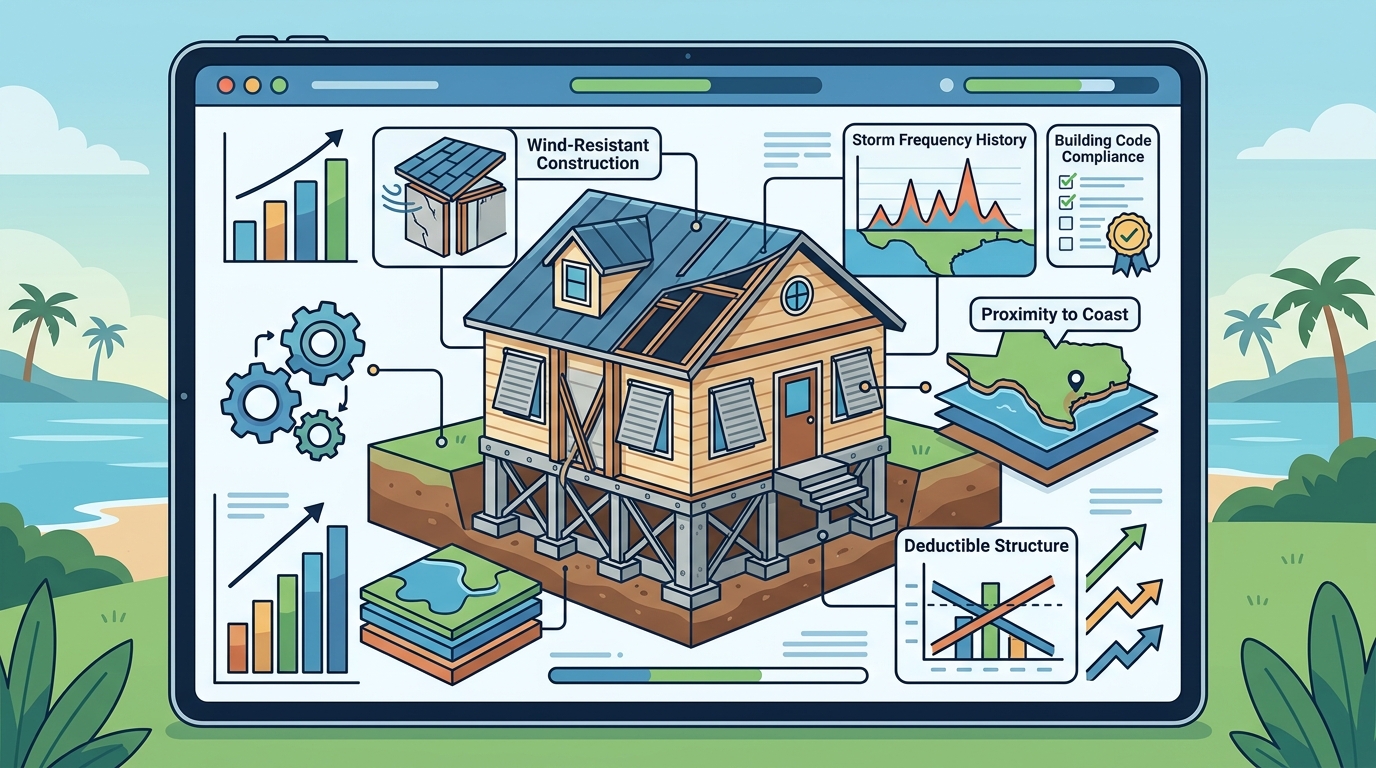
The physical composition of your home is the single most significant factor in determining your windstorm insurance premium. Insurers analyze the roof-to-wall attachment, the type of roofing materials, and the overall age of the structure. Older homes with deteriorating roofs present a higher risk of failure during high-velocity winds, leading to steeper premiums.
Roofing Materials and Age
Roofing is the first line of defense against wind-driven rain and debris. Homes with newer, impact-resistant shingles or metal roofing systems often qualify for lower rates. Conversely, older asphalt shingles that are curled or missing granules signal vulnerability. Insurance carriers view these homes as high-risk because they are more likely to suffer catastrophic damage during a storm event.
Foundation and Framing
Windstorm insurance also considers the foundation type and framing materials. Concrete slab foundations are generally preferred in coastal areas due to their stability. Wood-frame structures must meet specific engineering standards to withstand lateral forces. If your home was built before modern building codes were enacted, you may face higher premiums due to the lack of reinforced structural elements.
Location-Specific Risk Zones and Elevation
Your geographic location plays a pivotal role in pricing. Insurers use detailed flood maps and wind speed zones to assess risk. Homes located closer to the shoreline or in low-lying areas face higher premiums because they are more susceptible to storm surge and direct wind impact.
Flood Zone Designations
While windstorm insurance covers wind damage, it is often bundled with flood insurance in high-risk areas. If your property is located in a designated flood zone, your overall insurance costs will increase significantly. The Federal Emergency Management Agency (FEMA) updates these maps regularly, and properties newly classified as high-risk often see immediate premium hikes. FEMA flood maps provide the baseline for these risk assessments.
Proximity to Coastline
Distance from the coast is a critical metric. Homes within three miles of the Gulf Coast are considered ultra-high-risk. The closer you are to the water, the higher the probability of direct wind impact and storm surge. This proximity increases the likelihood of a claim, which insurers price into your premium through higher base rates.
Deductible Structures and Out-of-Pocket Costs
Understanding your deductible is crucial for managing your windstorm insurance costs. Unlike standard home insurance deductibles, which are often a fixed dollar amount, windstorm deductibles are frequently calculated as a percentage of your dwelling coverage limit.
Percentage-Based Deductibles
A 2% to 5% windstorm deductible is common in Texas. For a home insured for $300,000, a 2% deductible means you pay $6,000 out of pocket before insurance kicks in. Higher deductibles lower your premium, but they also increase your financial exposure during a claim. It is essential to balance monthly savings with your ability to pay a large deductible in an emergency.
Separate Deductibles
Windstorm coverage often has a separate deductible from your standard home insurance policy. This means you might pay one deductible for a hail claim and another for a wind claim. Understanding these separate structures helps you avoid surprise costs when filing a claim after a storm.
Coverage Limits and Replacement Costs
Your coverage limit directly influences your premium. Insurers calculate the cost to rebuild your home from scratch, including labor and materials, not the market value of the property. In coastal Texas, construction costs have risen sharply, driving up replacement cost estimates.
Extended Replacement Cost
Many policies offer extended replacement cost coverage, which pays above your policy limit if rebuilding costs exceed expectations. While this provides valuable protection, it also increases your premium. However, the cost of this coverage is often worth the peace of mind, especially in areas prone to rapid price inflation for construction materials.
Additional Living Expenses
Windstorm damage often renders homes uninhabitable. Coverage for additional living expenses (ALE) pays for hotels, meals, and other costs while your home is being repaired. Higher ALE limits result in higher premiums but ensure you are not financially strained during displacement.
Mitigation Discounts and Safety Features
Insurers reward homeowners who take steps to reduce risk. Installing mitigation features can lower your windstorm insurance premium by qualifying you for discounts. These features demonstrate to the insurer that your home is less likely to suffer severe damage.
Impact-Resistant Windows
Impact-resistant windows or storm shutters are highly valued by insurers. They prevent wind from entering the home, which reduces the risk of roof uplift and structural failure. Many carriers offer discounts of 10% to 20% for homes with these features installed.
Roof Reinforcement
Roof reinforcement kits, such as hurricane straps and clips, strengthen the connection between the roof and the walls. These small investments can lead to significant premium reductions. Additionally, regular maintenance and inspections can prove the roof's integrity, potentially lowering your rates.
Windstorm vs. Standard Home Insurance
It is critical to understand the difference between standard home insurance and standalone windstorm protection. Standard policies often exclude wind damage in high-risk coastal areas, making separate coverage essential.
| Feature | Standard Home Insurance | Standalone Windstorm Insurance |
|---|---|---|
| Wind Coverage | Often excluded in coastal zones | Specifically covers wind damage |
| Deductible Structure | Fixed dollar amount | Percentage of dwelling coverage |
| Premium Cost | Lower base rate | Higher due to risk exposure |
| Flood Coverage | Never included | Often bundled with flood policies |
| Provider | Major national carriers | Specialized coastal insurers |
For homeowners in Texas City, relying solely on standard home insurance leaves a massive gap in protection. Private Windstorm specializes in bridging this gap by offering tailored windstorm solutions.
Key Takeaways
- Roof Condition: The age and material of your roof are the primary drivers of your windstorm premium.
- Location Risk: Proximity to the Gulf Coast and flood zone designation significantly increase costs.
- Deductibles: Windstorm deductibles are typically percentage-based, not fixed amounts.
- Mitigation: Impact-resistant windows and roof reinforcements can lower premiums by up to 20%.
- Replacement Cost: Premiums are based on rebuilding costs, which are rising in coastal Texas.
- Separate Coverage: Standard home insurance often excludes wind damage in high-risk areas.
- Expert Guidance: Working with a local agent like Brad Spurgeon ensures accurate risk assessment.
Frequently Asked Questions
What is windstorm insurance?
Windstorm insurance is a specialized policy that covers damage to your home caused by high winds, hail, and wind-driven rain. It is often required in coastal areas where standard home insurance excludes wind damage.
Why are windstorm premiums so high in Texas?
Premiums are high due to the frequent occurrence of hurricanes and tropical storms in the Gulf Coast region. The high cost of construction and the risk of storm surge also contribute to increased pricing.
Can I bundle windstorm insurance with flood insurance?
Yes, many insurers offer bundled policies that include both windstorm and flood coverage. This can simplify your insurance management and sometimes result in a discount.
How does my credit score affect my premium?
In many states, including Texas, insurers use credit-based insurance scores to assess risk. A higher credit score may result in lower premiums, as it is correlated with fewer claims.
What is a WPI-8 form?
The WPI-8 is a standard policy form used in Texas for windstorm and hail insurance. It outlines the specific terms, conditions, and exclusions of your coverage.
Do I need windstorm insurance if I live inland?
While the risk is lower inland, wind damage can still occur. However, premiums are generally more affordable for properties located further from the coast.
How can I lower my windstorm deductible?
You cannot change the deductible structure set by the insurer, but you can choose a higher deductible to lower your premium. Alternatively, installing mitigation features may qualify you for discounts that offset the deductible cost.
What happens if I don't have windstorm insurance?
Without windstorm insurance, you are responsible for all repair costs related to wind damage. This can lead to significant financial hardship, especially after a major storm event.
Secure Your Protection Today
Protecting your home from windstorm damage requires more than just a standard policy. You need specialized coverage that understands the unique risks of the Texas Coast. Get a free consultation with our team to review your current coverage and ensure you are adequately protected. Do not wait for the next storm to assess your risk. Visit our contact page to schedule a meeting with Brad Spurgeon and secure your peace of mind today.