
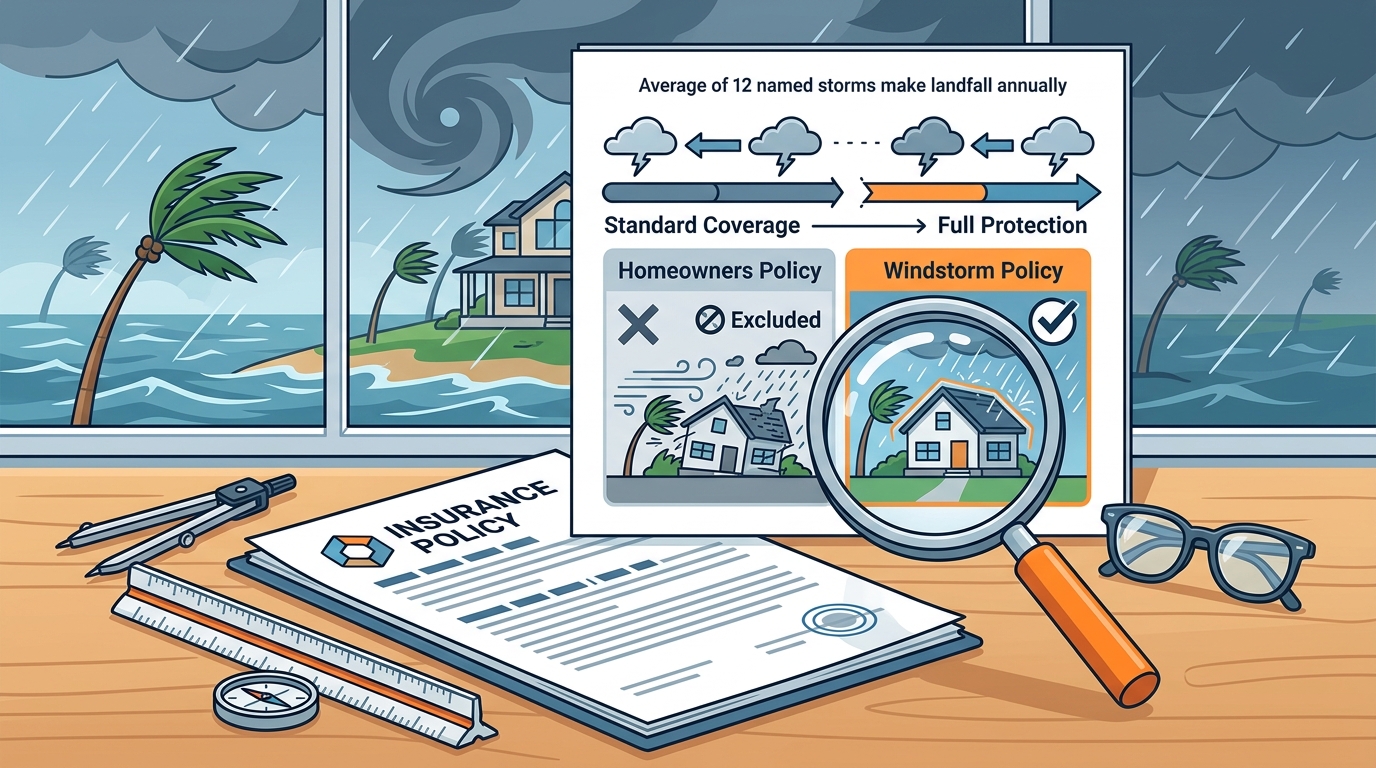
Homeowners in coastal regions face unique risks that standard insurance policies often fail to address. According to the National Hurricane Center, the United States has experienced an average of 12 named storms annually in recent decades, with a significant portion making landfall along the Gulf and Atlantic coasts. This high frequency of severe weather events creates a critical gap in traditional home protection. Standard homeowners insurance policies typically exclude wind damage caused by hurricanes or tropical storms. This exclusion leaves property owners vulnerable to massive financial losses from structural damage, roof failures, and debris impact. Understanding the specific scope of private windstorm insurance is essential for anyone living in a high-risk zone. This article examines whether private windstorm coverage applies to named hurricanes and tropical storms, detailing the mechanics of these policies and the importance of specialized protection. (Home Insurance Flood Windstorm)
Understanding Windstorm Coverage Basics
Windstorm insurance is a specialized policy designed to cover damage to your home and property caused by high winds. Windstorm insurance is a specialized policy designed to cover damage to your home and property caused by high winds. Unlike standard homeowners policies, which often exclude wind damage in coastal areas, this coverage fills that critical gap. It is particularly relevant for residents in Texas, Florida, and other Gulf Coast states where hurricane risks are elevated. (Home Insurance Flood Windstorm)
When a hurricane or tropical storm strikes, the primary cause of damage is often the wind itself. This includes roof damage, siding loss, and structural failures. Private windstorm insurance policies are crafted to address these specific perils. They provide a safety net for homeowners who cannot rely on standard insurance products. The coverage typically extends to both the structure of the home and its contents, depending on the specific policy terms.
It is important to note that windstorm insurance is not always a standalone product. In some cases, it is added as an endorsement to a homeowners policy. In other regions, it is sold as a separate, distinct policy. Private Windstorm Insurance offers comprehensive solutions for these complex needs. For more information on their specific offerings, you can visit their Windstorm Insurance page.
Named Storms vs. Tropical Depressions
A common question among homeowners is whether coverage applies to all weather events or just named storms. Naming a storm is a formal designation by meteorological agencies when wind speeds reach a specific threshold. The National Oceanic and Atmospheric Administration (NOAA) assigns names to tropical cyclones once they reach tropical storm strength, which is defined as sustained winds of 39 mph or higher.
Private windstorm insurance policies generally cover damage from named hurricanes and tropical storms. This includes events that have been officially named by the National Hurricane Center. The coverage is triggered by the wind speeds associated with these named systems. It does not typically require the event to be a full-blown hurricane. A tropical storm with winds exceeding the policy's wind speed threshold can trigger coverage.
What about tropical depressions? These are systems with sustained winds below 39 mph. Most standard windstorm policies exclude damage from tropical depressions. However, some comprehensive policies may offer limited coverage or allow for additional endorsements. It is crucial to review your specific policy documents to understand the wind speed thresholds. You can find detailed guides on policy certificates by visiting the WPI-8 Certificate Guide.
Deductibles and Claims Process
Windstorm insurance often comes with unique deductible structures. A hurricane deductible is a specific amount that the policyholder must pay out of pocket before insurance coverage begins. This deductible is usually a percentage of the home's insured value, ranging from 1% to 5% or more. This is different from the standard flat-dollar deductible found in most homeowners policies.
Understanding your deductible is vital for financial planning. If your home is insured for $500,000 and you have a 2% hurricane deductible, you would be responsible for the first $10,000 of wind damage. The insurance company would cover the remaining costs, up to the policy limits. This structure ensures that policyholders share a portion of the risk, which helps keep premiums manageable.
The claims process for windstorm damage can be complex. It requires thorough documentation of the damage and often involves independent adjusters. Private Windstorm Insurance provides support throughout this process. Their team can help you navigate the intricacies of filing a claim for hurricane damage. For more details on how to manage your policy, check out their Policy Review services.
Coverage Limits and Exclusions
While windstorm insurance covers a wide range of wind-related damages, it is not all-encompassing. Windstorm insurance is a specialized policy designed to cover damage to your home and property caused by high winds. It typically excludes damage from flooding, which requires separate flood insurance. This distinction is critical for coastal homeowners.
Other common exclusions may include damage from earth movement, such as landslides or sinkholes. Additionally, some policies may have limits on certain types of property, such as swimming pools or detached garages. It is essential to understand these limitations to avoid surprises during a claim. You can explore other insurance options, such as Flood Insurance, to ensure comprehensive protection.
Policy limits define the maximum amount the insurer will pay for a covered loss. These limits can be applied per event or annually. High-risk areas may require higher limits to adequately protect the home. Working with an experienced agent can help you determine the appropriate limits for your specific situation. Visit the Windstorm Insurance Quote page to get a personalized assessment.
Why Private Policies Matter
The need for private windstorm insurance has grown significantly in recent years. As climate patterns shift, the frequency and intensity of storms have increased. This trend puts traditional insurance markets under strain. Many standard carriers have withdrawn from high-risk coastal areas. This withdrawal has created a reliance on specialized private insurers.
Private windstorm policies offer flexibility and tailored coverage. They can be customized to meet the unique needs of coastal homeowners. This includes higher coverage limits, lower deductibles, and broader perils. The team at Private Windstorm Insurance specializes in these complex needs. They provide expert guidance to help homeowners secure the right protection. Learn more about their approach by visiting the About page.
Additionally, private policies often provide faster claims processing. In the aftermath of a storm, time is of the essence. Quick access to funds can help homeowners begin repairs and stabilize their property. This efficiency is a key benefit of working with specialized insurers. For more insights, read the latest updates on their Blog.
Key Takeaways
- Private windstorm insurance covers damage from named hurricanes and tropical storms, filling the gap left by standard homeowners policies.
- Coverage is typically triggered by wind speeds associated with officially named storms, not just tropical depressions.
- Hurricane deductibles are usually a percentage of the home's insured value, ranging from 1% to 5% or higher.
- Flood damage is excluded from windstorm policies and requires separate flood insurance coverage.
- Private policies offer tailored coverage options, including higher limits and specialized claims support.
- Working with a specialized agent like Private Windstorm Insurance ensures accurate risk assessment and policy selection.
- The frequency of named storms has increased, making specialized windstorm coverage more critical than ever.
Frequently Asked Questions
Does windstorm insurance cover damage from tropical storms?
Yes, windstorm insurance typically covers damage from tropical storms, provided they are named and meet the wind speed thresholds defined in the policy. The National Hurricane Center's naming convention is a key factor in determining coverage eligibility.
What is the difference between a hurricane deductible and a standard deductible?
A hurricane deductible is usually a percentage of the home's insured value, whereas a standard deductible is a fixed dollar amount. This means the out-of-pocket cost for wind damage can be significantly higher during a named storm event.
Does windstorm insurance cover flood damage?
No, windstorm insurance does not cover flood damage. Floods are considered a separate peril and require a dedicated flood insurance policy. This distinction is crucial for homeowners in coastal areas.
How do I file a claim for windstorm damage?
Filing a claim involves documenting the damage, contacting your insurance provider, and working with an adjuster. Private Windstorm Insurance offers support to guide you through this process efficiently. You can start by visiting their Report a Claim page.
Can I get windstorm insurance if I live in a high-risk area?
Yes, private windstorm insurance is specifically designed for homeowners in high-risk areas. Specialized insurers offer policies that standard carriers may not provide. Consult with an agent to find the best coverage for your location.
What is the WPI-8 certificate?
The WPI-8 certificate is a specific form used in Texas to document windstorm and hail insurance coverage. It provides proof of insurance for properties in coastal counties. You can learn more about this document on the WPI-8 Certificate Guide.
How much does windstorm insurance cost?
The cost varies based on factors such as location, home value, and coverage limits. Getting a personalized quote is the best way to determine the price. Visit the Home Insurance Quote page for an estimate.
Secure Your Protection Today
Protecting your home from the unpredictable forces of nature requires careful planning and the right insurance coverage. Private windstorm insurance provides the essential protection needed for coastal homeowners. Do not wait for the next storm to assess your risk. Contact Private Windstorm Insurance today to discuss your needs and secure your peace of mind. Visit their Contact page to get started.