
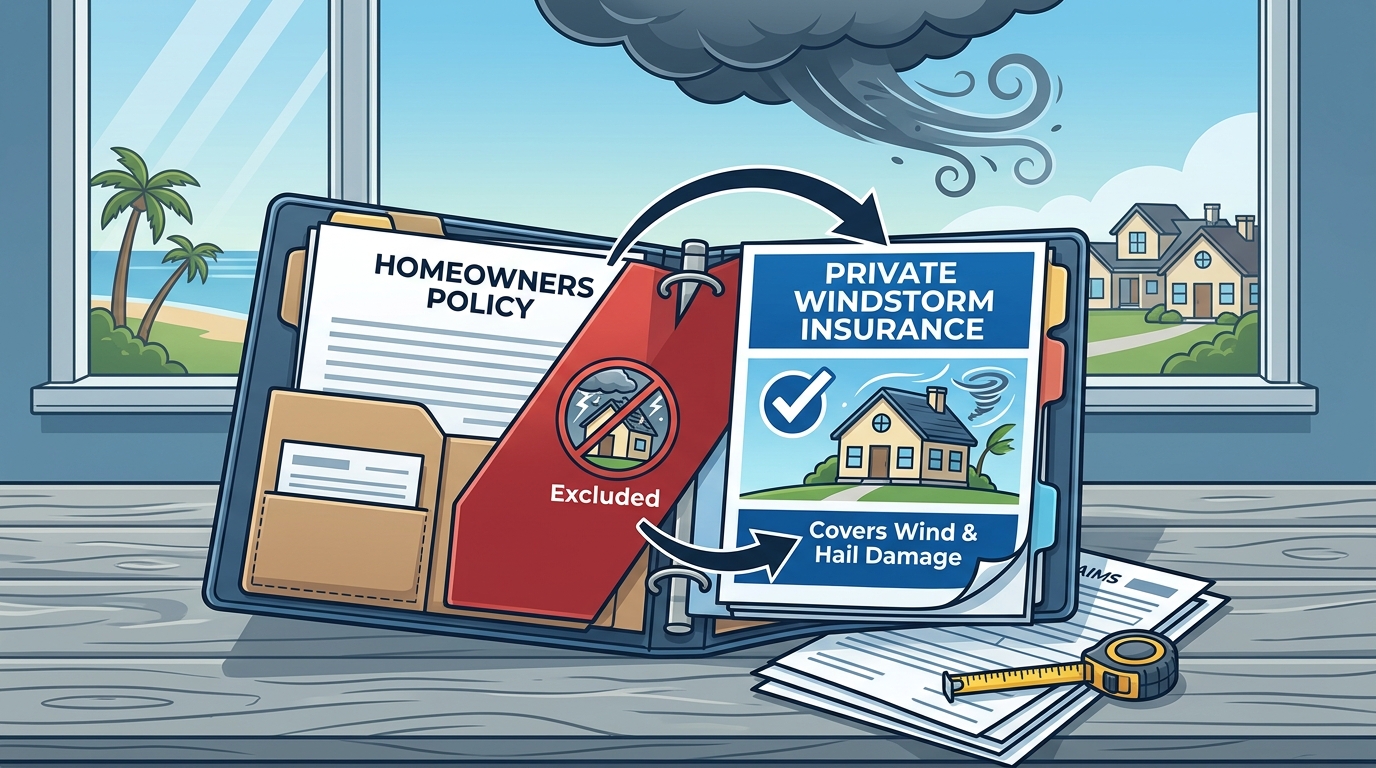
Standard homeowners insurance policies in coastal regions often exclude wind damage, leaving property owners vulnerable to massive financial losses during severe weather events. According to the Insurance Information Institute, wind is the second most costly natural disaster in the United States, trailing only hurricanes. This reality makes private windstorm insurance a critical component of any comprehensive risk management strategy for homeowners in high-risk zones like Texas City, TX. Understanding exactly what is covered, what is excluded, and how to navigate the claims process is essential for protecting your most significant asset.
Understanding Windstorm Coverage Basics
Windstorm insurance is a specialized policy designed to cover damage to your home and property caused by high winds. Unlike standard homeowners insurance, which may exclude wind damage in certain coastal areas, a private windstorm policy fills that gap. Windstorm insurance is a specialized policy designed to cover damage to your home and property caused by high winds. This coverage is particularly vital for residents in areas prone to severe weather, where the risk of structural damage is significantly higher.
When you purchase a private windstorm policy, you are essentially buying protection against the force of the wind itself. This includes damage to the roof, siding, windows, and doors. It also covers debris that may be thrown by the wind, such as tree branches or neighboring structures. Without this specific coverage, you could be responsible for thousands of dollars in repairs out of pocket.
For homeowners in Texas City, TX, the risk is not theoretical. The region is susceptible to frequent weather events that can cause substantial damage. By securing a policy through a trusted local agency, you ensure that your coverage is tailored to the specific risks of your area. You can start by getting a home insurance quote to understand your options.
Hurricanes vs. Tropical Storms
One of the most common questions homeowners ask is whether their windstorm policy covers both hurricanes and tropical storms. The short answer is yes, but the nuances matter. Hurricane damage is typically covered under windstorm policies, provided the wind speeds meet the policy's threshold. However, the definition of what constitutes a "windstorm" can vary between insurers.
Defining the Storm
A tropical storm is defined as a weather system with sustained winds between 39 and 73 miles per hour. A hurricane is a tropical cyclone with sustained winds of 74 miles per hour or higher. Both can cause significant damage to your home. The key difference often lies in the deductible. Many policies have a separate, higher deductible for hurricane damage compared to other wind events.
According to data from the National Hurricane Center, the frequency and intensity of these storms have been increasing over the past few decades. This trend underscores the importance of having adequate coverage. If you are unsure about your current policy's limits, you can review your policy with an expert to ensure you are not underinsured.
Wind Speed Thresholds
Some policies may have specific wind speed thresholds for coverage. For example, a policy might only cover wind damage if the sustained winds exceed 50 miles per hour. It is crucial to read the fine print to understand these thresholds. If you need clarification, you can contact your carrier directly for details.
Types of Windstorm Policies
Not all windstorm policies are created equal. Understanding the different types available can help you choose the right coverage for your needs. Replacement cost coverage is a type of policy that pays to replace damaged property with new materials of similar kind and quality. This is generally the preferred option for homeowners who want full protection.
Actual Cash Value vs. Replacement Cost
Some policies offer Actual Cash Value (ACV) coverage, which factors in depreciation. This means you might receive less money for older roofs or siding. Replacement cost coverage, on the other hand, does not deduct for depreciation. While it may have a slightly higher premium, it provides much better protection in the event of a total loss.
Stand-Alone vs. Endorsement
In some high-risk areas, windstorm coverage is not available as an endorsement to a standard homeowners policy. Instead, you may need a stand-alone windstorm policy. This is common in coastal regions where the risk is too high for standard insurers to absorb. A stand-alone policy offers comprehensive coverage specifically for wind-related perils.
If you are in a high-risk zone, you might need a flood insurance quote as well, since wind and water damage often occur together. Private Windstorm offers specialized quotes for these scenarios.
Common Exclusions and Limitations
While windstorm insurance is comprehensive, it is not all-encompassing. There are several common exclusions that homeowners should be aware of. Water damage from rising ground water is excluded from standard windstorm policies and requires separate flood insurance. This is a critical distinction that many homeowners overlook.
Water Damage Nuances
If wind damages your roof, and rain enters your home, that water damage is typically covered. However, if the water enters due to flooding from rising ground waters, it is not covered. This is why having both windstorm and flood insurance is essential for coastal homeowners. You can get a flood insurance quote to ensure you have both.
Earth Movement and Neglect
Damage caused by earth movement, such as earthquakes or sinkholes, is also excluded. Additionally, damage resulting from neglect or lack of maintenance is not covered. For example, if your roof was already in poor condition and wind caused further damage, the insurer may deny the claim. Regular maintenance is key to ensuring your coverage remains valid.
Ordinance or Law
Some policies do not cover the increased cost of rebuilding to meet current building codes. This is known as ordinance or law coverage. It is an important add-on to consider, especially in areas with strict building regulations. You can discuss these options during your free consultation.
Navigating the Claims Process
When a storm hits, knowing how to file a claim can make a significant difference in the speed and outcome of your recovery. Documenting damage immediately after a storm is crucial for a successful insurance claim. Take photos and videos of all affected areas before making any temporary repairs.
Immediate Steps
First, ensure your safety. If your home is unsafe, leave and contact your insurance agent. Do not attempt to make permanent repairs until an adjuster has inspected the property. You can report a claim online or by phone. Keep all receipts for any temporary repairs, such as tarps or plywood, as these may be reimbursable.
Working with an Adjuster
The insurance adjuster will inspect your property and determine the extent of the damage. It is helpful to have your own documentation ready to compare with the adjuster's findings. If you disagree with the settlement, you have the right to appeal. An experienced agent can help you navigate this process.
Payment and Repairs
Once the claim is approved, you will receive payment according to your policy terms. If you have a mortgage, the payment may be sent to your lender in installments as repairs are completed. You can make a payment or manage your policy online for convenience.
Key Takeaways
- Standard homeowners insurance often excludes wind damage in coastal areas, making private windstorm insurance essential.
- Windstorm policies typically cover both hurricanes and tropical storms, but deductibles may vary.
- Replacement cost coverage is superior to actual cash value as it does not factor in depreciation.
- Flood damage from rising ground water is excluded and requires separate flood insurance.
- Documenting damage immediately after a storm is critical for a successful claim.
- Regular maintenance is required to ensure coverage validity for pre-existing conditions.
- Private Windstorm offers specialized quotes for home, flood, and windstorm insurance in Texas City.
Frequently Asked Questions
Does private windstorm insurance cover roof damage from high winds?
Yes, private windstorm insurance typically covers roof damage caused by high winds. This includes shingle loss, tearing, or structural damage. However, damage due to wear and tear or lack of maintenance is usually excluded. It is important to have your roof inspected regularly to ensure it is in good condition.
Is there a separate deductible for hurricane damage?
Many windstorm policies have a separate, higher deductible for hurricane damage. This deductible is often a percentage of the home's insured value, such as 1% or 2%. It is crucial to understand this deductible before a storm hits, as it can significantly impact your out-of-pocket costs.
What is the difference between windstorm and flood insurance?
Windstorm insurance covers damage caused by the force of the wind, such as roof loss or broken windows. Flood insurance covers damage from rising water, whether from rain, storm surge, or overflowing bodies of water. Both are often needed for comprehensive protection in coastal areas.
Can I get windstorm insurance if I live in a high-risk area?
Yes, but it may require a stand-alone policy rather than an endorsement to a standard homeowners policy. Private Windstorm specializes in providing coverage for high-risk areas in Texas City and surrounding regions. You can get a windstorm insurance quote to see your options.
How long does the claims process take?
The duration of the claims process varies depending on the extent of the damage and the number of claims filed. In the aftermath of a major storm, it may take longer for adjusters to inspect all properties. Promptly reporting your claim and providing documentation can help expedite the process.
Does windstorm insurance cover debris removal?
Yes, most windstorm policies cover the cost of removing debris caused by the wind. This includes tree branches, parts of neighboring structures, and other debris that may have fallen on your property. This coverage is essential for safety and preventing further damage.
What is a WPI-8 certificate?
A WPI-8 certificate is a document used in Texas to verify windstorm and fire insurance coverage. It is often required by lenders and local authorities. Private Windstorm provides a WPI-8 Certificate Guide to help homeowners understand this requirement.
Secure Your Coverage Today
Do not wait for the next storm to realize you are underinsured. Protect your home and peace of mind with comprehensive windstorm coverage from Private Windstorm. Our team of experts is ready to help you navigate the complexities of insurance and find the best policy for your needs. Contact us today to schedule your free consultation and get a home insurance quote tailored to your property.