
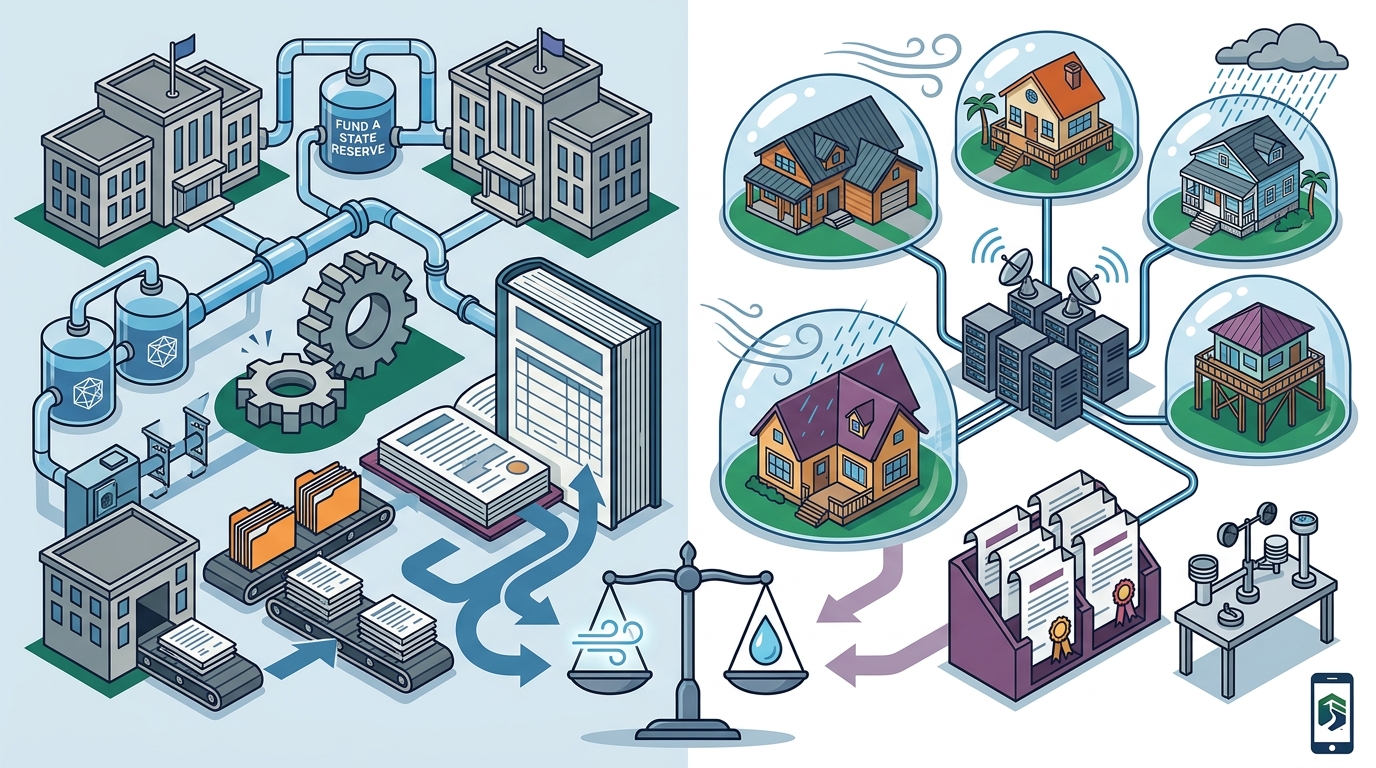
Homeowners in coastal regions face unique risks that standard insurance policies often exclude. Understanding the structural differences between state-run insurance pools and private market windstorm coverage is critical for adequate protection. According to FEMA, nearly 20 percent of all flood insurance claims come from properties in low-to-moderate risk areas, highlighting the widespread nature of these perils. This article breaks down the operational, financial, and coverage distinctions to help you make an informed decision. (Home Flood amp Windstorm)
Understanding the Basics of Windstorm Coverage
Windstorm insurance covers damage caused by high winds, including hurricanes, tornadoes, and straight-line winds. Standard homeowners policies typically exclude wind damage in high-risk coastal zones. This exclusion creates a gap in protection that requires specialized coverage. According to Nationwide, wind damage is one of the most costly perils for coastal homeowners, often resulting in hundreds of thousands of dollars in repairs. Without specific windstorm coverage, property owners face significant financial vulnerability.
Windstorm is a specialized insurance product designed to fill this gap. It can be purchased as a standalone policy or as an endorsement to a homeowners policy. The availability of these products depends heavily on geographic location and the risk profile of the area. In states like Texas, Florida, and Louisiana, the market is dominated by a mix of state-backed entities and private insurers.
State-Run Pools: The Safety Net
State-run insurance pools, often referred to as "insurers of last resort," are created by state legislatures to provide coverage when the private market withdraws. These entities are not-for-profit and are designed to stabilize the insurance market in high-risk areas. According to the California Department of Insurance, these pools operate under strict regulatory oversight to ensure solvency and fair pricing.
Operational Structure
State pools are funded through a combination of premiums, state appropriations, and post-event assessments. If a major hurricane causes catastrophic losses, policyholders may face additional assessments to cover the shortfall. This mechanism ensures that the pool remains solvent but can lead to unpredictable costs for consumers. The Texas Windstorm Insurance Association (TWIA) is a prime example of this model, serving the Gulf Coast region.
Eligibility and Restrictions
Eligibility for state-run pools is often restricted to specific geographic zones. In Texas, for instance, coverage is limited to properties within designated wind-vulnerable zones. According to TWIA, policyholders must also meet strict construction standards to qualify for coverage. Homes built before certain dates may require costly upgrades to wind-resistant features to remain eligible.
Private Market Windstorm Coverage
Private market windstorm coverage is offered by commercial insurance companies that operate for profit. These insurers use actuarial data to price risk and determine premiums. They are not bound by the same regulatory constraints as state pools, allowing for more flexible product offerings. According to Allstate, private insurers often provide broader coverage options, including additional living expenses and personal property protection.
Financial Stability and Solvency
Private insurers are rated by agencies like A.M. Best and Standard & Poor's. These ratings reflect the company's ability to pay claims. High-rated insurers are generally considered more financially stable than state pools, which may rely on state backing. However, private insurers can withdraw from high-risk markets if losses exceed projections. This withdrawal often forces homeowners back into state-run pools.
Coverage Flexibility
Private policies often offer more customizable coverage limits and deductibles. Policyholders can choose higher deductibles to lower premiums or opt for lower deductibles for greater peace of mind. Private home insurance products may also include coverage for wind-driven rain, which is a common source of damage during storms. State pools may exclude certain types of water damage, leaving policyholders with gaps in protection.
Coverage and Limit Comparisons
Understanding the differences in coverage limits is crucial for adequate protection. State pools often have maximum coverage limits set by legislation. In Texas, TWIA has a maximum dwelling coverage limit of $30 million for single-family homes. Private insurers may offer higher limits or allow for additional coverage through excess policies.
| Feature | State-Run Pools | Private Market Coverage |
|---|---|---|
| Maximum Coverage Limits | Often capped by state law (e.g., $30M in TX) | Higher limits available; excess policies possible |
| Premium Stability | Subject to state rate filings and assessments | Market-driven; can fluctuate based on loss history |
| Construction Requirements | Strict wind-resistance standards required | Varies by insurer; often more flexible |
| Claims Handling | May involve third-party administrators | Direct insurer handling; often faster resolution |
| Additional Living Expenses | Limited or excluded in some pools | Commonly included with generous limits |
Cost and Premium Structures
Premium costs vary significantly between state-run pools and private insurers. State pools often charge lower base premiums but impose mandatory assessments after major events. These assessments can add thousands of dollars to a policyholder's bill. Private insurers charge higher base premiums to account for risk but do not impose post-event assessments.
Assessment Risks
The risk of assessments is a key differentiator. According to TWIA, policyholders may face assessments of up to $1,000 per $100,000 of coverage after a major hurricane. This unpredictability makes budgeting difficult for homeowners. Private insurers absorb these costs through their reinsurance programs, providing more stable premium expectations.
Discount Opportunities
Private insurers often offer discounts for wind-resistant features, such as impact-resistant windows and reinforced roofs. These discounts can significantly reduce premiums. State pools may offer limited discounts, if any. Getting a quote from a private insurer can reveal potential savings through bundling or loyalty discounts.
The Claims Process and Payout Speed
The claims process is a critical factor in choosing between state-run pools and private coverage. State pools often rely on third-party administrators to handle claims. This can lead to delays and inconsistencies in claim evaluation. Private insurers typically have dedicated claims teams that can respond more quickly to policyholder needs.
Adjuster Availability
After a major storm, the demand for adjusters spikes. State pools may struggle to meet this demand, leading to long wait times for inspections. Private insurers with larger networks can deploy adjusters more efficiently. According to Nationwide, timely claim resolution is essential for homeowners to begin repairs and prevent further damage.
Dispute Resolution
Disputes over claim values are common in windstorm insurance. State pools may have more rigid guidelines for damage assessment, limiting negotiation options. Private insurers may offer more flexibility in settlement negotiations. Policyholders should document all damage thoroughly and consider hiring a public adjuster for complex claims.
Key Takeaways
- State-Run Pools act as insurers of last resort, providing coverage when the private market withdraws from high-risk areas.
- Private Market Coverage offers greater flexibility in limits, deductibles, and additional living expenses.
- Assessment Risk is a unique feature of state pools, where policyholders may face additional charges after major events.
- Construction Standards are often stricter for state pool eligibility, requiring wind-resistant upgrades.
- Claims Speed can be faster with private insurers due to larger adjuster networks and dedicated teams.
- Premium Stability is generally higher with private insurers, who do not impose post-event assessments.
- Maximum Limits in state pools are often capped by legislation, while private insurers can offer higher coverage through excess policies.
Frequently Asked Questions
What is the primary difference between state-run pools and private windstorm coverage?
State-run pools are non-profit entities that provide coverage when the private market withdraws, often subject to post-event assessments. Private coverage is for-profit, offers more flexible limits, and does not impose additional assessments.
Do state-run pools have maximum coverage limits?
Yes, state-run pools like TWIA have maximum coverage limits set by state law. For example, TWIA caps dwelling coverage at $30 million for single-family homes.
Can I get discounts on private windstorm insurance?
Yes, private insurers often offer discounts for wind-resistant features, such as impact windows and reinforced roofs. Bundling policies can also lead to savings.
How do claims differ between state pools and private insurers?
State pools may use third-party administrators, which can lead to delays. Private insurers often have dedicated claims teams that can respond more quickly to policyholder needs.
What happens if a private insurer withdraws from my area?
If a private insurer withdraws, homeowners may need to seek coverage through the state-run pool or other available private carriers. It is important to monitor market changes in your area.
Are state-run pools financially stable?
State-run pools are backed by state governments and can impose assessments on policyholders to cover losses. This provides a layer of financial stability but introduces cost unpredictability.
Do I need separate flood insurance for windstorm coverage?
Yes, windstorm coverage does not include flood damage. According to FEMA, flood insurance is a separate policy required for properties in flood zones.
Secure Your Protection Today
Navigating the complexities of windstorm insurance requires expert guidance. Whether you need a quote for a state-run pool or a private market policy, our team is here to help. Contact us for a free consultation to determine the best coverage for your home. We specialize in helping homeowners in Texas City and surrounding areas secure comprehensive protection against wind and flood risks. Do not wait until the storm hits to secure your peace of mind.