
Homeowners in high-risk coastal regions face a critical decision when securing windstorm protection. The choice often lies between state-backed insurance pools and private market carriers. Understanding the structural and financial differences between these two options is essential for proper risk management. Recent data indicates that over 15 million homes in the United States are located in areas with elevated windstorm risk, making this distinction vital for property owners. (Home Insurance Flood Windstorm)
Understanding State-Run Insurance Pools
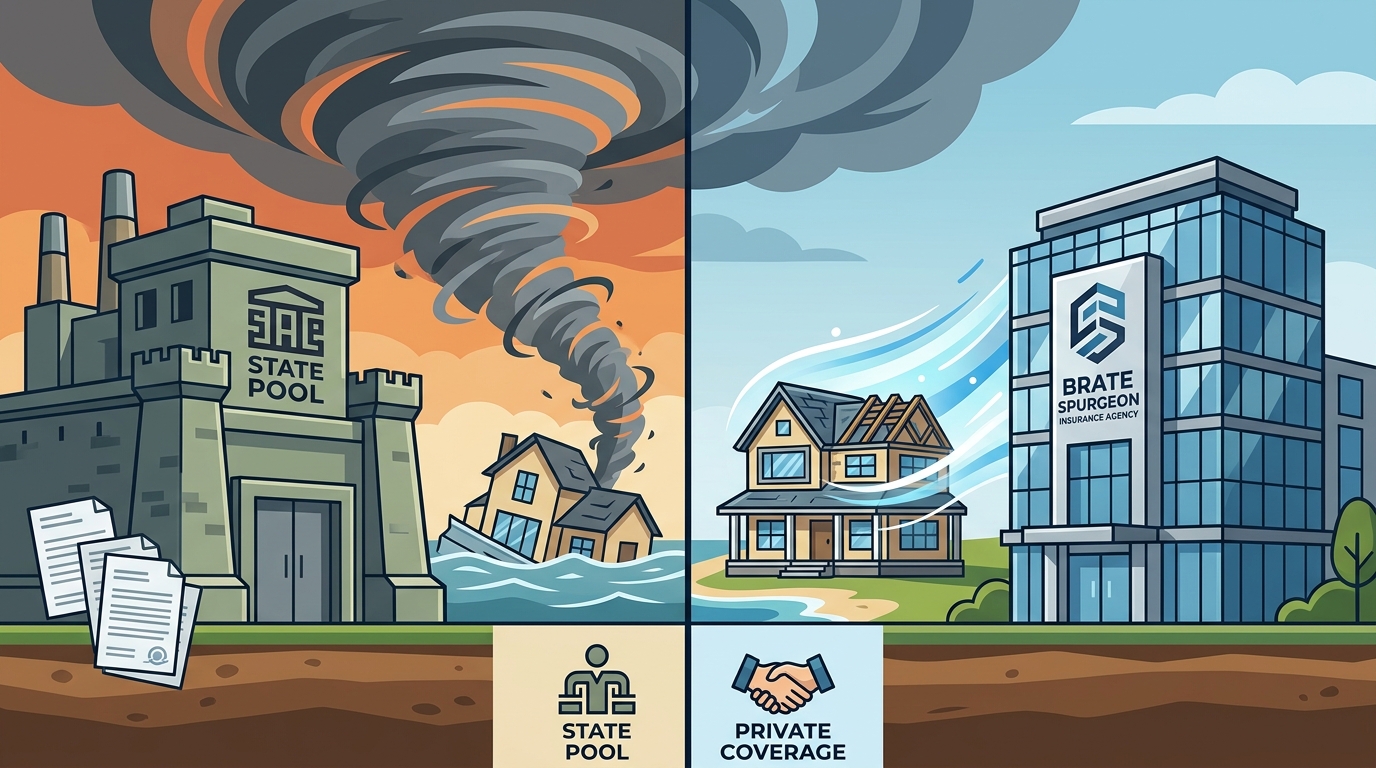
State-run insurance pools, often referred to as insurers of last resort, are created by state legislatures to provide coverage in markets where private insurers have withdrawn. These entities operate as quasi-governmental organizations. Their primary mandate is to ensure that all residents have access to basic property insurance, regardless of risk level. (Home Insurance Flood Windstorm)
These pools typically step in when private carriers deem a region too hazardous due to frequent hurricanes or tornadoes. For example, the Texas Windstorm Insurance Association (TWIA) was established to provide windstorm and hail coverage in coastal counties where private markets struggled to remain solvent. According to industry reports, state pools often cover millions of policyholders in high-risk zones.
The defining characteristic of a state pool is its regulatory framework. They are not-for-profit entities. This means they do not distribute earnings to shareholders. Instead, any surplus is used to bolster reserves or lower premiums slightly. However, this structure also means they have less flexibility in pricing and underwriting compared to private competitors.
Policyholders in state pools often face specific construction requirements. To qualify for coverage, homes must meet strict building codes. This is designed to reduce the overall risk to the pool. If a home does not meet these standards, the pool may deny coverage or require expensive retrofits before issuing a policy.
The Private Market Windstorm Model
Private windstorm coverage is offered by commercial insurance companies. These entities operate for profit and use complex actuarial models to price risk. They have the freedom to underwrite policies based on their own risk appetite and financial goals.
Private carriers often offer more comprehensive policies. They may bundle windstorm coverage with homeowners insurance, simplifying the management of claims. This bundling can be a significant advantage for homeowners who want a single point of contact for all their property needs.
Another key difference is the variety of coverage options. Private insurers often provide additional endorsements for things like debris removal, code upgrade coverage, and temporary living expenses. These add-ons can be customized to fit specific homeowner needs. State pools usually offer more standardized, basic coverage.
The availability of private windstorm coverage fluctuates with market conditions. In years with high hurricane activity, private insurers may raise premiums significantly or withdraw from certain markets entirely. This volatility is a major concern for long-term planning. According to financial data, private insurance premiums in coastal areas have risen by an average of 20% annually in recent years.
Coverage and Limit Comparisons
When comparing state pools and private carriers, the scope of coverage is a primary differentiator. State pools generally provide basic windstorm and hail coverage. They often exclude other perils like fire or theft, which must be covered by a separate homeowners policy.
Private carriers often offer "windstorm included" home policies. This means wind coverage is integrated into the main homeowners policy. This integration can streamline the claims process. If a storm damages both the roof and the interior, one claim handles both issues.
Deductible Structures
Deductibles vary widely between the two models. State pools often have flat-dollar deductibles or percentage-based deductibles that are strictly defined by state law. These deductibles can be high, especially in high-risk zones. Homeowners must be prepared to pay a significant out-of-pocket amount before coverage kicks in.
Private insurers offer more flexibility in deductible selection. Policyholders can often choose higher deductibles to lower their monthly premiums. This allows for greater customization of the insurance plan. However, private carriers may also have stricter requirements for wind mitigation discounts.
Claims Processing Speed
Claims processing is a critical factor after a storm. Private insurers often have larger networks of adjusters and repair contractors. This can lead to faster initial assessments and repairs. They have a financial incentive to resolve claims efficiently to maintain customer satisfaction.
State pools may face delays during major catastrophe events. Because they have fewer resources, they may rely on third-party administrators. During large hurricanes, the volume of claims can overwhelm these systems. This can result in longer wait times for policyholders. Data shows that claim settlement times can extend by several weeks during peak storm seasons.
Pricing and Affordability Factors
Pricing is often the main driver for choosing between a state pool and a private carrier. State pools are generally required by law to offer affordable rates. They do not need to generate a profit. This can make them cheaper for high-risk properties that private insurers would charge exorbitant rates for.
However, affordability is not guaranteed. State pools may impose surcharges or fees to cover their operational costs. They may also require policyholders to pay premiums in full annually. This can be a cash flow burden for some homeowners.
Private insurers price their policies based on risk. If your home has modern roofing, impact-resistant windows, and a strong roof-to-wall connection, you may qualify for significant discounts. Private carriers are more likely to reward risk mitigation efforts. According to industry analysis, homes with wind mitigation features can save up to 45% on premiums with private carriers.
Financial Stability and Solvency
The financial backing of the insurer is a crucial consideration. State pools are backed by the full faith and credit of the state. In extreme cases, the state can levy assessments on all property owners to pay claims. This provides a high level of security for policyholders.
Private insurers are backed by their capital reserves and reinsurance contracts. They are regulated by state insurance departments to ensure they remain solvent. However, they do not have the same government backing as state pools. If a private insurer becomes insolvent, the state guaranty fund may step in, but coverage limits apply.
Reinsurance is a key component of windstorm coverage. Both state pools and private carriers purchase reinsurance to protect against catastrophic losses. The terms of these reinsurance contracts can affect the stability of the primary insurer. Private carriers often have more diverse reinsurance portfolios, which can enhance their stability.
Key Takeaways
- State pools act as insurers of last resort, providing basic coverage when private markets withdraw.
- Private carriers offer more comprehensive policies and flexible deductible options.
- State pools often have stricter construction requirements for eligibility.
- Private insurers may offer wind mitigation discounts for upgraded home features.
- Claims processing can be faster with private carriers due to larger adjuster networks.
- State pools are backed by state government, while private carriers rely on capital reserves.
- Pricing varies based on risk profile, with private markets offering more customization.
Frequently Asked Questions
Can I have both state pool and private windstorm coverage?
No, you cannot have duplicate windstorm coverage. You must choose one primary source for wind protection. However, you can have a separate homeowners policy from a different carrier if the state pool only covers wind and hail.
What happens if my home does not meet state pool building codes?
If your home does not meet the required building codes, the state pool may deny coverage. You may need to make repairs or upgrades to become eligible. Private insurers may also decline coverage or charge higher rates for non-compliant homes.
Are state pool premiums tax-deductible?
Insurance premiums are generally not tax-deductible for personal residences. However, if you use part of your home for business, a portion may be deductible. Consult a tax professional for specific advice.
How do I know if I am in a state pool service area?
State pools typically cover specific coastal counties. You can check your address on the state pool website or contact a local insurance agent. In Texas, for example, TWIA covers 38 coastal counties.
What is the difference between a windstorm deductible and a standard deductible?
A windstorm deductible is often a percentage of the home's insured value, whereas a standard deductible is a flat dollar amount. Wind deductibles are usually higher to account for the severity of storm damage.
Do private insurers offer discounts for storm shutters?
Yes, many private insurers offer discounts for installed storm shutters or impact-resistant windows. These discounts can significantly lower your premium. The amount varies by carrier.
How long does it take to get a quote from a state pool?
Getting a quote from a state pool can take longer than from a private insurer. This is because they may require more documentation and verification of building codes. Private insurers often provide instant online quotes.
Get Your Custom Quote
Navigating the complexities of windstorm insurance requires expert guidance. Whether you need to compare state pool rates with private market options, or you are looking for a comprehensive windstorm included home policy, we are here to help. Our team specializes in protecting Texas Gulf Coast homeowners with tailored insurance solutions.
Do not leave your property vulnerable to wind and hail damage. Contact us today to schedule a free consultation. We will analyze your specific needs and find the best coverage for your budget. Visit our Home Insurance Quote page to get started. You can also explore our Flood Insurance Quote options to ensure complete protection.
For more information about our services, please visit our About Our Agency page. We have been serving the community since 1986. Call us at (409) 945-4746 or email brad@bradspurgeonins.com to speak with a licensed agent.