
Homeowners in the Texas Gulf Coast face unique and escalating risks that directly impact their insurance costs. According to industry data, wind and hail damage accounts for a significant portion of property claims in coastal regions, driving up base premiums for standalone policies. Understanding these cost drivers is essential for residents in Texas City and surrounding communities to manage their financial exposure effectively.
Structural Determinants of Cost
The physical characteristics of your home are the primary drivers of your windstorm insurance premium. Insurance carriers assess the likelihood of damage based on how well the structure can withstand high-velocity winds and flying debris.
Roof Age and Construction
Your roof is the first line of defense against windstorms. FEMA reports that roof failures are a leading cause of interior water damage during storms. Homes with roofs older than ten years often face higher premiums because they are more susceptible to shingle loss and structural failure. Newer roofs built to modern building codes typically qualify for lower rates due to their enhanced durability.
Building Materials and Design
The materials used in your home's construction play a critical role in pricing. State insurance guidelines indicate that homes with impact-resistant windows, reinforced garage doors, and hip roof designs generally command lower premiums. These features reduce the probability of catastrophic failure during a storm, thereby lowering the insurer's risk exposure.
Foundation Type
Windstorm insurance often intersects with flood risk, making the foundation type relevant. Homes on slab foundations may have different risk profiles compared to those on crawl spaces or piers. Flood insurance requirements can influence the overall cost of protecting your property, as insurers evaluate the combined risk of wind uplift and water intrusion.
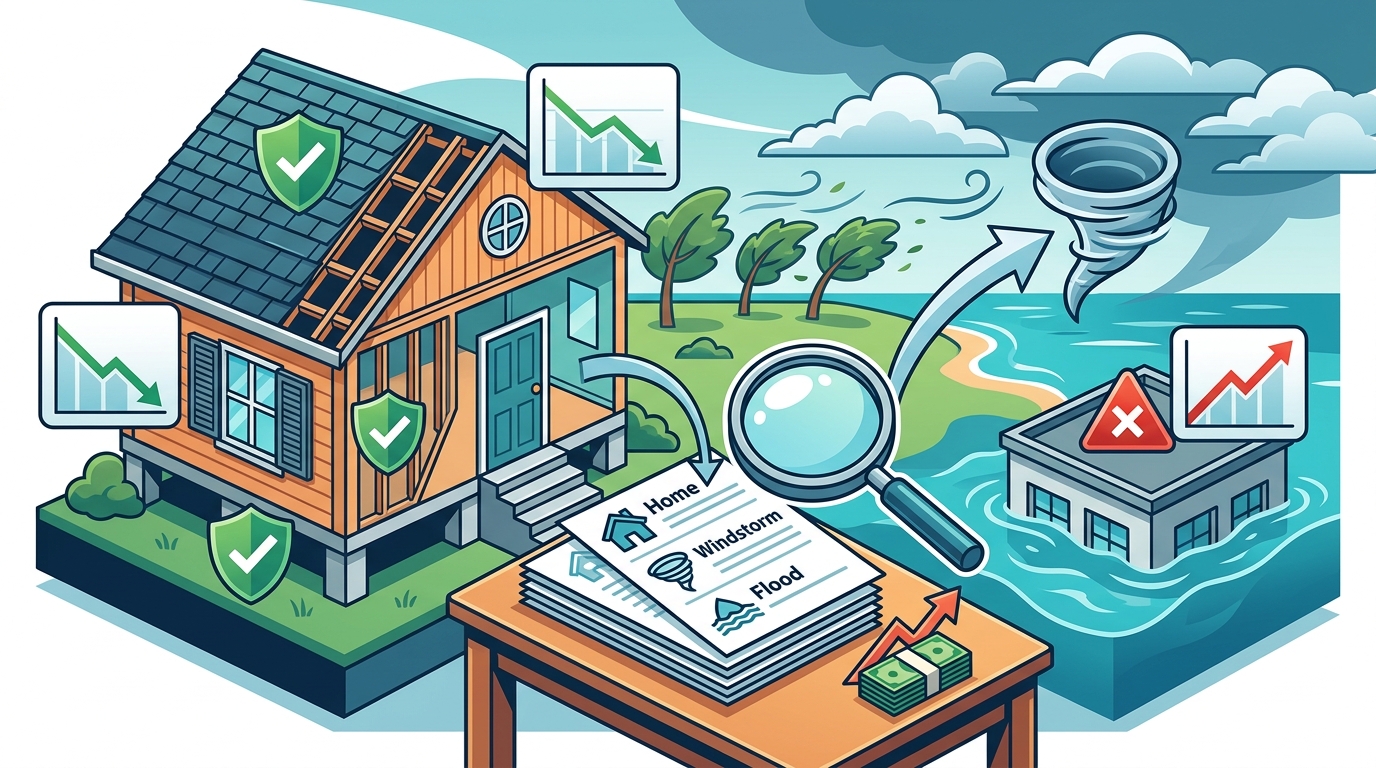
Location and Risk Zone Analysis
Geography is a non-negotiable factor in determining windstorm premiums. The Texas Gulf Coast is a high-risk zone due to its proximity to the Gulf of Mexico and historical storm patterns.
Proximity to the Coast
Distance from the shoreline is a primary metric for underwriters. Weather modeling data shows that wind speeds and debris impact intensity decrease as you move inland. Homes within three miles of the coast often face the highest premiums due to the increased likelihood of direct hurricane impacts and storm surge.
Historical Claim Data
Insurers analyze historical claim data for specific zip codes and neighborhoods. If your area has experienced multiple wind or hail events in the last decade, premiums will reflect that elevated risk. Local insurance trends in Texas City show that areas with frequent hail damage see a steady increase in base rates for windstorm coverage.
Topography and Wind Exposure
Even within the same neighborhood, topography matters. Homes on elevated lots or those with open exposure to prevailing winds may face higher costs. Conversely, properties shielded by natural barriers or dense tree lines might qualify for slight discounts, though insurers often discount the value of trees due to their own vulnerability to wind.
Deductible Impact on Premiums
Your choice of deductible is the most direct lever you have to control your windstorm insurance premium. A deductible is the amount you pay out of pocket before your insurance coverage kicks in.
Percentage-Based Deductibles
In high-risk coastal areas, windstorm deductibles are often calculated as a percentage of your home's insured value, typically ranging from 1% to 5%. Insurance regulatory data indicates that choosing a higher percentage deductible can significantly lower your annual premium. For example, increasing your deductible from 2% to 5% might reduce your premium by 15 to 20 percent.
Flat Dollar Deductibles
Some policies offer flat dollar deductibles for wind and hail, such as $1,000 or $2,500. These are more common in areas with lower risk profiles. For Texas Gulf Coast homeowners, percentage-based deductibles are standard, and understanding the financial implication of each tier is crucial for budgeting.
Balancing Risk and Reward
Selecting a deductible requires balancing monthly savings against potential out-of-pocket costs. Home insurance experts recommend choosing a deductible you can comfortably afford in the event of a claim. Opting for the lowest possible premium with a high deductible can leave you financially vulnerable if a storm occurs.
Mitigation Strategies for Savings
Proactive improvements to your property can lead to substantial premium reductions. Insurers reward homeowners who take steps to mitigate risk.
Wind Mitigation Inspections
Many carriers offer discounts for homes that pass a wind mitigation inspection. This inspection verifies features like roof-to-wall connections, secondary water barriers, and hurricane clips. The WPI-8 certificate is a standard document in Texas that details these features and is often required to secure windstorm coverage. Submitting this certificate can result in immediate premium savings.
Impact-Resistant Windows and Doors
Installing impact-resistant windows and doors not only protects your home from debris but also reduces the risk of wind pressure buildup that can cause roof failure. Federal mitigation grants sometimes support these upgrades, and insurers frequently offer discounts for their installation.
Regular Maintenance
Keeping your property well-maintained is a simple yet effective way to manage costs. Regularly trimming trees, securing outdoor furniture, and maintaining your roof can prevent small issues from becoming major claims. Contacting your agent for a policy review ensures your coverage aligns with your current risk profile.
Comparing Windstorm Options
Understanding the different types of windstorm coverage available is essential for making an informed decision. The table below summarizes the key differences between common policy structures.
| Policy Type | Coverage Scope | Typical Deductible | Best For |
|---|---|---|---|
| Standalone Windstorm | Covers only wind and hail damage | 1% to 5% of dwelling value | High-risk coastal zones |
| Windstorm Included Home Policy | Combines wind, hail, and home coverage | Varies by carrier | Homeowners seeking simplified billing |
| Flood Insurance (NFIP) | Covers water damage from flooding | Flat dollar amount | Properties in flood zones |
| Umbrella Policy | Additional liability coverage | Excess over primary policy | High-net-worth individuals |
Choosing the right policy depends on your specific location and risk tolerance. Windstorm insurance is often required separately in high-risk areas, while some carriers offer bundled options that simplify the process.
Key Takeaways
- Roof Age is Critical: Roofs older than ten years often face higher premiums due to increased vulnerability to wind and hail damage.
- Proximity Matters: Homes within three miles of the Texas Gulf Coast typically face the highest windstorm insurance costs.
- Deductible Choice: Increasing your windstorm deductible from 1% to 5% can significantly lower your annual premium.
- Mitigation Discounts: Completing a wind mitigation inspection and submitting a WPI-8 certificate can unlock substantial savings.
- Historical Data: Insurers use local claim history to adjust rates, meaning frequent storm activity in your area drives up costs.
- Building Codes: Homes built to modern codes with impact-resistant features qualify for lower risk assessments.
- Agency Expertise: Working with a local agency like Brad Spurgeon Insurance Agency Inc. ensures you navigate complex coastal regulations effectively.
Frequently Asked Questions
What is windstorm insurance?
Windstorm insurance is a specialized policy that covers damage to your home caused by high winds and hail, which is often excluded from standard homeowners insurance in high-risk coastal areas.
How is the windstorm deductible calculated?
In Texas, windstorm deductibles are typically calculated as a percentage of your home's insured dwelling value, usually ranging from 1% to 5%, rather than a flat dollar amount.
Do I need separate flood insurance for wind damage?
No, flood insurance covers water damage from rising water, while windstorm insurance covers damage from wind and hail. However, wind can cause openings that lead to flood damage, so both are often necessary for comprehensive protection.
What is a WPI-8 certificate?
A WPI-8 certificate is a standardized document in Texas that details the wind-resistant features of a home, such as roof construction and window protection, used to determine insurance discounts.
Can I get windstorm insurance if my home is old?
Yes, but premiums may be higher due to the increased risk of structural failure. Some carriers may require a structural inspection before issuing a policy for older homes.
How does location affect my premium?
Location is a primary factor, with homes closer to the coast and in areas with high historical storm activity facing significantly higher premiums due to increased risk exposure.
What is the Windstorm Included Home Policy?
This is a specialized policy offered by some carriers that combines windstorm coverage with standard homeowners insurance, simplifying the process for Texas Gulf Coast homeowners.
How can I lower my windstorm premium?
You can lower your premium by increasing your deductible, installing wind mitigation features, and maintaining a strong roof and impact-resistant windows.
Get Your Custom Quote
Protecting your home from wind and hail requires expert guidance tailored to the unique risks of the Texas Gulf Coast. Brad Spurgeon Insurance Agency Inc. has served Texas City and surrounding communities since 1986, providing trusted advice on homeowners, windstorm, and flood insurance. Contact us today to schedule a free consultation and secure the right coverage for your property.