
Securing windstorm coverage in the Texas Gulf Coast region has become increasingly difficult due to tightening underwriting standards. Recent industry data indicates that over 40% of homeowners in high-risk zones face initial denial or non-renewal from major carriers. This rejection often stems from specific structural vulnerabilities or incomplete documentation rather than a permanent loss of insurability. Understanding the exact criteria used by underwriters is the first step toward securing a policy. This guide outlines the precise remediation steps required to rebuild your eligibility profile and successfully navigate the application process with specialized providers. (Home Flood amp Windstorm)
Diagnose the Root Cause of Your Rejection
Before attempting to reapply, you must understand why your previous applications were denied. Insurance carriers do not reject policies arbitrarily; they rely on actuarial data and risk assessment models. Common reasons for denial include an aging roof system, lack of secondary water barrier, or insufficient wind-resistant construction details. If you do not address these specific findings, subsequent applications will likely result in the same outcome.
Windstorm insurance is a specialized form of coverage that protects your property against damage caused by high winds and hail. Standard homeowners policies often exclude or limit this coverage in coastal regions. Therefore, the underwriting process is more rigorous than for standard home insurance. You need to determine if your home meets the current windstorm insurance requirements for your specific zone.
Start by requesting a detailed explanation of the denial from your previous carriers. Look for specific codes or comments regarding the roof age, attachment methods, or opening protections. This information is critical for the next phase of remediation. Without this data, you are essentially guessing what needs to be fixed.
Implement Critical Structural Hardening
Once you have identified the vulnerabilities, you must implement physical improvements to your property. Underwriters prioritize homes that have been hardened against wind forces. The most common areas of focus are the roof deck, the roof-to-wall attachment, and the exterior openings.
Roof System Assessment
The roof is the primary defense against wind-driven rain and debris. If your roof is older than 10 to 15 years, many carriers will automatically deny coverage or require a full replacement. Ensure that your roof has a secondary water barrier installed. This layer prevents water intrusion if the shingles are lifted by high winds. Additionally, verify that the roof deck is properly attached to the trusses using specific nailing patterns required by local building codes.
Opening Protections
Windows and doors are weak points in a home's envelope. Installing impact-resistant windows or storm shutters significantly improves your chances of approval. These features reduce the risk of internal pressurization, which is a leading cause of roof failure during storms. If full replacement is not feasible, ensure that existing shutters are certified and properly installed.
Compile the WPI-8 Certificate and Proof
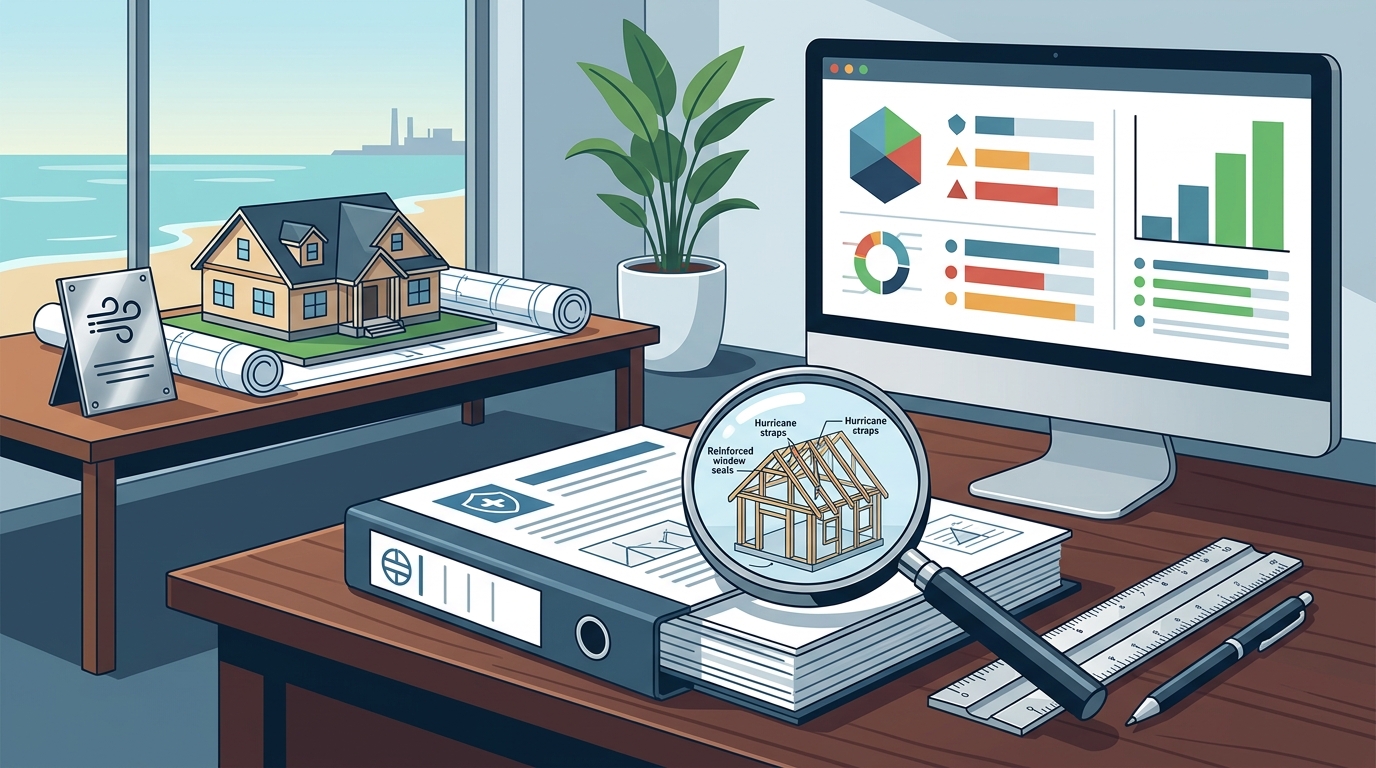
Documentation is the bridge between your physical improvements and insurance approval. In Texas, the WPI-8 Certificate is the standard document used to certify a home's wind resistance. This form must be completed by a licensed contractor or inspector who verifies that the home meets specific wind-resistant construction standards.
The WPI-8 certificate evaluates several key components:
- Roof Covering: Type, age, and attachment method.
- Roof Deck Attachment: Nailing pattern and spacing.
- Roof-to-Wall Attachment: Clips or straps used to secure the roof.
- Opening Protections: Shutters or impact-resistant glazing.
- Secondary Water Barrier: Presence and installation quality.
Without a valid WPI-8 certificate, most carriers will assume your home is high-risk. Ensure that the certificate is recent, typically within the last 12 months, and signed by a qualified professional. This document serves as proof that your home has been hardened against wind forces.
Select the Right Carrier for High-Risk Profiles
Not all insurance carriers write windstorm policies in the same way. Some carriers have exited the Texas market entirely, while others have strict age limits for roofs. It is essential to work with an agency that specializes in high-risk coastal properties. Generalist agents may not have access to the specialized carriers that write policies for homes with older roofs or complex construction.
Look for carriers that offer a windstorm included home policy or specific coastal home insurance products. These policies are designed to accommodate homes that do not meet the strict criteria of standard carriers. They often have more flexible underwriting guidelines regarding roof age and construction details.
Compare the following options based on your specific needs:
| Carrier Type | Underwriting Flexibility | Best For | Documentation Required |
|---|---|---|---|
| Standard Carrier | Low | New construction or recently renovated homes | Basic inspection |
| Surplus Lines Carrier | High | Homes with older roofs or unique structures | Detailed WPI-8 Certificate |
| Coastal Specialty Carrier | Medium | Homes with partial hardening features | Contractor verification |
Working with a specialized agency allows you to access these surplus lines markets. They can match your home's specific profile with a carrier that is willing to accept the risk. This approach is often more effective than applying to multiple standard carriers sequentially.
Navigate the Application and Underwriting Review
When you submit your application, ensure that all documentation is complete and accurate. Incomplete applications are a common cause of delays and further denials. Provide the WPI-8 certificate, photos of the roof and openings, and any previous inspection reports.
Be prepared for additional questions from the underwriter. They may request a third-party inspection if the documentation is unclear. Cooperate fully with these requests to demonstrate your commitment to risk mitigation. If the underwriter has concerns, ask for specific feedback on what additional improvements are needed.
Consider scheduling a free consultation with an insurance specialist before submitting your final application. They can review your documentation and identify potential red flags. This proactive step can save time and prevent further rejections. It also ensures that you are presenting your home in the best possible light to the underwriter.
Key Takeaways for Policy Qualification
- Understand the Denial: Request specific reasons for previous rejections to target your remediation efforts.
- Hardening is Key: Focus on roof attachment, secondary water barriers, and opening protections to improve risk profile.
- WPI-8 Certificate: Obtain a current WPI-8 certificate from a licensed professional to prove wind resistance.
- Specialized Carriers: Work with agencies that have access to surplus lines and coastal specialty carriers.
- Documentation Accuracy: Ensure all photos and reports are clear, recent, and complete before submission.
- Professional Guidance: Utilize expert consultation to navigate complex underwriting requirements.
- Patience and Persistence: The process may take time, but targeted improvements lead to approval.
Frequently Asked Questions
How long does it take to get windstorm insurance after rejection?
The timeline varies based on the speed of your remediation and the carrier's underwriting process. Once you have implemented improvements and gathered documentation, the application review can take 1 to 3 weeks. Working with a specialized agency can expedite this process by ensuring your application is complete and compliant from the start.
Can I get windstorm insurance with an old roof?
It is possible, but more difficult. Some surplus lines carriers may accept roofs up to 15 or 20 years old if they are in good condition and have a valid WPI-8 certificate. However, many standard carriers have strict age limits, often requiring a roof less than 10 years old. In such cases, a roof replacement may be necessary to secure coverage.
What is the WPI-8 certificate and why is it important?
The WPI-8 certificate is a standardized form used in Texas to certify that a home meets specific wind-resistant construction standards. It is important because it provides underwriters with verified data about your home's structural integrity. Without this certificate, carriers may assume your home is high-risk and deny coverage or charge higher premiums.
Do I need to replace all windows to get windstorm insurance?
Not necessarily. If your existing windows are in good condition and you install certified storm shutters, you may still qualify. However, impact-resistant windows are often preferred by underwriters as they provide continuous protection. The key is to demonstrate that your openings are protected against wind-driven debris.
How can Brad Spurgeon Insurance Agency help with windstorm coverage?
Brad Spurgeon Insurance Agency specializes in helping homeowners in the Texas Gulf Coast secure windstorm and flood insurance. We work with multiple specialized carriers to find coverage for homes that have been rejected by standard insurers. Our team can assist with documentation, remediation guidance, and carrier selection to ensure you get the best possible coverage.
What is the difference between windstorm and flood insurance?
Windstorm insurance covers damage caused by high winds and hail, such as roof damage or broken windows. Flood insurance covers damage caused by rising water from external sources, such as heavy rain or storm surge. Standard homeowners policies typically exclude flood damage, so separate flood insurance is required. Both are critical for comprehensive protection in coastal areas.
Secure Your Home's Future Today
Rejection is not the end of the road. By understanding the underwriting criteria and implementing targeted improvements, you can qualify for windstorm coverage. Do not leave your home unprotected. Contact Brad Spurgeon Insurance Agency Inc. today to schedule a consultation and explore your options. We are dedicated to helping you navigate the complexities of coastal insurance.
Get a Windstorm Insurance Quote now to start the process. Our team is ready to assist you with every step, from documentation to carrier placement. Protect your home and your peace of mind with expert guidance.