

Homeowners in high-risk coastal regions face a critical decision when securing windstorm protection. The choice often lies between government-backed insurance pools and private market carriers. According to recent industry data, over 60% of coastal homeowners in Texas rely on state-run entities like the Texas Windstorm Insurance Association (TWIA) due to the perceived stability of government backing. However, this reliance comes with significant trade-offs in coverage limits and claims processing speed. Understanding these distinctions is vital for protecting your most valuable asset against the Gulf Coast's volatile weather patterns.
Coverage Limits and Policy Structure
The most immediate difference between state-run pools and private carriers is the cap on coverage amounts. State-run entities often operate under statutory limits that may not reflect the current replacement cost of modern homes. For instance, TWIA has historically faced challenges in raising its coverage limits to match inflation and construction costs. This means that in the event of a total loss, a homeowner might face a significant coverage gap.
Private market windstorm coverage, by contrast, typically offers higher or unlimited coverage limits depending on the carrier. These companies use actuarial data to price risk more dynamically, allowing them to offer policies that fully cover the cost of rebuilding. Homeowners must verify that their policy covers the full replacement cost, not just the market value, of their property.
Additionally, the structure of the policy itself differs. State-run policies are often standardized to ensure uniformity across the state. Private policies can be more customized, allowing homeowners to add specific endorsements for things like hurricane deductibles or debris removal. For more details on how windstorm policies are structured, you can review our Windstorm Insurance resources.
Claims Processing and Payout Speed
When disaster strikes, the speed of claims processing is paramount. State-run pools are often criticized for slower claims resolution due to bureaucratic processes and limited staff during peak disaster periods. The volume of claims following a major hurricane can overwhelm the system, leading to delays that leave homeowners without funds for temporary housing or repairs.
Private insurance companies generally have more robust claims infrastructure and dedicated adjusters who specialize in windstorm damage. They often utilize advanced technology for initial assessments, which can accelerate the payout process. According to industry reports, private carriers often resolve standard windstorm claims faster than government-backed pools. This efficiency is crucial for homeowners who need to begin repairs immediately to prevent further damage.
Brad Spurgeon Insurance Agency Inc. has witnessed firsthand the importance of responsive claims support. Our team assists clients in navigating the claims process, ensuring that documentation is submitted correctly and promptly. You can learn more about our claims reporting services to understand how we help clients during critical times.
Financial Stability and Premium Costs
Financial stability is a key concern for any insurance provider. State-run pools are backed by the full faith and credit of the state, which provides a sense of security. However, this backing also means that if the pool faces severe financial strain, it may need to levy special assessments on policyholders or seek state loans. This was evident in previous hurricane seasons where TWIA required additional funding to remain solvent.
Private carriers are regulated by state insurance departments and must maintain specific surplus levels to ensure they can pay claims. They are also subject to market forces, which can lead to premium fluctuations. While private premiums may appear higher initially, they often reflect the true risk and include comprehensive coverage. In contrast, state-run premiums might seem lower but can be supplemented by post-disaster assessments.
Understanding the true cost of insurance requires looking beyond the base premium. We offer free home insurance quotes that break down these costs, helping you make an informed decision based on your specific risk profile.
Policy Flexibility and Additional Coverages
State-run pools typically offer a one-size-fits-all approach to coverage. This standardization ensures that all policyholders receive the same basic protection but limits the ability to tailor coverage to individual needs. For example, adding coverage for specific personal property or additional living expenses might be restricted or unavailable.
Private market carriers offer greater flexibility. Homeowners can choose from various deductibles, coverage limits, and endorsements. This allows for a more personalized insurance strategy. For instance, a homeowner near the coast might opt for a higher deductible to lower their premium, while another might choose a lower deductible for greater peace of mind.
Our agency specializes in helping clients navigate these options. We provide free consultations to discuss how different policy structures can meet your unique needs. Whether you need coverage for a primary residence or a vacation home, we can guide you toward the right solution.
Eligibility and Geographic Restrictions
Eligibility for state-run pools is often restricted to specific geographic areas, typically those within coastal counties. In Texas, TWIA covers properties in designated coastal counties. If you live outside these areas, you may not be eligible for their coverage, forcing you to seek private insurance anyway.
Private carriers may have broader or narrower geographic restrictions depending on their risk appetite. Some private insurers may refuse to write policies in high-risk zones altogether, while others may offer them at a premium. It is essential to check with multiple carriers to ensure you have options.
Brad Spurgeon Insurance Agency Inc. serves Texas City and all Texas Gulf Coast communities. We understand the local nuances of insurance eligibility and can help you find the best coverage regardless of your specific location. Visit our About Us page to learn more about our commitment to the community.
Comparison Summary
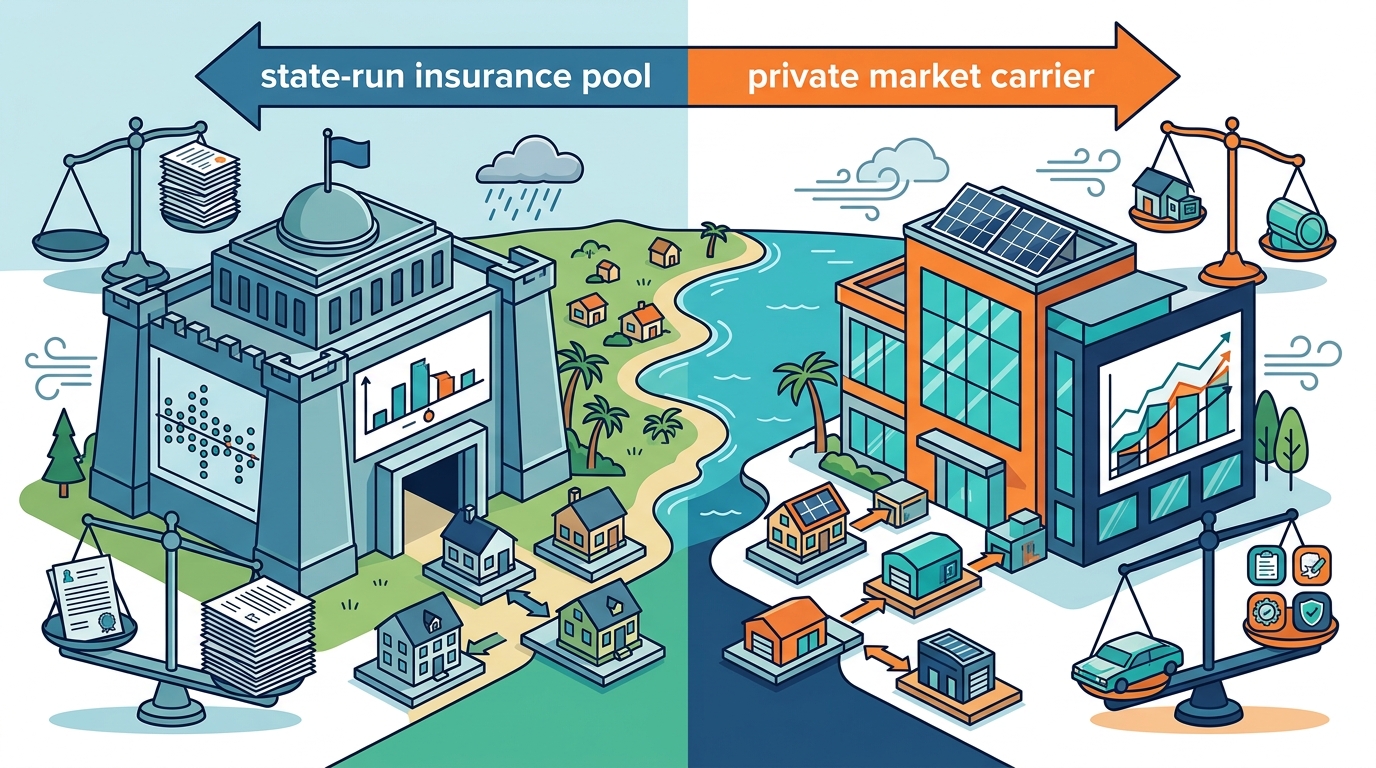
The table below summarizes the key differences between state-run insurance pools and private market windstorm coverage.
| Feature | State-Run Pools (e.g., TWIA) | Private Market Carriers |
|---|---|---|
| Coverage Limits | Statutory caps, may not cover full replacement cost | Higher or unlimited limits based on property value |
| Claims Speed | Often slower due to bureaucracy and volume | Faster, with dedicated adjusters and technology |
| Financial Backing | State government backing, potential for assessments | Regulated surplus requirements, market-driven |
| Policy Flexibility | Standardized, limited customization | Highly customizable with various endorsements |
| Eligibility | Restricted to specific coastal counties | Varies by carrier, may be broader or narrower |
Key Takeaways
- State-run pools like TWIA have statutory coverage limits that may not reflect current construction costs.
- Private carriers often offer faster claims processing and more flexible policy options.
- Financial stability in state-run pools can be impacted by large-scale disasters, leading to potential assessments.
- Eligibility for state-run pools is often geographically restricted to coastal counties.
- Private insurance premiums may be higher but can provide more comprehensive coverage.
- Brad Spurgeon Insurance Agency Inc. has served the Texas Gulf Coast since 1986.
- Regular policy reviews are essential to ensure adequate coverage as home values increase.
Frequently Asked Questions
What is the Texas Windstorm Insurance Association (TWIA)?
TWIA is a state-run insurance pool that provides windstorm and hail coverage for homeowners in designated coastal counties in Texas. It was established to ensure that windstorm insurance is available in high-risk areas.
Can I get windstorm coverage from a private insurer if I live in a coastal county?
Yes, many private insurers offer windstorm coverage in coastal counties. However, availability and premiums may vary based on the specific location and risk profile of the property.
How does claims processing differ between state-run pools and private carriers?
State-run pools may experience slower claims processing due to bureaucratic processes and high volumes of claims after major storms. Private carriers often have more resources dedicated to claims, leading to faster resolution.
What are the coverage limits for TWIA?
TWIA has statutory coverage limits that are subject to change. Homeowners should verify the current limits to ensure they have adequate coverage for their property's replacement cost.
How can I get a quote for private windstorm insurance?
You can get a quote by contacting a local insurance agency like Brad Spurgeon Insurance Agency Inc. We offer free consultations and can help you compare options from multiple carriers.
Is flood insurance included in windstorm policies?
No, flood insurance is typically a separate policy. Standard windstorm policies cover damage from wind and hail, but not from flooding. You may need a separate flood insurance policy for comprehensive protection.
What is a hurricane deductible?
A hurricane deductible is a specific deductible amount that applies to losses caused by hurricanes. It is often a percentage of the home's insured value rather than a fixed dollar amount.
Secure Your Protection Today
Don't leave your home's protection to chance. Whether you are currently with a state-run pool or considering private coverage, it is essential to review your policy regularly. At Brad Spurgeon Insurance Agency Inc., we are dedicated to helping Texas Gulf Coast homeowners find the best coverage for their needs. Contact us today to schedule a free consultation and ensure your home is fully protected against windstorm risks.