
Coastal property owners face escalating weather risks every single year. Recent industry reports indicate that Gulf Coast communities experience an average of four to six named storm events annually. This frequency directly impacts property values and insurance premiums across Texas City and surrounding counties. Understanding exactly how your policy responds to these events remains critical for financial stability. Private windstorm insurance is a specialized property coverage designed to protect structures against direct wind damage caused by severe weather systems. Homeowners must verify their specific policy language before storm season arrives. You can review detailed coverage options by visiting our windstorm coverage page. Many policyholders overlook critical exclusions that leave them financially exposed during peak hurricane months. Consulting our expert blog provides additional context on regional risk factors.
Understanding Private Windstorm Policies
Standard homeowners insurance policies rarely include comprehensive wind protection for coastal regions. Insurers frequently exclude wind damage to maintain profitability in high-risk zones. Private windstorm insurance fills this critical gap by offering standalone coverage specifically engineered for coastal properties. This policy type operates independently from your base homeowners policy. You must purchase it separately to ensure full structural protection. Flood insurance is a separate policy that covers rising water, ground saturation, and storm surge. These two coverages work together to create a complete risk management strategy. Your agent will help you align both policies to eliminate coverage gaps. You can request a free consultation to evaluate your current risk exposure. Proper alignment prevents claim denials during the most stressful moments of a disaster.
How Named Storms Trigger Coverage
Insurance carriers define named storms using official designations from the National Weather Service. A system must receive an official name to trigger specific windstorm policy provisions. Unnamed low-pressure systems or tropical depressions often fall outside standard windstorm definitions. Your policy language dictates whether partial storm systems qualify for payouts. Most modern policies cover damage from any system that reaches tropical storm strength or higher. You must document all structural damage immediately after the storm passes. Submitting your claim through our claims portal ensures faster processing times. Adjusters will verify wind speeds and storm classification before approving payouts. Delayed reporting frequently results in reduced settlement values. Maintaining detailed photo evidence strengthens your position during the assessment phase.
The Difference Between Wind and Water Damage
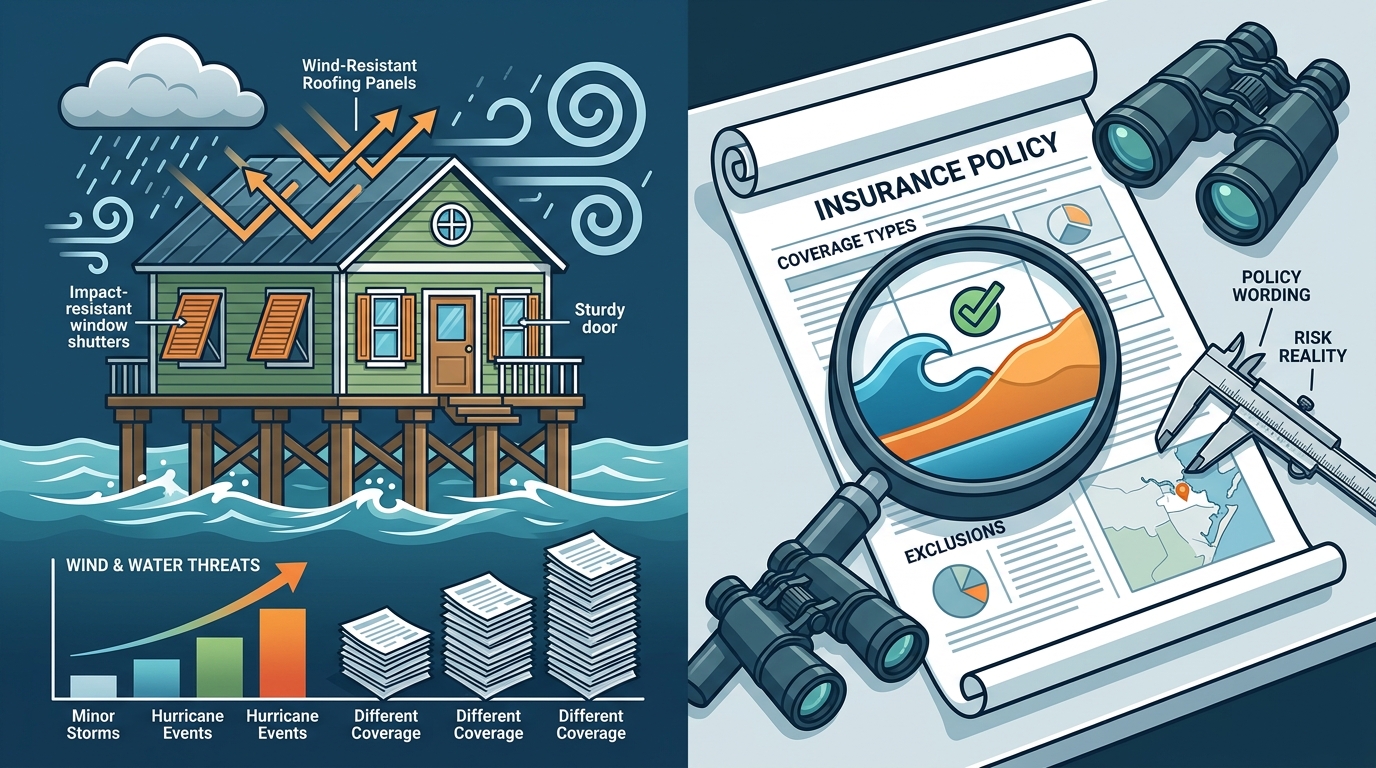
Policyholders frequently confuse wind damage with water intrusion during severe weather events. Wind damage covers direct structural impacts from flying debris, roof uplift, and broken windows. Water damage covers rising groundwater, storm surge, and flooding from overwhelmed drainage systems. Your private windstorm policy explicitly excludes water intrusion regardless of the storm origin. You must carry a separate flood policy to cover water-related structural damage. This distinction prevents coverage disputes during the claims adjustment process. Insurance carriers require clear documentation to separate wind impacts from flood impacts. You can explore flood protection options to bridge this coverage gap. Proper documentation prevents claim denials and accelerates your recovery timeline. Understanding this boundary protects your financial recovery after a major event.
Policy Exclusions and Deductible Structures
High-risk coastal regions utilize percentage-based deductibles rather than flat dollar amounts. These deductibles typically range from two percent to five percent of your dwelling coverage limit. You must pay this percentage out of pocket before your policy provides any financial assistance. Standard homeowners policies often use one percent deductibles or fixed dollar amounts. Windstorm deductibles scale with your coverage limits to match actual replacement costs. Some policies exclude specific components like roof decking or exterior siding. You must review your policy declarations page to identify these exclusions. Our team at Private Windstorm Insurance helps clients decode complex policy language. Understanding your deductible structure prevents unexpected financial burdens during recovery. You should calculate your maximum out-of-pocket exposure before storm season arrives. Proper financial planning ensures you can cover initial repair costs without delay.
Navigating the Texas Coastal Insurance Market
Texas City sits directly in the path of frequent Gulf of Mexico weather systems. Local insurers adjust pricing models based on historical storm data and rebuilding costs. The WPI-8 certificate guide outlines specific compliance requirements for coastal properties. Agents like Brad Spurgeon specialize in navigating these complex regulatory landscapes. You must verify your property elevation certificates before purchasing coverage. Insurance carriers require accurate elevation data to calculate your premium accurately. Our agency maintains partnerships with multiple top-tier carriers to secure competitive rates. You can compare insurance quotes to find the best market fit. Regional regulatory changes frequently impact policy availability and pricing structures. Staying informed about local insurance mandates ensures continuous coverage availability. Proactive policy reviews prevent unexpected non-renewals during peak storm seasons.
Steps to Secure Comprehensive Storm Protection
Homeowners should schedule an annual policy review before hurricane season begins. You must verify your dwelling coverage limits match current construction costs. Updating your policy ensures your coverage keeps pace with rising material prices. You should document all permanent improvements and structural upgrades immediately. Maintaining an updated home inventory accelerates your claim processing timeline. You must store digital copies of your policy declarations in a secure cloud location. Our agency provides comprehensive policy reviews to identify coverage gaps. You can schedule a free consultation to optimize your coverage structure. Regular policy updates prevent claim denials and ensure maximum financial protection. Proactive management reduces your overall risk exposure and stabilizes your premiums.
Key Takeaways
- Private windstorm insurance covers direct structural damage from named storms and tropical systems.
- Standard homeowners policies frequently exclude wind damage in high-risk coastal zones.
- Percentage-based deductibles typically range from two percent to five percent of dwelling coverage.
- Flood insurance remains completely separate and covers rising water and storm surge.
- Official National Weather Service designations trigger specific policy provisions and payouts.
- Annual policy reviews prevent coverage gaps and ensure accurate replacement cost limits.
- Texas City properties require precise elevation certificates to secure competitive market rates.
Frequently Asked Questions
Does private windstorm insurance cover damage from named hurricanes and tropical storms?
Yes. Private windstorm insurance explicitly covers structural damage caused by officially named hurricanes and tropical storms. Your policy must be active during the storm event to qualify for payouts. You must document all damage and submit your claim through our designated portal.
What is the difference between wind damage and flood damage?
Wind damage covers direct structural impacts from flying debris and roof uplift. Flood damage covers rising water, ground saturation, and storm surge. You must carry separate policies to cover both types of damage completely.
How are windstorm deductibles calculated?
Windstorm deductibles are calculated as a percentage of your dwelling coverage limit. These percentages typically range from two percent to five percent. You must pay this amount out of pocket before your policy provides financial assistance.
Do unnamed tropical depressions trigger windstorm coverage?
Most private windstorm policies require an official National Weather Service designation. Unnamed systems frequently fall outside standard policy definitions. You should verify your specific policy language to confirm coverage triggers.
How long does the claims process take?
Claims processing times vary based on storm severity and documentation quality. Submitting complete photo evidence and repair estimates accelerates your adjustment timeline. Our team prioritizes coastal claims to minimize your financial exposure.
Can I bundle windstorm insurance with my homeowners policy?
Most coastal insurers require windstorm coverage to be purchased separately. You can bundle multiple policies under a single account for administrative convenience. Our agency helps you structure your coverage to maximize savings and protection.
What documentation do I need after a storm hits?
You must photograph all structural damage, broken windows, and displaced debris. You should also document any water intrusion or foundation shifts. Submitting these records through our claims portal ensures faster processing.
Secure Your Policy Today
Coastal property owners cannot afford coverage gaps during peak storm season. You must verify your policy language, update your coverage limits, and document your property before hurricane season arrives. Our agency specializes in Texas City windstorm and flood protection. You can schedule a free consultation to optimize your coverage structure. Visit our home insurance page to explore additional protection options. Protect your property and secure your financial future today.