

Does Private Windstorm Insurance Cover Damage from Named Hurricanes and Tropical Storms?
Homeowners in the Texas Gulf Coast region face unique risks that standard policies often fail to address. Windstorm insurance is a specialized coverage type designed to protect your property against high-velocity winds, which are the primary cause of structural damage during severe weather events. According to industry data, standard homeowners policies in coastal zones frequently exclude wind damage, leaving homeowners financially vulnerable when storms strike. This guide explains exactly how private windstorm coverage works, what it includes, and how Brad Spurgeon Insurance Agency helps you navigate these complex requirements.
What Is Windstorm Coverage?
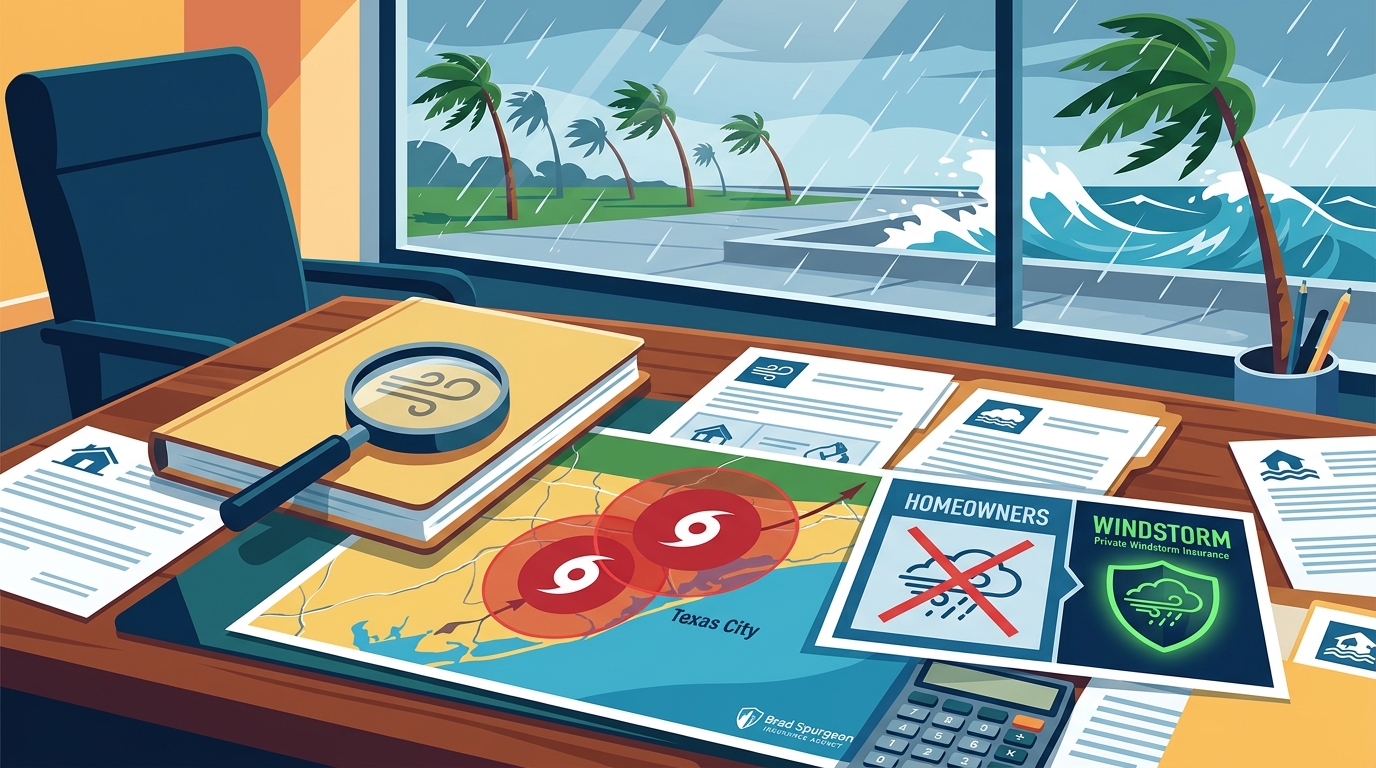
Windstorm insurance provides protection for your home against damage caused by high winds. This is distinct from standard homeowners insurance, which often contains exclusions for wind-related perils in high-risk coastal areas. Windstorm insurance is essential for any property located in a zone prone to severe weather, including the Texas Gulf Coast.
When you purchase a private windstorm policy, you are securing a layer of defense that activates when wind speeds exceed specific thresholds. This coverage is not automatic. You must explicitly request it, and it often requires separate documentation and underwriting. The Texas Gulf Coast, including Texas City and surrounding communities, has a long history of severe weather events that make this coverage non-negotiable for many homeowners.
For a deeper understanding of your specific policy needs, you can review our Windstorm Insurance resources. We help clients understand the nuances of wind coverage in high-risk zones.
Named vs. Non-Named Storms
A common question among homeowners is whether their policy covers damage from both named hurricanes and tropical storms. The answer is generally yes, but the mechanics differ slightly.
Named Hurricanes
A named hurricane is a tropical cyclone that has been assigned a name by the National Hurricane Center. When a hurricane strikes, the resulting wind damage is typically covered under a standard windstorm policy. However, the definition of "wind" can be specific. Some policies may have deductibles that are a percentage of the home's insured value rather than a flat dollar amount. This is known as a percentage deductible. (Hurricane Insurance Protection)
Tropical Storms
Tropical storms are also covered under most private windstorm policies. Even if a system does not reach hurricane strength, the sustained winds and gusts can cause significant damage to roofs, siding, and windows. Tropical storm coverage ensures that you are protected regardless of the storm's final classification. This is crucial because tropical storms can cause extensive damage without the fanfare of a named hurricane.
Understanding the difference between these weather events is vital for accurate risk assessment. You can learn more about our Home Insurance options to see how we tailor coverage to your specific location.
What Does the Policy Cover?
Private windstorm insurance is comprehensive. It covers the physical structure of your home and often your personal belongings. Here is a breakdown of typical coverage areas:
- Roof Damage: Shingles, tiles, and structural components damaged by wind uplift.
- Exterior Walls: Siding, brick, and stucco that may be torn away or damaged.
- Windows and Doors: Breakage due to wind pressure or flying debris.
- Attached Structures: Garages, carports, and decks that are part of the main property.
- Personal Property: Furniture, electronics, and other items inside the home.
It is important to note that windstorm insurance does not cover damage caused by flooding. This is a critical distinction that many homeowners overlook. For detailed information on our services, visit our Services page.
The Critical Flood Distinction
One of the most common misconceptions about insurance is that windstorm coverage includes flood protection. It does not. Flood insurance is a separate policy that covers damage from rising water, including storm surges, heavy rain, and overflowing bodies of water.
During a hurricane, the combination of wind and water is devastating. While your windstorm policy covers the wind damage, you need a separate flood policy to cover the water damage. This is why we strongly recommend bundling both types of coverage for comprehensive protection.
If you are unsure about your flood risk, you can get a Flood Insurance Quote to understand your specific exposure. Our agency specializes in helping Gulf Coast homeowners secure both wind and flood coverage.
Policy Options for Gulf Coast Homes
Brad Spurgeon Insurance Agency offers tailored solutions for Texas Gulf Coast homeowners. We understand the unique challenges of the region and work with top carriers to provide reliable coverage.
| Policy Type | Coverage Focus | Best For |
|---|---|---|
| Windstorm Included Home Policy | Combines wind and home coverage | Homeowners seeking simplified billing |
| Standalone Flood Insurance | Water damage protection | High-risk flood zones |
| Comprehensive Home Policy | Standard perils (fire, theft) | Non-coastal or low-risk areas |
We also offer a Windstorm Included Home Policy specifically designed for Texas Gulf Coast homeowners. This option simplifies the insurance process by bundling wind coverage with your home policy.
Key Takeaways
- Private windstorm insurance covers damage from both named hurricanes and tropical storms.
- Wind damage is often excluded from standard homeowners policies in coastal zones.
- Flood damage is not covered by windstorm insurance and requires a separate policy.
- Brad Spurgeon Insurance Agency has served the Texas Gulf Coast since 1986. (Hurricane Insurance Protection)
- Percentage deductibles are common in windstorm policies for high-risk areas.
- Bundling wind and flood insurance provides the most comprehensive protection.
- Our agency offers a specialized Windstorm Included Home Policy for local homeowners.
Frequently Asked Questions
Does windstorm insurance cover damage from tropical storms?
Yes, private windstorm insurance typically covers damage caused by tropical storms, not just named hurricanes. The key factor is the wind speed and the resulting damage, regardless of the storm's name.
What is the difference between windstorm and flood insurance?
Windstorm insurance covers damage from high winds, such as roof tears and broken windows. Flood insurance covers damage from rising water, including storm surges and heavy rainfall. They are separate policies.
Do I need windstorm insurance if I live in Texas City?
Yes, Texas City is in a high-risk zone for windstorms. Standard homeowners policies often exclude wind damage, making separate windstorm coverage essential for financial protection.
How does Brad Spurgeon Insurance Agency help with claims?
We assist clients with the entire claims process, from reporting the claim to working with adjusters. Our goal is to ensure you receive the full coverage you are entitled to.
What is a percentage deductible?
A percentage deductible is a deductible amount calculated as a percentage of your home's insured value, rather than a flat dollar amount. This is common in windstorm policies for high-risk areas.
Can I bundle wind and flood insurance?
Yes, we strongly recommend bundling wind and flood insurance for comprehensive protection. This ensures you are covered for both wind and water damage.
How do I get a quote for windstorm insurance?
You can get a quote by visiting our Windstorm Insurance Quote page or contacting our agency directly. We offer free consultations to help you understand your options.
Secure Your Coverage Today
Do not wait until the storm hits to secure your coverage. Brad Spurgeon Insurance Agency is here to help you navigate the complexities of windstorm and flood insurance. Our team of experts is ready to provide you with a personalized quote and answer any questions you may have.
Contact us today to schedule a free consultation. We serve Texas City and all Texas Gulf Coast communities with dedication and expertise. Visit our Contact Us page to get started.