

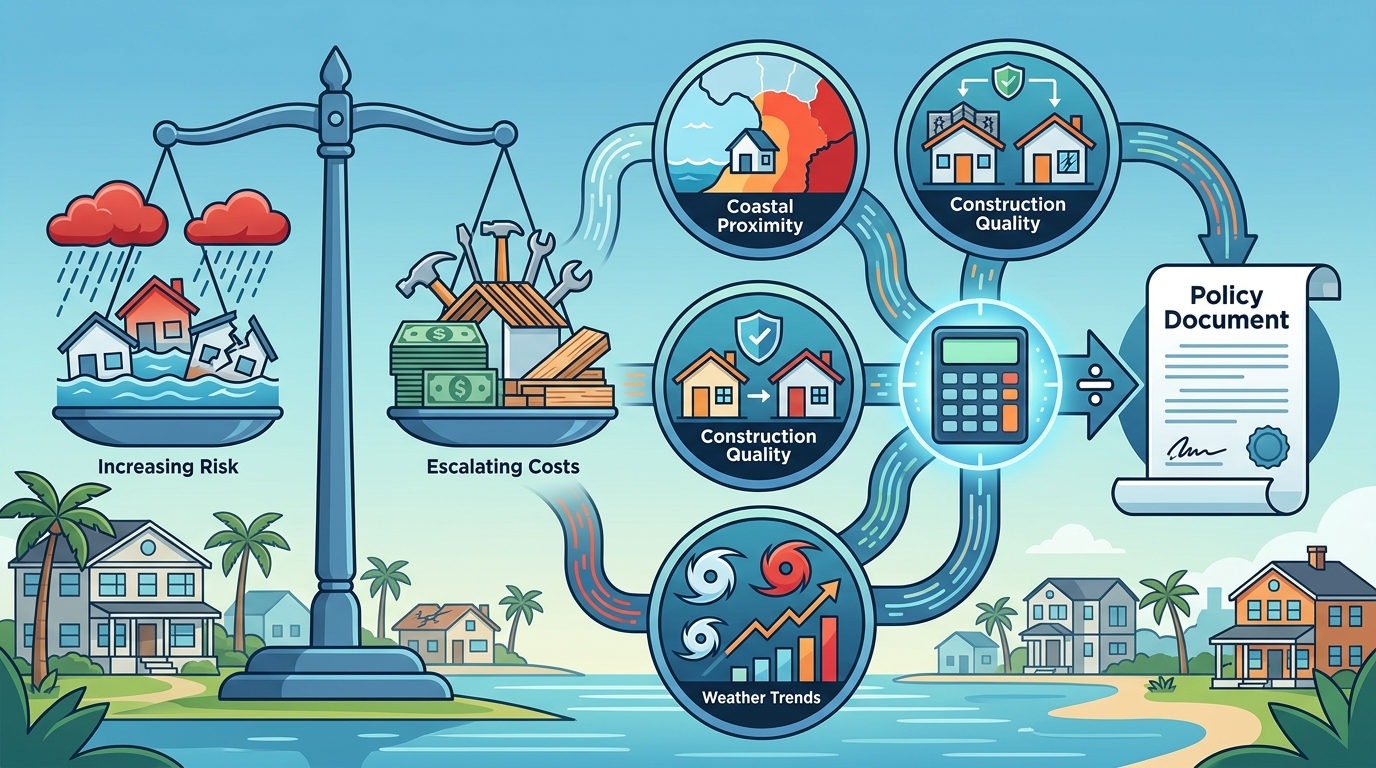
Property owners in high-risk coastal regions face escalating insurance expenses due to shifting climate patterns and increased construction costs. According to recent catastrophe data, annual wind-related property losses now exceed forty billion dollars across the United States. This financial reality forces carriers to adjust pricing models continuously. Homeowners must understand the exact variables that drive these premium increases. Understanding these mechanics allows you to make informed coverage decisions and secure affordable protection. Your local agency can provide a detailed evaluation of your specific risk profile and help you navigate complex policy requirements.
Property Location and Elevation Data
Geographic positioning remains the primary driver of windstorm pricing. Carriers analyze distance to the coastline and elevation above sea level to calculate baseline risk. Properties located within three miles of the water typically face the highest premium brackets. This proximity increases exposure to storm surge and flying debris. According to federal guidelines, coastal zones require specialized coverage limits that standard policies simply cannot provide. Your insurance carrier will pull precise latitude and longitude coordinates to run actuarial models. These coordinates determine your base rate before any structural factors are applied. You can request a customized windstorm insurance quote to see how your exact address impacts your monthly costs.
Construction Materials and Roof Design
Windstorm insurance is a specialized property coverage policy designed to protect structures against direct wind damage. The physical composition of your home directly dictates your premium tier. Modern building codes require impact-resistant windows and reinforced garage doors. These upgrades significantly reduce the likelihood of structural failure during extreme weather events. Carriers reward homes with hip roofs and sealed shingle attachments with substantial premium discounts. Flat roofs or older asphalt shingle systems often trigger higher risk multipliers. A licensed adjuster will verify your roof age and attachment method during the underwriting process. Contact our team to schedule a free consultation and review your current coverage options.
Coverage Limits and Deductible Structures
Policyholders must carefully select their dwelling coverage limits to avoid severe financial gaps. A windstorm deductible is a fixed dollar amount or percentage of the dwelling value that replaces the standard percentage-based deductible. Many coastal carriers now mandate a five percent or ten percent wind deductible. This structure shifts more initial repair costs to the homeowner. Higher coverage limits naturally increase your base premium, but they protect your equity during a total loss event. You should compare standard replacement cost values against actual market prices. Our agency offers comprehensive windstorm insurance quote services to help you balance affordability with adequate protection.
Historical Loss Frequency and Regional Exposure
Insurance carriers continuously monitor historical claims data to adjust regional pricing. Neighborhoods that have experienced multiple named storm events face immediate premium surcharges. These surcharges reflect the increased probability of future claims. According to coastal surge research, repeated storm impacts degrade building foundations and compromise long-term structural integrity. Carriers use this historical frequency to calculate loss ratios for specific zip codes. High-frequency zones often face restricted capacity or mandatory policy renewals at higher rates. You can report a claim or request a policy review to ensure your coverage remains active and competitive. Regular policy updates prevent unexpected coverage lapses during renewal season.
Mitigation Upgrades and Wind Mitigation Inspections
Proactive home improvements directly reduce your insurance premiums. A wind mitigation inspection is a formal structural assessment that evaluates roof attachments, opening protections, and building code compliance. Certified inspectors document the installation of hurricane clips, reinforced roof coverings, and impact-rated glazing. Carriers apply specific discount matrices based on these verified upgrades. Homes that pass a full mitigation inspection often see premium reductions ranging from fifteen to thirty percent. These upgrades also improve your home’s resilience against extreme weather. Our staff can guide you through the documentation process to maximize your available discounts.
Carrier Underwriting Models and Market Cycles
Insurance market cycles heavily influence the availability and cost of standalone windstorm protection. During hard market conditions, carriers restrict capacity and raise baseline rates across all risk tiers. According to peer-reviewed studies, global reinsurance costs have risen sharply due to increased climate volatility. Primary carriers pass these reinsurance expenses directly to policyholders. Multiple carrier options allow you to compare underwriting guidelines and find the most favorable pricing. Our agency maintains relationships with numerous top-rated insurance carriers to secure competitive rates. You can contact my carrier directly through our secure portal to request updated binding authority.
Windstorm Deductible Comparison Matrix
| Deductible Type | Calculation Method | Typical Premium Impact | Best Use Case |
|---|---|---|---|
| Flat Dollar Deductible | Fixed amount per claim | Lower premium increase | Standard suburban properties |
| Percentage Deductible | Percent of dwelling coverage | Higher premium increase | High-risk coastal zones |
| Wind Mitigation Discount | Applied after inspection | Significant premium reduction | Code-compliant modern homes |
| Named Storm Deductible | Variable based on storm class | Variable premium adjustment | Advanced coastal structures |
Key Takeaways
- Distance to the coastline directly determines baseline risk multipliers and base rate calculations.
- Hip roofs with sealed shingle attachments consistently qualify for the highest carrier discounts.
- Five percent wind deductibles are now standard in high-exposure zip codes across the Gulf Coast.
- Verified mitigation upgrades typically reduce annual premiums by fifteen to thirty percent.
- Historical claims frequency in your specific neighborhood triggers immediate regional surcharges.
- Hard market cycles force carriers to restrict capacity and raise reinsurance pass-through costs.
- Regular policy reviews prevent coverage gaps and ensure you maintain competitive binding authority.
Frequently Asked Questions
How does distance to the water affect my windstorm premium?
Carriers use precise geographic coordinates to calculate baseline risk. Properties located closer to the shoreline face higher premium brackets due to increased exposure to storm surge and flying debris. This proximity directly impacts your base rate before structural factors are applied.
What exactly is a wind mitigation inspection?
A wind mitigation inspection is a formal structural assessment that evaluates roof attachments, opening protections, and building code compliance. Certified inspectors document specific upgrades that reduce wind damage probability. Carriers apply discount matrices based on these verified improvements.
Why do coastal carriers use percentage-based deductibles?
A windstorm deductible is a fixed dollar amount or percentage of the dwelling value that replaces the standard percentage-based deductible. Percentage deductibles align the homeowner’s financial responsibility with the severity of named storm events. This structure helps carriers manage catastrophic loss exposure across high-risk regions.
Can I lower my premium by upgrading my roof?
Yes. Modern building codes require impact-resistant windows and reinforced garage doors. Carriers reward homes with hip roofs and sealed shingle attachments with substantial premium discounts. These upgrades significantly reduce the likelihood of structural failure during extreme weather events.
How often do insurance carriers adjust coastal pricing?
Carriers continuously monitor historical claims data to adjust regional pricing. Neighborhoods that have experienced multiple named storm events face immediate premium surcharges. These adjustments typically occur during annual renewal cycles or when new catastrophe models are released.
What happens during a hard insurance market cycle?
During hard market conditions, carriers restrict capacity and raise baseline rates across all risk tiers. Global reinsurance costs have risen sharply due to increased climate volatility. Primary carriers pass these reinsurance expenses directly to policyholders through higher premiums.
How do I request a policy review or update my coverage?
You can report a claim or request a policy review to ensure your coverage remains active and competitive. Our agency offers comprehensive windstorm insurance quote services to help you balance affordability with adequate protection. Contact our team to schedule a free consultation and review your current coverage options.
Secure Your Coastal Protection Today
Navigating windstorm pricing requires expert guidance and precise risk assessment. Brad Spurgeon leads our agency with decades of regional expertise serving Texas City homeowners and business owners. We analyze your property’s exact location, construction details, and mitigation upgrades to find the most competitive rates. Visit our website to explore our full range of insurance products and service options. Schedule your free consultation today and take control of your property’s financial future. Book your personalized policy review now.