

Does Private Windstorm Insurance Cover Damage from Named Hurricanes and Tropical Storms?
Insurance adjusters have a term for the question that decides most coastal storm claims: proximate cause. It's a simple idea with real financial consequences — what actually caused the damage, wind or water, determines which policy pays. A lot of confusion about windstorm coverage traces back to skipping this question, whether that's assuming a policy only responds to storms with official names, or assuming wind coverage extends to water that rose up from the ground. Understanding how proximate cause works is the fastest way to know what your policy actually protects, especially for residents in high-risk zones like Texas City, Texas, where tropical systems are a recurring seasonal reality.
Defining Private Windstorm Coverage
Private windstorm insurance is a specialized policy or endorsement covering damage to your home and property caused by high winds — repairs for a torn-off roof, cracked siding, or a window broken by flying debris, the kind of damage a standard homeowners policy in a coastal county typically won't touch.
In areas like Texas City, standard carriers often decline to write wind coverage at all given the risk profile, which is exactly why specialized agencies exist — working with multiple carriers to keep coverage available and responsive through hurricane season, rather than leaving homeowners to find it themselves. Without this coverage, a single bad storm can mean tens of thousands of dollars in unreimbursed repairs.
For more on how these policies work, see our Windstorm Insurance page, which breaks down underwriting mechanics and what perils a typical contract includes.
Named Hurricanes vs. Tropical Storms
A common misconception is that windstorm coverage only responds to named hurricanes. It doesn't work that way — coverage extends to tropical storms and unnamed wind events too. Tropical storms carry sustained winds between 39 and 73 mph and can cause real structural damage well below hurricane intensity.
When a system gets a name — Hurricane Beryl, Tropical Storm Allison — it triggers specific public reporting and sometimes a higher "named storm" deductible depending on the policy and state. But the underlying damage mechanism doesn't change. Whether the wind comes from a named hurricane or an unnamed tropical depression, a private windstorm policy responds to the wind speed and resulting damage, not to whatever label the weather service assigned it.
Tropical storms are a genuine, recurring source of property damage along the Gulf Coast even without hurricane status — treating a system as low-risk simply because it hasn't been upgraded to "hurricane" is a real blind spot for homeowners.
Understanding the distinction matters for your full risk picture. See our Flood Insurance options as well, since wind and water often arrive together in these events.
Understanding Windstorm Deductibles
One of the more important structural features of private windstorm insurance is the deductible. Unlike a standard homeowners policy, which typically uses a flat dollar deductible, windstorm deductibles are frequently percentage-based — calculated as a share of your home's insured value rather than a fixed number.
For example, a home insured for $500,000 with a 2% windstorm deductible means you're responsible for the first $10,000 of any wind claim. This structure keeps smaller repairs on the homeowner's side of the ledger while ensuring the policy is there for genuinely catastrophic losses.
It's worth understanding how this applies across a hurricane season with multiple storms — depending on policy terms, the deductible may apply separately to each distinct wind event rather than once per season. Clear documentation and a responsive claims process matter here; our Report a Claim resource walks through what to expect.
Wind Damage vs. Flood Damage
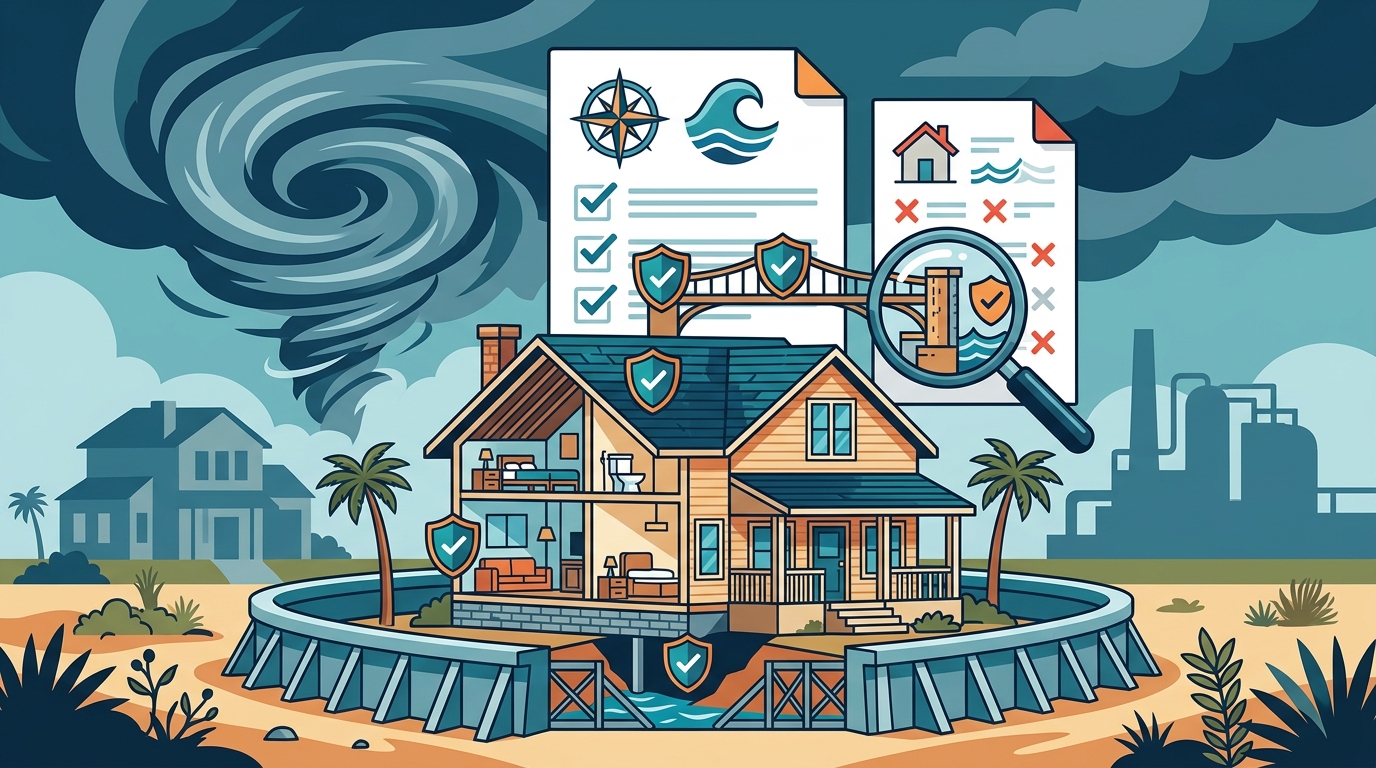
This is where proximate cause becomes the whole ballgame. Flood insurance is a separate policy covering damage from rising water, including storm surge and heavy rainfall accumulation — and private windstorm insurance does not cover it. That split isn't a quirk of any one insurer; it's a structural feature of how property insurance is regulated in the U.S.
During a hurricane, the most catastrophic damage often comes from storm surge — a flood event, not a wind event. But wind plays a role too, breaking windows or tearing off roofing that then lets rain in. The distinction adjusters draw is proximate cause: if wind broke the window and rain came through the opening, that's typically a windstorm claim. If water rose from ground level, that's a flood claim, full stop, regardless of what caused the storm in the first place.
It's a common and costly misunderstanding for homeowners to assume their windstorm policy covers storm surge — it doesn't. You need a separate flood policy, whether through the National Flood Insurance Program (NFIP) or a private flood carrier. See our Flood Insurance quotes to make sure both sides of that risk are actually covered.
Choosing the Right Policy
Choosing the right windstorm coverage means taking a real look at your property's specific risk factors — age, construction type, and distance from the coast all shape both your premium and what coverage is even available to you.
A home with impact-resistant windows and a reinforced roof will generally qualify for a meaningfully lower premium than one with standard vinyl siding and asphalt shingles, since carriers price directly off these risk factors. Working with an experienced agency means someone is comparing rates across multiple carriers on your behalf rather than you evaluating one quote in isolation.
Here's a summary of the coverage types Texas City homeowners typically need to consider together:
| Coverage Type | Primary Peril Covered | Deductible Structure | Typical Carrier |
|---|---|---|---|
| Private Windstorm | High winds, hail, debris | Percentage-based | Specialized Carriers |
| Flood Insurance | Storm surge, rising water | Flat dollar amount | NFIP or Private |
| HO-3 Standard | Fire, theft, liability | Flat dollar amount | Major Insurers |
| Umbrella Policy | Liability excess | Flat dollar amount | Various Carriers |
For more detail on wind coverage specifically, visit our Windstorm Insurance page, which includes guidance on evaluating your current policy for gaps.
Key Takeaways
- Private windstorm insurance covers damage from high winds, including named hurricanes and tropical storms alike.
- Wind damage and flood damage are legally and structurally distinct perils; flood requires a separate policy.
- Windstorm deductibles are often percentage-based, calculated on the home's insured value rather than a flat dollar figure.
- Tropical storms cause real damage well below hurricane intensity and are covered the same way hurricanes are.
- Home construction type and coastal proximity significantly affect both premium cost and coverage availability.
- Proximate cause — what actually caused the damage — determines whether a wind or flood policy responds to a claim.
- Working with a specialized agency gives you access to multiple carriers rather than a single quote in isolation.
Frequently Asked Questions
Does private windstorm insurance cover damage from tropical storms?
Yes. Private windstorm insurance covers damage caused by high winds from tropical storms, not just named hurricanes — coverage is triggered by wind speed and resulting damage, not the storm's name.
What is the difference between wind damage and flood damage?
Wind damage comes from the force of moving air — a torn roof or a broken window. Flood damage comes from rising water, like storm surge or accumulated rainfall. They're covered under separate policies, and the distinction matters at claim time.
How is a windstorm deductible calculated?
Windstorm deductibles are typically percentage-based, calculated against your home's insured value rather than as a flat number. A 2% deductible on a $500,000 home works out to $10,000.
Do I need both windstorm and flood insurance?
In a coastal area like Texas City, generally yes. Windstorm insurance covers wind damage; flood insurance covers water damage from storm surge and rising water. Neither substitutes for the other.
Can standard homeowners insurance cover wind damage?
Often not in high-risk coastal areas, where standard policies frequently exclude wind damage outright. Private windstorm insurance exists specifically to fill that gap.
How do I report a claim for wind damage?
You can report a claim through our online portal or by contacting our agency directly, and we'll guide you through documentation and inspection.
What factors affect my windstorm insurance premium?
Your home's age, construction type, distance from the coast, and chosen deductible all factor in — reinforced construction typically qualifies for a lower premium.
Get Your Custom Quote
Don't wait for the next storm to find out what your policy actually covers. Secure comprehensive private windstorm and flood insurance today. Contact our team for a free consultation and a personalized quote. Visit our Home Insurance Quote page to get started.