Common Mistakes When Securing Windstorm Coverage for Commercial Properties After Non-Renewal
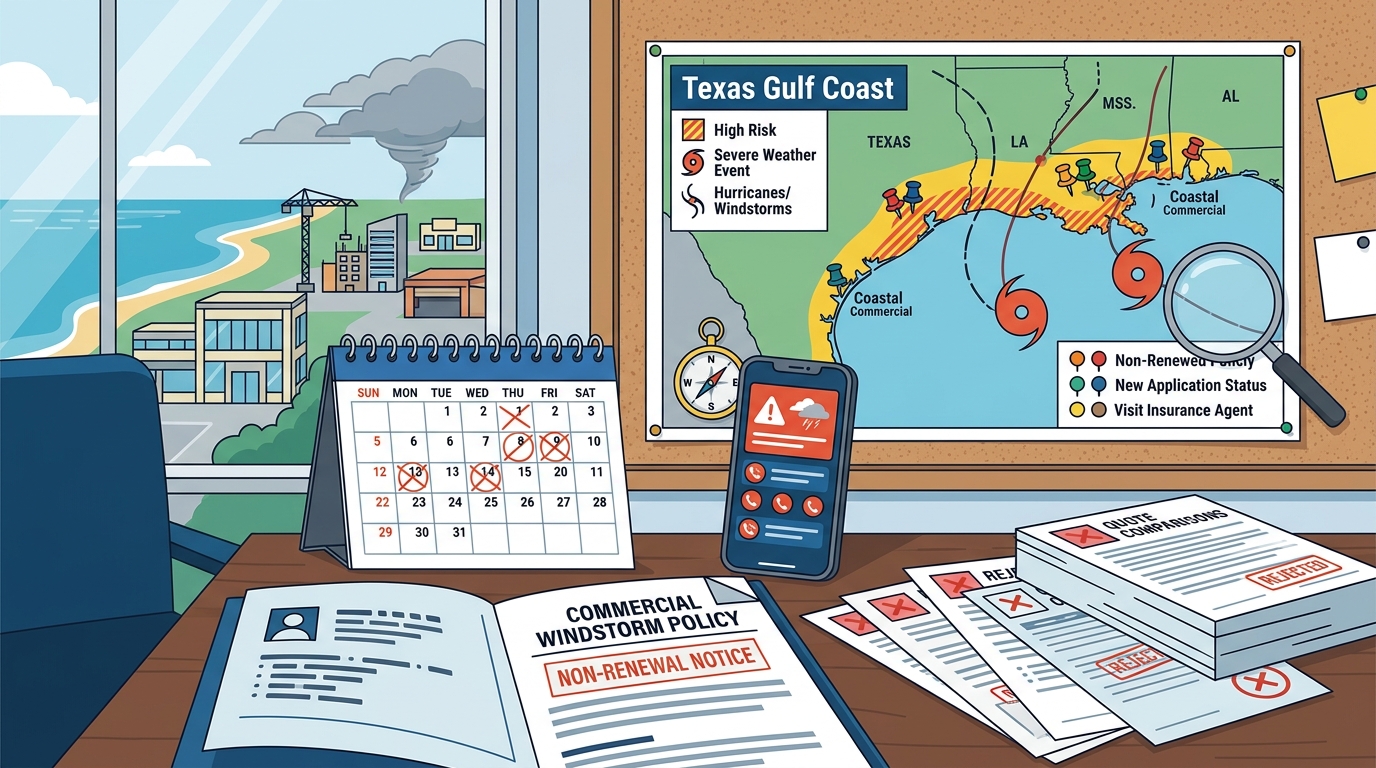
Commercial property owners in the Texas Gulf Coast face a unique set of challenges when their windstorm insurance is not renewed. The frequency of severe weather events has led many carriers to tighten their underwriting guidelines, leaving business owners scrambling to find replacement coverage. According to recent industry data, over 30% of commercial policies in high-risk coastal zones face non-renewal or significant premium hikes annually. This statistic highlights the urgency of understanding the pitfalls that can delay or prevent securing new protection. Without a strategic approach, businesses risk operating without adequate coverage, exposing themselves to catastrophic financial loss.
The Timing Trap: Waiting Too Long to Act
One of the most critical errors commercial property owners make is waiting until the last minute to seek new coverage. Non-renewal notices are typically sent 30 to 60 days before the policy expiration date. Many business owners assume they have more time than they actually do, leading to a dangerous gap in coverage.
Windstorm insurance is highly specialized, and carriers often have limited capacity in high-risk zones. If you wait until the final week, you may find that the available carriers are fully booked or have raised their rates significantly. Securing a quote early allows you to navigate the market with confidence and avoid the panic of a coverage lapse.
At Brad Spurgeon Insurance Agency Inc., we emphasize the importance of proactive planning. Our team specializes in helping commercial clients transition smoothly from non-renewed policies to robust new coverage. By starting the process early, you ensure that your business remains protected against the unpredictable nature of coastal weather.
Documentation Errors and Incomplete Filings
Another common mistake is submitting incomplete or inaccurate documentation when applying for new windstorm coverage. Carriers require detailed information about the property, including its construction type, age, and previous claim history. Errors in this data can lead to delays in underwriting or even denial of coverage.
For example, if your property has undergone recent renovations, you must provide updated engineering reports or certificates of occupancy. Failure to do so can result in the carrier assuming the property is in its original, potentially less resilient state. This can lead to higher premiums or stricter policy terms.
To avoid these pitfalls, ensure that all documentation is accurate and up-to-date before submitting your application. Our online services provide resources to help you prepare your filings correctly, ensuring a smoother underwriting process.
Choosing the Wrong Carrier for Your Risk Profile
Not all insurance carriers are created equal, especially when it comes to windstorm coverage. Some carriers specialize in high-risk coastal properties, while others have limited capacity or exclude certain types of commercial buildings. Choosing a carrier that does not align with your risk profile can lead to inadequate coverage or unexpected exclusions.
It is essential to work with an agency that has access to a wide network of carriers. This allows us to match your specific property characteristics with the most suitable insurance products. For instance, a warehouse with a large footprint may require different coverage terms than a multi-story office building.
Our agency partners with leading insurance carriers who understand the unique challenges of the Texas Gulf Coast. By leveraging these relationships, we can secure competitive rates and comprehensive coverage for your commercial property. Learn more about our agency services to see how we can assist you.
Overlooking Critical Coverage Gaps
When securing new windstorm coverage, it is easy to focus solely on the premium cost and overlook critical coverage gaps. Standard commercial property policies often exclude windstorm damage, requiring a separate windstorm policy. However, even within windstorm policies, there can be significant variations in coverage limits, deductibles, and exclusions.
For example, some policies may exclude damage from storm surge, while others may have high deductibles for wind damage. It is crucial to review the policy details carefully to ensure that your business is protected against the specific risks it faces. A thorough policy review can help you identify these gaps and make informed decisions.
We offer policy review services to help you understand the nuances of your coverage. This ensures that you are not caught off guard by unexpected exclusions when a claim arises.
Failing to Implement Mitigation Measures
Insurance carriers often offer premium discounts for properties that implement mitigation measures to reduce wind damage risk. These measures can include installing impact-resistant windows, reinforcing roofs, or securing outdoor equipment. Failing to implement these measures can result in higher premiums or even denial of coverage.
By taking proactive steps to mitigate risk, you not only reduce your insurance costs but also enhance the safety of your property. This is particularly important for commercial properties that house valuable assets or serve as critical infrastructure for your business operations.
Our team can provide guidance on effective mitigation strategies tailored to your property. We also help you document these improvements to present to carriers, potentially unlocking significant savings. Explore our knowledge hub for more tips on risk mitigation.
The Importance of a Structured Comparison Process
Finally, a common mistake is failing to conduct a structured comparison of quotes from multiple carriers. Relying on a single quote can lead to overpaying for coverage or missing out on better terms. A structured comparison allows you to evaluate not just the price, but also the coverage limits, deductibles, and carrier reputation.
Here is a summary of key factors to consider when comparing windstorm coverage options:
| Factor | Why It Matters | What to Look For |
|---|---|---|
| Premium Cost | Direct impact on your budget | Competitive rates within your risk profile |
| Coverage Limits | Ensures adequate protection for assets | Limits that match the replacement cost of your property |
| Deductible Structure | Affects out-of-pocket costs during a claim | Clear and manageable deductible terms |
| Carrier Financial Strength | Indicates ability to pay claims | High ratings from agencies like A.M. Best |
By systematically evaluating these factors, you can make a more informed decision that balances cost and coverage. Our windstorm insurance quote process is designed to simplify this comparison, providing you with clear, actionable insights.
Key Takeaways
- Act early to avoid coverage gaps and secure the best rates.
- Ensure all documentation is accurate and up-to-date before filing.
- Choose a carrier that specializes in your specific risk profile.
- Review policy details carefully to identify and address coverage gaps.
- Implement mitigation measures to reduce risk and potentially lower premiums.
- Conduct a structured comparison of quotes to ensure you get the best value.
- Work with a specialized agency like Brad Spurgeon Insurance Agency Inc. for expert guidance.
Frequently Asked Questions
How long does it take to secure new windstorm coverage after non-renewal?
The timeline can vary depending on the complexity of your property and the availability of carriers. However, starting the process early can significantly reduce the time needed to secure coverage.
What documentation is required for commercial windstorm insurance?
Typically, you will need a property survey, construction details, previous claim history, and any relevant engineering reports. Our agency can provide a detailed checklist to ensure you have everything ready.
Can I get windstorm coverage if my previous carrier non-renewed my policy?
Yes, it is possible to secure new coverage, but it may require working with specialized carriers. Our agency has access to a wide network of carriers willing to underwrite high-risk properties.
What are the most common exclusions in commercial windstorm policies?
Common exclusions include flood damage, which requires separate coverage, and damage from certain types of wind-driven debris. It is crucial to review the policy exclusions carefully.
How can I lower my commercial windstorm insurance premium?
Implementing mitigation measures, such as reinforcing your roof or installing impact-resistant windows, can help lower your premium. Additionally, working with a knowledgeable agent can help you find the most competitive rates.
What is the difference between windstorm and flood insurance?
Windstorm insurance covers damage caused by high winds, while flood insurance covers damage from rising water. Both are often necessary for properties in coastal areas, but they are separate policies.
Why should I use a specialized insurance agency for commercial windstorm coverage?
Specialized agencies have access to a wider range of carriers and expertise in navigating complex underwriting guidelines. This can lead to better coverage options and more competitive rates.
Secure Your Commercial Property Today
Do not let a non-renewal leave your business vulnerable. Contact Brad Spurgeon Insurance Agency Inc. today to schedule a free consultation and secure the windstorm coverage your commercial property needs. Our team is dedicated to providing expert guidance and comprehensive protection for your business.