
Commercial property owners in high-risk coastal zones often face non-renewal notices from standard carriers. Surplus lines insurance is coverage that is unavailable through admitted carriers but can legally be placed with eligible non-admitted companies. This specialized market provides a critical safety net for businesses that cannot find windstorm protection in the standard market. Understanding this option is essential for protecting your commercial investment.
The Role of Surplus Lines in Commercial Windstorm
Standard admitted carriers often withdraw from high-risk coastal areas due to catastrophic loss exposure. When a business receives a notice of non-renewal, the surplus lines market becomes the primary alternative. These carriers are not regulated by state insurance departments in the same way as admitted companies, allowing them to offer unique coverage terms. This flexibility is vital for commercial properties that present unusual risks or are located in designated catastrophe areas.
The Texas Department of Insurance tracks companies that write commercial wind coverage in the TWIA catastrophe area. This data helps identify which non-admitted carriers are active in the region. For property owners, knowing that a specific carrier is licensed to operate in this space provides confidence in the policy's validity. It ensures that the coverage is legally recognized and enforceable within the state.
Eligibility and the E&O Requirement
Placing a policy with a surplus lines carrier requires a specific legal process. The broker must obtain an Errors and Omissions (E&O) insurance policy to protect the client. This requirement ensures that the broker is financially responsible for any mistakes made during the placement process. It is a standard safeguard that protects the commercial property owner from professional negligence.
Before a policy can be bound, the broker must demonstrate that the coverage is unavailable in the standard market. This is typically done through a diligent search of at least ten admitted carriers. The search results must be documented and provided to the client. This process proves that the surplus lines option is the only viable path for the business. It protects the client from being forced into a non-standard market when standard options exist.
Understanding Coverage Terms and Limits
Surplus lines policies often differ significantly from standard commercial property forms. Basic form policies usually cover damage caused by fire, windstorms, hail, and lightning. However, surplus lines carriers may offer broader or more restrictive terms depending on the specific risk. Property owners must review the policy declarations carefully to understand what is covered. It is crucial to verify that windstorm and hail are explicitly included in the coverage grant.
Working with a Local Insurance Agency
Navigating the surplus lines market requires expertise and local knowledge. A local agency can help identify carriers that are willing to write coverage for specific commercial properties. They can also assist with the diligent search process and E&O requirements. Working with a trusted agency ensures that the policy is placed correctly and that the client understands all terms. It provides a single point of contact for all insurance needs. according to Surplus Lines for
Brad Spurgeon Insurance Agency has extensive experience helping commercial property owners in the Gulf Coast region. We understand the unique challenges of securing windstorm coverage in high-risk areas. Our team can guide you through the surplus lines process and help you find the right coverage. We are committed to protecting your business and providing peace of mind. To discuss your commercial windstorm needs, .
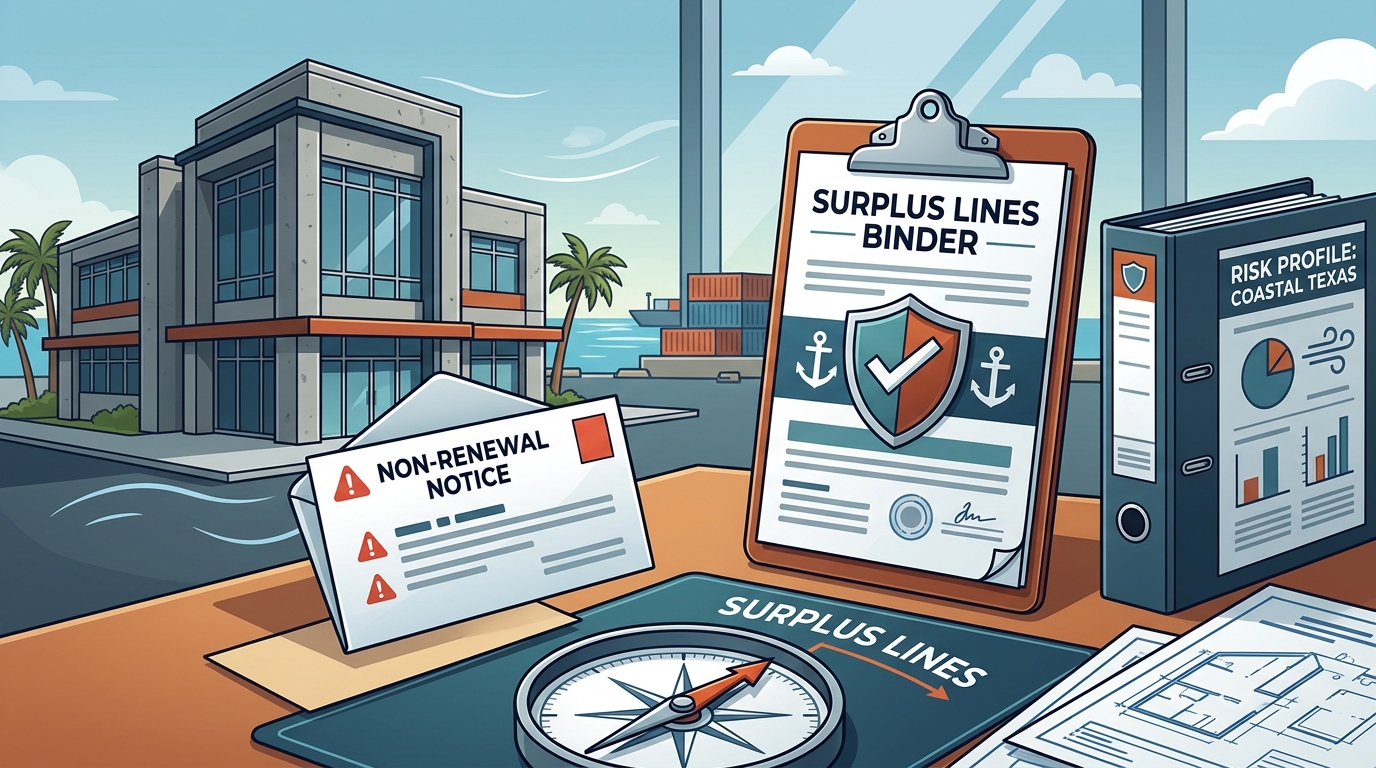
Key Takeaways
- Surplus lines insurance is a legal alternative when standard carriers decline coverage.
- The broker must obtain E&O insurance to place a surplus lines policy.
- A diligent search of at least ten admitted carriers is required.
- Surplus lines policies may have different terms and limits than standard forms.
- Working with a local agency can simplify the placement process.
Frequently Asked Questions
What is surplus lines insurance?
Surplus lines insurance is coverage that is unavailable through admitted carriers but can legally be placed with eligible non-admitted companies.
Why would a commercial property need surplus lines coverage?
Commercial properties in high-risk areas may be declined by standard carriers due to catastrophic exposure. Surplus lines coverage provides a viable alternative.
What is an E&O policy?
An E&O policy is an Errors and Omissions insurance policy that the broker must obtain to protect the client from professional negligence.
How is a surplus lines policy placed?
The broker must conduct a diligent search of at least ten admitted carriers and document that the coverage is unavailable in the standard market. according to Windstorm coverage for
Are surplus lines policies regulated?
Surplus lines carriers are not regulated by state insurance departments in the same way as admitted companies, but they must comply with specific state laws.
Can I switch back to a standard carrier later?
Yes, if a standard carrier becomes available, you can switch back to a standard policy. However, this depends on the carrier's underwriting guidelines.