
Do You Need a Separate Wind-Only Policy? Texas Gulf Coast Guide
For homeowners along the Texas Gulf Coast, the distinction between standard hazard insurance and wind coverage is not merely academic, it is a critical financial safeguard. According to recent industry data, over 60% of coastal homeowners in Texas face the risk of being underinsured for wind damage because they assume their standard policy covers all weather-related perils. This misconception often leaves property owners vulnerable to massive out-of-pocket expenses after a storm passes. Understanding the specific regulatory and contractual requirements in your county is the first step toward securing comprehensive protection for your most significant asset. (Home Flood amp Windstorm)
Understanding the Wind-Only Policy Gap
Standard homeowners insurance policies are designed to cover a wide array of risks, including fire, theft, and liability. However, the definition of "hazard" varies significantly by region. In many parts of the United States, wind damage is included in the base premium. In high-risk coastal zones, insurers often exclude wind and hail from the standard package to mitigate their exposure to catastrophic losses. (Home Insurance Flood Windstorm)
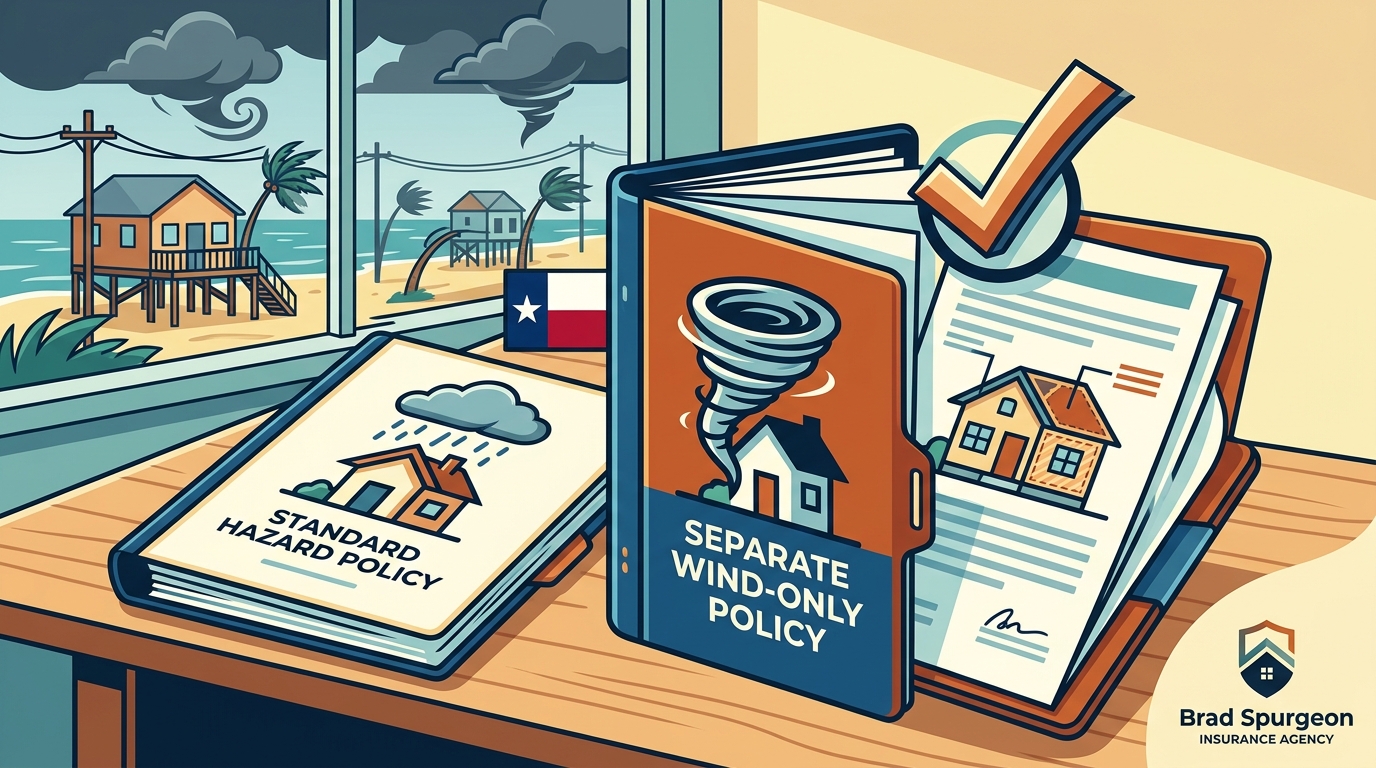
Wind-only insurance is a specialized policy that covers damage to your home's structure and personal belongings caused specifically by wind and hail. It does not cover flood damage, which requires a separate flood policy. If you live in a county where wind is excluded from standard policies, you must purchase this separate coverage to ensure your roof, siding, and windows are protected against storm damage. Without it, a single severe weather event could result in a total financial loss for structural repairs. (Home Insurance Flood Windstorm)
At Brad Spurgeon Insurance Agency, we specialize in navigating these complex requirements for Texas City and the broader Gulf Coast. Our agency has served the community since 1986, providing third-generation expertise in aligning your coverage with local regulatory demands. We help clients understand that standard hazard insurance is often insufficient for coastal living, necessitating a tailored approach to risk management.
County-Specific Insurance Rules
The requirement for a separate wind policy is not uniform across Texas. It is dictated by your specific county's insurance regulations and the risk profile assigned by the Texas Department of Insurance. Counties along the Gulf Coast, such as Galveston, Brazoria, and Chambers, often have stricter underwriting guidelines due to their proximity to the ocean and historical storm data.
In many of these high-risk counties, standard homeowners policies are written on an "exclusionary" basis. This means that wind and hail are explicitly excluded from the base policy. Homeowners in these areas must purchase a separate windstorm policy to fill this coverage gap. This is not a choice but a necessity for adequate protection. The Texas Windstorm Insurance Association (TWIA) has historically played a role in this market, though private carriers are increasingly offering windstorm-included policies that simplify the process for homeowners.
Understanding your county's specific status is crucial. If you are in a county where wind is excluded, you will likely need to manage two separate policies: one for general hazards and one for windstorm. This can complicate claims processing, as you may need to file separate claims for different types of damage. Our agency helps streamline this process by ensuring all your policies are coordinated and that you understand the distinct deductibles associated with each.
Types of Wind Coverage
When determining your needs, it is important to understand the different types of wind coverage available. The landscape of Texas insurance has evolved, offering homeowners more flexibility than in the past. Here is a breakdown of the primary options:
| Coverage Type | Description | Best For |
|---|---|---|
| Separate Wind-Only Policy | A standalone policy covering only wind and hail damage. Often required in high-risk counties. | Homeowners in counties where standard policies exclude wind. |
| Windstorm-Included Home Policy | A comprehensive policy that bundles wind, hail, and hazard coverage into one premium. | Homeowners seeking simplified management and single-deductible convenience. |
| TWIA Coverage | State-backed windstorm insurance for properties in designated coastal counties. | Properties that do not qualify for private windstorm policies. |
The Windstorm Insurance options available today vary in terms of cost, deductible structures, and coverage limits. A separate wind-only policy often comes with a high percentage-based deductible, which can be significant in the event of a major storm. In contrast, a windstorm-included home policy may offer a flat-dollar deductible, providing more predictable out-of-pocket costs. It is essential to compare these structures carefully to determine which aligns with your financial risk tolerance.
Our agency works with multiple top-tier carriers to find the best fit for your specific property. We analyze your home's construction, age, and location to recommend the most cost-effective solution. Whether you need a standalone wind policy or a bundled approach, our goal is to ensure you are fully protected without paying for unnecessary coverage.
Assessment Checklist
Determining if you need a separate wind-only policy requires a systematic review of your current coverage and local regulations. Use the following steps to assess your situation:
1. Review Your Current Declarations Page
Look at your existing homeowners insurance declarations page. Check the "Coverages" section for any exclusions related to wind, hail, or weather-related perils. If you see language stating that wind damage is excluded, you likely need additional coverage. This document is your primary source of truth for what is currently covered.
2. Verify Your County's Status
Identify your specific county and research its insurance requirements. Counties in the Texas Gulf Coast region often have specific mandates or high-risk designations that necessitate separate wind coverage. If you are in a high-risk county, the likelihood of needing a separate policy is significantly higher.
3. Evaluate Your Home's Construction
The age and construction materials of your home can influence both your eligibility for certain policies and your premium costs. Older homes or those with older roofing systems may face stricter underwriting requirements. Ensuring your home meets current wind-resistant standards can sometimes lower premiums or make you eligible for more favorable policy terms.
4. Consult with a Local Expert
Insurance regulations and carrier offerings change frequently. A local agent who understands the nuances of the Texas Gulf Coast market can provide clarity on your specific needs. At Brad Spurgeon Insurance Agency, we offer free consultations to help you navigate these complexities. We can review your current policies and recommend adjustments to ensure you are adequately protected.
Key Takeaways
- Standard Policies Often Exclude Wind: In many Texas Gulf Coast counties, standard hazard insurance does not cover wind or hail damage, requiring a separate policy.
- County Matters: Your specific county's risk designation dictates whether you need standalone wind coverage or if it can be bundled.
- Deductible Structures Vary: Separate wind policies often use percentage-based deductibles, while bundled policies may use flat deductibles.
- Flood is Separate: Neither wind-only nor standard hazard policies cover flood damage. You need a separate flood insurance policy for that.
- Expert Guidance is Critical: With over 35 years of service since 1986, Brad Spurgeon Insurance Agency provides specialized knowledge for Texas City and surrounding communities.
- Regular Reviews are Essential: Insurance needs change as your home ages and market conditions shift. Annual policy reviews are recommended.
- Multiple Options Exist: Homeowners can choose between separate wind policies, windstorm-included policies, or state-backed options depending on eligibility.
Frequently Asked Questions
What is the difference between wind insurance and flood insurance?
Wind insurance covers damage caused by wind and hail, such as roof damage or broken windows. Flood insurance covers damage from rising water, including storm surges and heavy rainfall that overflows onto the property. These are two distinct types of coverage, and neither standard homeowners nor wind-only policies include flood protection.
Do I need a separate wind policy if I live in Texas City?
Many homeowners in Texas City and the surrounding Gulf Coast counties require separate windstorm coverage because standard policies often exclude wind and hail in these high-risk areas. It is essential to verify your specific county's requirements and your current policy's exclusions.
What is a windstorm-included home policy?
A windstorm-included home policy is a comprehensive insurance product that bundles wind, hail, and hazard coverage into a single policy. This option simplifies management by providing one premium and one deductible for all weather-related and property damage claims.
How is the wind insurance deductible calculated?
Wind insurance deductibles are often calculated as a percentage of your home's insured value, rather than a flat dollar amount. For example, a 2% deductible on a $300,000 home would require you to pay $6,000 out of pocket before coverage begins. This is different from standard hazard deductibles, which are typically flat fees.
Can I get wind insurance if my home is older?
Yes, but eligibility and premiums may vary. Older homes may require specific wind-resistant upgrades to qualify for certain policies or to receive premium discounts. Our agency can help you understand what improvements might be necessary to secure the best coverage.
What is TWIA?
The Texas Windstorm Insurance Association (TWIA) is a state-backed insurer that provides windstorm coverage for properties in designated coastal counties. It serves as a provider of last resort for homeowners who cannot obtain windstorm insurance from private carriers.
How often should I review my insurance coverage?
It is recommended to review your insurance coverage annually or after any significant home improvements. This ensures that your coverage limits keep pace with the rising cost of construction and that your policy reflects any changes in your local risk environment.
Secure Your Home's Future Today
Do not wait for the next storm to reveal gaps in your coverage. Whether you need a separate wind-only policy or a comprehensive windstorm-included home policy, the experts at Brad Spurgeon Insurance Agency are here to help. As a third-generation family agency serving Texas City and the Gulf Coast since 1986, we understand the unique challenges of coastal insurance. We are dedicated to providing personalized service and peace of mind to every client we serve.
Contact us today to schedule a free consultation. Our team will review your current policies, assess your specific needs, and recommend the best coverage options to protect your home and family. Visit our Home Insurance Quote page to get started, or call us directly at (409) 945-4746. Let us help you navigate the complexities of Texas insurance with confidence and clarity.