
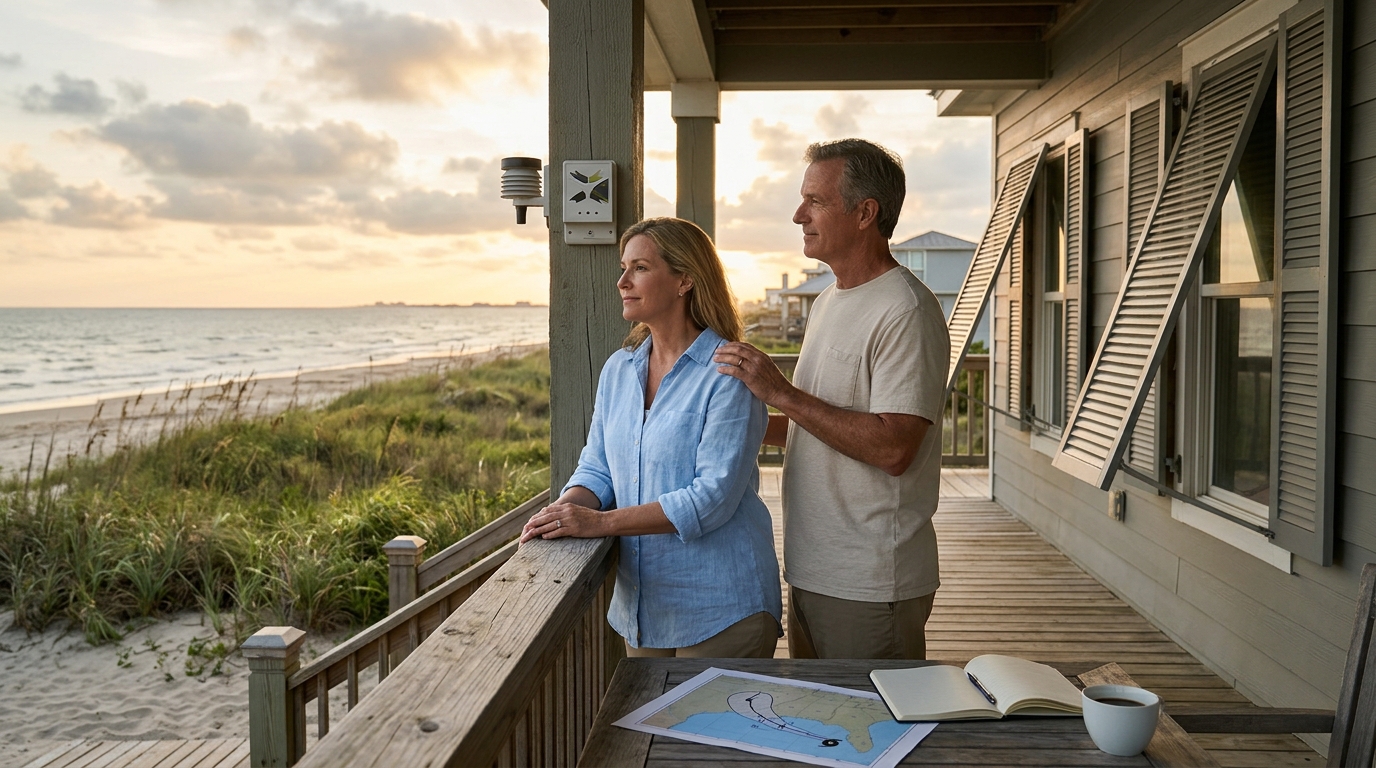
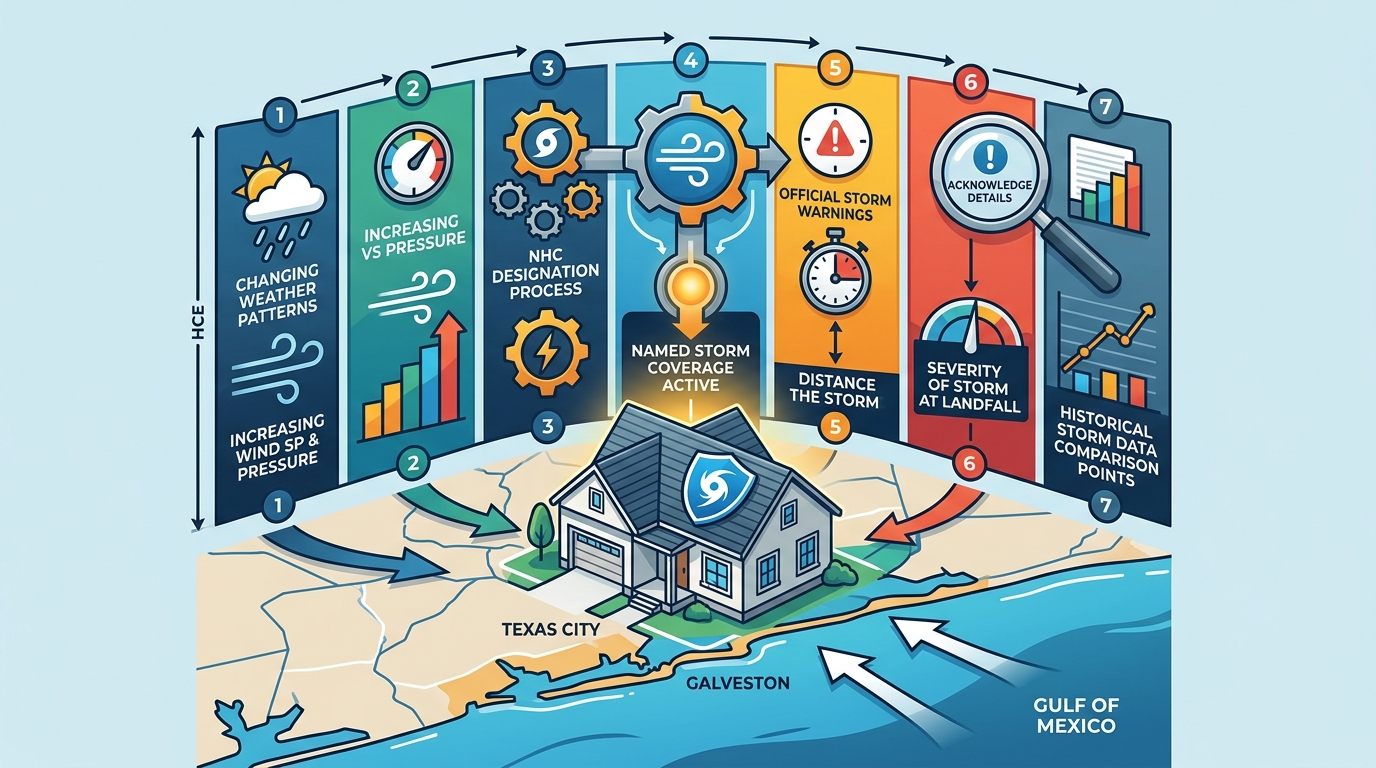
Named storm coverage is a specific provision in windstorm insurance that triggers payouts only when damage is caused by a storm officially named by the National Hurricane Center. This distinction is critical for homeowners in high-risk coastal areas like Galveston and Texas City, where standard policies often exclude wind damage. Understanding these factors helps you avoid unexpected gaps in protection during hurricane season.
1. Official Storm Naming and Classification
The storm must be officially named by the National Hurricane Center to trigger coverage. A hurricane or named storm deductible only applies when a storm has been officially named by the National Hurricane Center. Damage from a regular thunderstorm or straight-line winds would not trigger it. This classification determines whether your policy's specific named storm provisions activate.
2. Geographic Location and Risk Zone
Your specific address determines which windstorm carrier and policy type applies. In Texas, especially along the coast, many standard homeowners insurance policies exclude windstorm and hail coverage. Instead, property owners often need to purchase separate windstorm insurance through private insurers or through the Texas Windstorm Insurance Association (TWIA). The location dictates whether you are in a catastrophe area requiring specific state-backed or private coverage.
3. Deductible Structure and Trigger
Named storm deductibles are often a percentage of the home's insured value. Windstorm deductibles are often a percentage of your home’s value, not a flat amount. For example, if your home is insured for $300,000 and you have a 2% windstorm deductible, you’ll pay $6,000 out of pocket. According to the Center for Insurance Policy and Research (CIPR), a hurricane deductible usually applies to damage from a National Weather Service (NWS) or National Hurricane Center (NHC) declared hurricane.
4. Policy Exclusions and Endorsements
Standard HO-3 policies typically exclude wind and hail, requiring separate riders. A standard HO-3 policy, the most common form of home insurance in the country, organizes coverage into six sections but often excludes windstorm in coastal zones. You must verify whether your primary policy includes wind and hail damage or if you need to buy a separate rider or policy. Some policies may exclude flood damage even during a storm, requiring separate flood insurance.
5. Timing of the Loss and Watch Warnings
The timing of the damage relative to official warnings affects coverage eligibility. Most policies include a built-in buffer, often starting 24 hours before the storm is officially named or a watch is issued and extending 48 to 72 hours after the last watch or warning is cancelled for your area. The timing window matters just as much as the trigger itself, ensuring that damage occurring during the active threat period is covered.
6. Property Construction and Mitigation
Building code compliance and mitigation features can influence coverage terms. Renovations can quietly create windstorm insurance gaps because they change what your property would cost to rebuild. The safest approach is to update your windstorm coverage immediately after major upgrades, especially roofs, additions, and exterior improvements, so your policy limits match the home you actually have today. Insurers may offer discounts to policyholders who strengthen their homes against windstorms.
7. Carrier Financial Strength and Availability
The financial stability of the insurer ensures claims are paid when needed. Your policy won't protect you if your insurer is bankrupt, so do some research before deciding which company should provide your policy. Some things to look for are the insurer’s financial strength, claim settlement record, and feedbacks from customers. In high-risk areas, you may be required to purchase separate windstorm insurance through a state-run or private insurer if coverage is limited.
Choosing the Right Coverage
When selecting named storm coverage, prioritize policies that clearly define the trigger events and deductible structures. Ensure your coverage limits reflect your current replacement cost, especially after renovations. For residents in Galveston and Texas City, working with a local agency ensures you understand the specific nuances of coastal windstorm risks.
Frequently Asked Questions
What is a named storm deductible?
A named storm deductible is a specific amount or percentage you must pay out of pocket before your insurance covers damage caused by a named hurricane or tropical storm. according to Wind Insurance What
Does standard homeowners insurance cover named storms?
In many coastal areas, standard homeowners insurance excludes wind and hail damage, requiring a separate windstorm policy or endorsement.
How is a named storm defined for insurance purposes?
For insurance, a named storm is typically a hurricane or tropical storm that has been officially named by the National Hurricane Center.
Can I buy windstorm insurance during a storm warning?
Generally, no. Most windstorm and flood policies have waiting periods, and you cannot purchase new coverage once a storm is imminent or a warning is issued.
What factors affect the cost of named storm coverage?
Costs are influenced by your location, home construction, roof type, deductible percentage, and the financial strength of the insurance carrier.
Next Steps
To ensure your home is fully protected against named storm risks, schedule a review with Brad Spurgeon Insurance Agency. Our team in Texas City specializes in navigating the complexities of windstorm and flood coverage for Gulf Coast residents.