
Step-by-Step Guide to Filing a Hurricane Damage Claim on Your Galveston Coastal Home
Galveston Bay and the surrounding Gulf Coast communities face an average of 1.5 tropical storms or hurricanes annually, making proactive insurance management a necessity rather than a luxury. According to the National Hurricane Center, the region's unique geographic exposure demands that homeowners understand their specific coverage limits before the first drop of rain falls. This guide outlines the precise steps to secure your financial recovery through Brad Spurgeon Insurance Agency.
Immediate Safety and Documentation
When a storm passes, the instinct is often to rush inside and begin repairs. However, rushing can compromise your claim. FEMA guidelines emphasize that safety must always precede documentation. Ensure the structure is stable before entering. If you suspect gas leaks or electrical hazards, contact utility providers immediately.
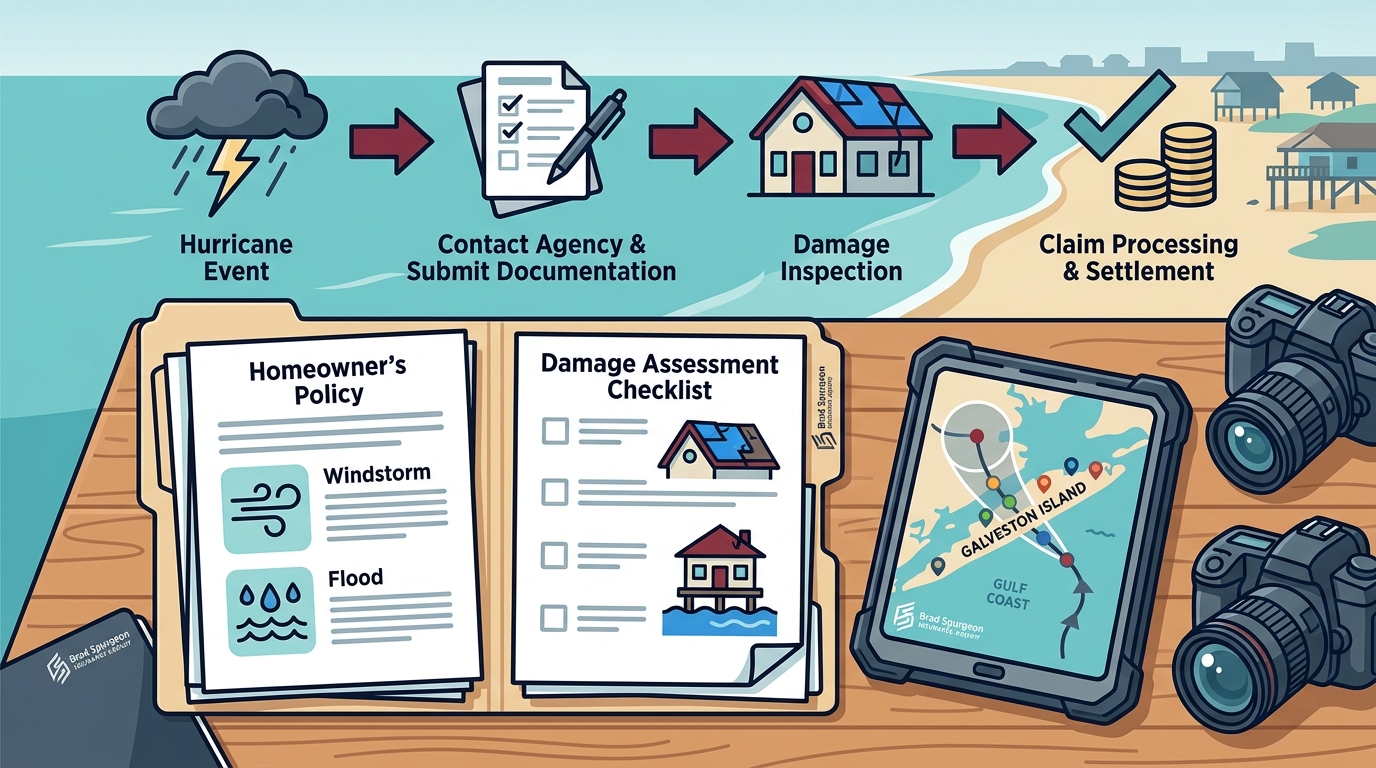
Once the area is safe, document everything. Use your smartphone to take high-resolution photos and videos of all damage. Capture wide shots of the property and close-ups of specific issues like broken windows, roof shingles, or water intrusion. This visual evidence serves as the primary foundation for your claim. According to Investopedia, detailed documentation significantly reduces the likelihood of claim disputes during the underwriting phase.
Reviewing Your Windstorm and Flood Coverage
Standard homeowners policies in Texas often exclude windstorm and flood damage. This is a critical distinction for Galveston homeowners. FloodSmart.gov confirms that flood insurance is a separate policy required for most properties in Special Flood Hazard Areas. If your home is in a flood zone, your standard policy will not cover water damage from rising waters.
Windstorm coverage is also frequently excluded in coastal counties. You may have a separate windstorm policy or a specific endorsement. Understanding the difference between wind-driven rain and flood damage is vital. Windstorm insurance typically covers damage from high winds, such as roof loss or broken windows. Flood insurance covers water entering the home from external sources. Reviewing your policy details with an expert ensures you know exactly what is covered.
Initiating the Claim Process
Do not wait for the insurance company to contact you. Proactive claim initiation speeds up the entire process. Contact your insurance agent immediately to report the loss. Brad Spurgeon Insurance Agency provides a streamlined reporting process designed to get you connected with the right carrier quickly.
When you call, have your policy number ready. Provide a clear, concise summary of the damage. Avoid speculating on the cause if you are unsure. Stick to the facts. For example, state that water entered through the basement due to rising ground levels, rather than guessing about pipe bursts. This clarity helps the adjuster assign the correct coverage type.
Preparing for the Adjuster Inspection
The adjuster is the insurance company's representative who will assess the damage. Their goal is to determine the cost of repairs based on your policy terms. According to the Consumer Financial Protection Bureau, homeowners should never sign a blank or incomplete repair estimate. Always review the adjuster's report before signing.
Be present during the inspection. Walk through the property with the adjuster and point out all visible damage. Do not overlook minor issues like cracked siding or damaged gutters, as these add to the total claim value. Bring your documentation and photos to support your case. If the adjuster misses something, politely point it out and provide evidence.
Selecting Repair Contractors
Once the claim is approved, you must choose a contractor to perform the repairs. The National Association of Home Builders recommends verifying that contractors are licensed, bonded, and insured in Texas. Do not hire the first person who knocks on your door. Storm chasers often offer low prices but may disappear after receiving a deposit.
Get at least three detailed estimates. Ensure each estimate includes a breakdown of materials, labor, and timeline. Compare the estimates against the adjuster's report. If the contractor's estimate is significantly higher, ask for a justification. If it is lower, be cautious. Home insurance claims are based on actual cash value or replacement cost, so the repair must meet code standards.
Avoiding Common Claim Pitfalls
Many homeowners make costly mistakes during the claims process. One common error is discarding damaged items before the adjuster sees them. Keep all damaged materials until the claim is fully settled. Another mistake is attempting major repairs before the inspection. Temporary repairs like tarping a roof are usually covered, but permanent repairs can complicate the assessment.
Do not sign a settlement check that includes a "full and final release" clause if you are unsure of the total damage. This clause can prevent you from claiming additional costs later. The Texas Department of Insurance advises policyholders to read all settlement documents carefully. If you are unsure, consult your agent or an attorney before signing.
Key Takeaways
- Safety First: Ensure the property is structurally sound before entering to document damage.
- Document Everything: Take photos and videos of all damage before making any repairs.
- Know Your Coverage: Distinguish between windstorm and flood insurance, as they are separate policies.
- Proactive Reporting: Contact your agent immediately to initiate the claim process.
- Verify Contractors: Check licenses and insurance for any repair professionals you hire.
- Review Estimates: Never sign a blank or incomplete repair estimate.
- Keep Records: Save all receipts, correspondence, and damaged materials until the claim is closed.
Frequently Asked Questions
How long does it take to process a hurricane damage claim?
Processing times vary based on the extent of the damage and the number of claims filed. The Texas Department of Insurance notes that simple claims may be resolved in weeks, while complex cases can take months.
Do I need flood insurance if I am not in a flood zone?
While not legally required outside of designated flood zones, flood insurance is highly recommended. FloodSmart.gov states that 20% of flood claims come from properties outside high-risk areas.
What is the WPI-8 form?
The WPI-8 is a standard policy form used in Texas for windstorm and hail insurance. Brad Spurgeon Insurance Agency provides a detailed guide to help homeowners understand this specific coverage.
Can I hire my own contractor for repairs?
Yes, you have the right to choose your own contractor. The Consumer Financial Protection Bureau confirms that insurance companies cannot force you to use their preferred vendors.
What if my claim is denied?
If your claim is denied, review the denial letter for specific reasons. You can appeal the decision or contact your state's insurance department for assistance. The Texas Department of Insurance offers resources for dispute resolution.
How does wind-driven rain affect my claim?
Wind-driven rain is typically covered under windstorm policies if the wind caused an opening in the structure. Windstorm insurance details should be reviewed to understand specific exclusions.
What is the deductible for windstorm damage?
Deductibles for windstorm damage are often a percentage of the home's insured value, such as 1% to 5%. Brad Spurgeon Insurance Agency can help you understand your specific deductible based on your policy.
Contact Us for a Free Consultation
Navigating hurricane damage claims can be overwhelming. Brad Spurgeon Insurance Agency is here to help you every step of the way. As a third-generation family agency serving the Texas Gulf Coast since 1986, we understand the unique challenges of coastal insurance. Contact us today for a free consultation and ensure your home is protected.