
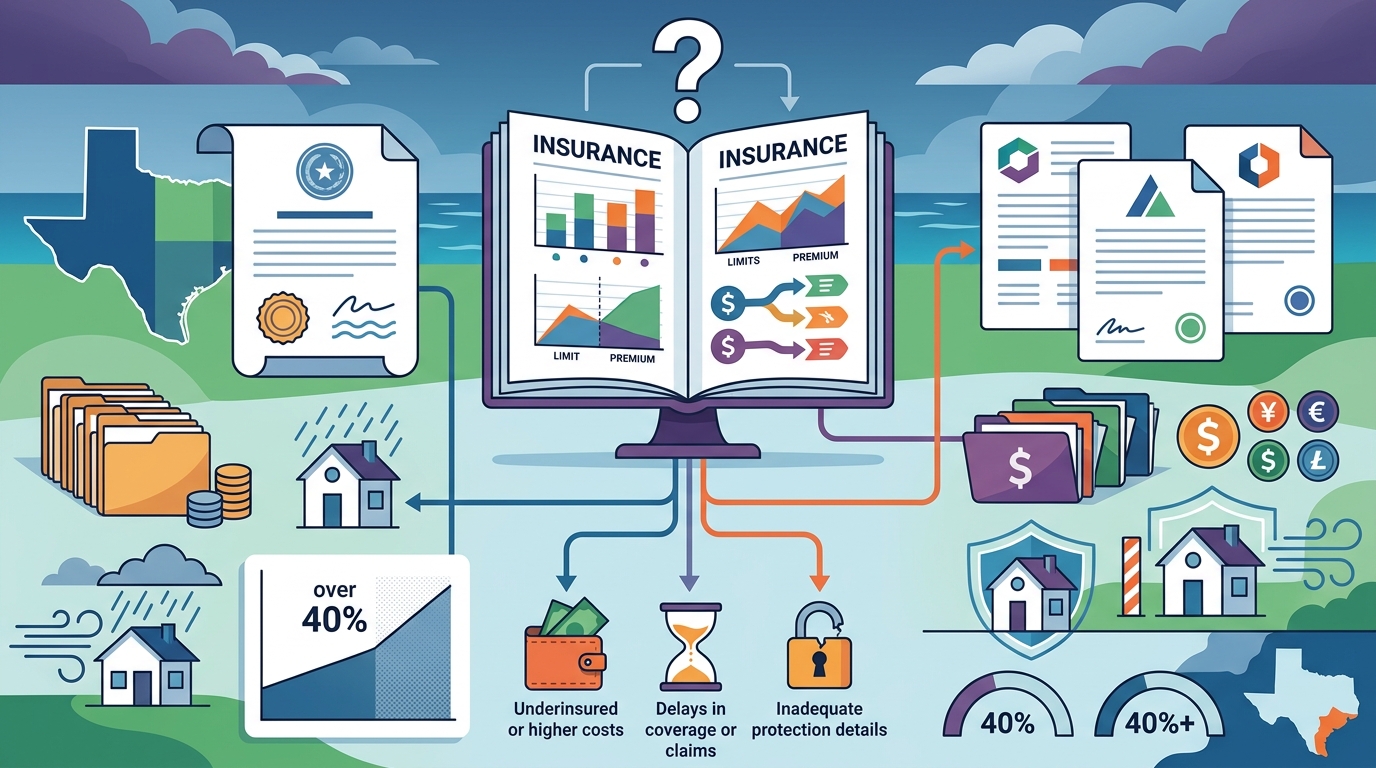
Homeowners in the Texas Gulf Coast face unique challenges when securing adequate windstorm coverage. The decision often comes down to choosing between the Texas Windstorm Insurance Association (TWIA) and private market carriers. According to recent industry data, over 40% of coastal homeowners in Texas rely on the state-backed pool for their primary wind coverage. This statistic highlights the critical importance of understanding the nuances of each option. Making the wrong choice can leave your property underinsured or your premiums unnecessarily high. This guide breaks down the most frequent errors homeowners make when navigating this complex landscape. (Home Flood amp Windstorm)
Mistake 1: Assuming Standard Policies Cover Wind
One of the most dangerous misconceptions among coastal homeowners is believing that a standard homeowners insurance policy automatically includes windstorm coverage. This is simply not true in high-risk zones. Windstorm insurance is a specialized coverage type that must be explicitly added to your policy or secured through a dedicated wind policy. In Texas, many standard policies exclude wind damage entirely due to the high frequency of storms in the region. If you assume you are covered, you could face devastating financial losses after a single storm event. Always verify your policy declarations page to ensure wind is listed as a covered peril.
Private carriers often bundle wind coverage with homeowners insurance, but they require strict adherence to building codes. The Texas Windstorm Insurance Association (TWIA) serves as the insurer of last resort for those who cannot find private coverage or choose not to purchase it. Understanding this distinction is vital for your financial security.
Mistake 2: Ignoring the Deductible Trap
Homeowners frequently focus solely on the premium cost while ignoring the deductible structure. Windstorm deductibles are typically calculated as a percentage of the dwelling coverage limit, not a flat dollar amount. For example, a 2% deductible on a $500,000 home equals a $10,000 out-of-pocket cost before coverage kicks in. This is significantly higher than the standard 1% or $1,000 deductible found in non-wind policies. Many homeowners are shocked by this amount when they file a claim after a minor storm.
When comparing the Texas Windstorm Insurance Association to private carriers, the deductible percentages can vary. Private insurers may offer lower deductibles for homes that meet specific hurricane-resistant standards. It is crucial to calculate the potential out-of-pocket maximum for each option before signing a contract. This calculation provides a clearer picture of your true financial exposure.
Mistake 3: Overlooking the WPI-8 Certificate
The WPI-8 Certificate is a critical document that proves your home meets Texas building codes for wind resistance. The WPI-8 Certificate is a mandatory requirement for obtaining windstorm insurance in many coastal counties. Without this certificate, you may be forced to purchase coverage through the state pool, which often comes with higher premiums and limited coverage options. Homeowners who skip this step during the construction or renovation process often face delays and increased costs later.
Private insurance carriers require a valid WPI-8 certificate to issue a policy. If your home was built before current codes or has not been inspected, you may not qualify for private coverage. This is where the Texas Windstorm Insurance Association becomes the primary option for many residents. Ensure your builder or contractor provides this documentation early in the process to avoid coverage gaps.
Mistake 4: Failing to Compare Total Costs
Comparing only the annual premium is a common error that leads to poor financial decisions. The total cost of ownership includes deductibles, claim handling fees, and potential rate increases after a storm. Private insurers may offer lower premiums but higher deductibles, while the state pool may have higher premiums but more predictable claim outcomes. Homeowners must look at the entire financial picture to make an informed choice.
Additionally, private carriers often provide discounts for hurricane-resistant features such as impact-resistant windows or reinforced roofing. These discounts can significantly reduce the overall cost of your policy. The Texas Windstorm Insurance Association does not offer the same level of customization or discounts for mitigation efforts. Evaluating these factors helps you determine which option provides the best value for your specific home.
Mistake 5: Neglecting Flood Insurance Needs
Windstorm damage and flood damage are two distinct perils that require separate coverage. Flood insurance provides coverage for property damage caused by rising water, which is not included in standard windstorm policies. Many homeowners mistakenly believe that wind coverage protects against flood damage, leading to significant gaps in their protection. In coastal Texas, flood risk is often just as high as wind risk, making dual coverage essential.
The National Flood Insurance Program (NFIP) is the primary source for flood insurance, but private flood insurers are also available. Homeowners should secure flood insurance regardless of whether they choose the state pool or a private windstorm carrier. This ensures comprehensive protection against all natural disaster risks. Consult with a local agent to determine the appropriate flood coverage limits for your property.
Mistake 6: Delaying Policy Renewals
Waiting until the last minute to renew your windstorm insurance can result in coverage lapses or higher rates. Insurance carriers in the Gulf Coast region often adjust their rates annually based on loss experience and economic factors. Homeowners who delay the renewal process may miss out on early payment discounts or promotional rates. Furthermore, if your home no longer meets current building codes, you may face difficulties in securing coverage at the last minute.
Proactive renewal management allows you to shop around for the best rates and coverage options. It also gives you time to address any issues with your property that might affect insurability. Regular policy reviews ensure that your coverage limits keep pace with the rising cost of construction materials. Stay ahead of the curve by managing your renewals well in advance.
Comparison of Coverage Options
Understanding the differences between the Texas Windstorm Insurance Association and private carriers is essential for making the right choice. The table below summarizes the key distinctions between these two primary options for coastal homeowners.
| Feature | Texas Windstorm Insurance Association (TWIA) | Private Windstorm Carriers |
|---|---|---|
| Coverage Type | Wind and hail only | Often bundled with homeowners insurance |
| Eligibility | Insurer of last resort | Subject to underwriting guidelines |
| Deductibles | Percentage-based (typically 2-5%) | Variable, often lower for compliant homes |
| Building Codes | Strict adherence required | May offer discounts for mitigation |
| Claims Process | State-managed | Carrier-managed |
Key Takeaways
- Standard homeowners policies rarely include windstorm coverage in high-risk coastal zones.
- Windstorm deductibles are percentage-based and can result in high out-of-pocket costs.
- The WPI-8 Certificate is mandatory for proving compliance with Texas building codes.
- Private carriers may offer lower premiums but require strict adherence to mitigation standards.
- Flood insurance is a separate policy and is not included in windstorm coverage.
- Homeowners who have served the Texas Gulf Coast since 1986 understand the importance of proactive planning.
- Regular policy reviews help ensure your coverage keeps pace with construction cost inflation.
Frequently Asked Questions
What is the Texas Windstorm Insurance Association?
The Texas Windstorm Insurance Association (TWIA) is a state-backed insurance pool that provides windstorm and hail coverage for homeowners who cannot find coverage in the private market or choose not to purchase it. It serves as the insurer of last resort for coastal Texas.
Do I need both windstorm and flood insurance?
Yes, you need both. Windstorm insurance covers damage from wind and hail, while flood insurance covers damage from rising water. Standard policies do not cover flood damage, making separate flood coverage essential for coastal homeowners.
How is the windstorm deductible calculated?
The windstorm deductible is typically calculated as a percentage of your dwelling coverage limit. For example, a 2% deductible on a $300,000 home would require you to pay $6,000 out-of-pocket before your insurance coverage begins.
What is the WPI-8 Certificate?
The WPI-8 Certificate is a document that certifies your home meets the Texas Department of Insurance building codes for wind resistance. It is required for obtaining windstorm insurance in many coastal counties.
Can I switch from TWIA to a private carrier?
Yes, you can switch to a private carrier if your home meets their underwriting guidelines and building code requirements. Many homeowners find that private carriers offer more comprehensive coverage options and competitive rates.
How often should I review my windstorm policy?
You should review your windstorm policy annually during renewal. This ensures that your coverage limits keep pace with the rising cost of construction and that you are taking advantage of any available discounts.
What happens if my home no longer meets building codes?
If your home no longer meets current building codes, you may face difficulties in securing coverage or may be required to make upgrades. Private carriers may deny coverage, while TWIA may still provide coverage but with higher premiums.
Secure Your Home Today
Navigating the complexities of windstorm insurance requires expert guidance and a clear understanding of your options. Whether you choose the Texas Windstorm Insurance Association or a private carrier, ensuring you have adequate coverage is vital for your peace of mind. Our team at Brad Spurgeon Insurance Agency Inc. has served the Texas Gulf Coast since 1986, helping homeowners protect their most valuable asset. We specialize in homeowners, windstorm, and flood insurance, including our new Windstorm Included Home Policy. Do not wait until a storm approaches to secure your coverage. Get a Free Insurance Quote today and ensure your home is protected against the elements.