Securing Galveston Homes Against Hurricane Winds: A Step-by-Step Guide
Living on the Texas Gulf Coast means accepting the reality of severe weather. According to the National Weather Service, the region faces an elevated risk of hurricane-force winds that can devastate unprotected structures. For homeowners in Galveston and Texas City, standard policies often exclude wind damage, leaving a critical coverage gap. This guide outlines the precise steps to fortify your property and secure the necessary insurance protections through Brad Spurgeon Insurance Agency. (Home Insurance Flood Windstorm)
Step 1: Structural Hardening and Roof Reinforcement
The first line of defense is your home's physical integrity. Galveston County building codes have evolved significantly to combat wind uplift. Homeowners must ensure their roofs meet current standards for high-wind resistance.
Roof Deck Attachment
Wind uplift can peel a roof off a house. Proper roof deck attachment involves using nails rather than staples and ensuring adequate nailing patterns. According to the Insurance Institute for Business & Home Safety, proper roof attachment can reduce wind damage by up to 30 percent. If your roof is older, consider a professional inspection to verify compliance.
Impact-Resistant Windows
Broken windows allow wind to enter, pressurizing the interior and potentially blowing out walls. Installing impact-resistant windows or hurricane shutters is essential. Data from the Federal Emergency Management Agency shows that homes with protected openings suffer significantly less interior damage during storms.
Gutter and Downspout Maintenance
Loose gutters become projectiles in high winds. Secure all exterior fixtures, including shutters, satellite dishes, and outdoor furniture. A report by the American Red Cross highlights that securing the perimeter is a critical step in reducing property loss.
Step 2: Understanding Windstorm Insurance Requirements
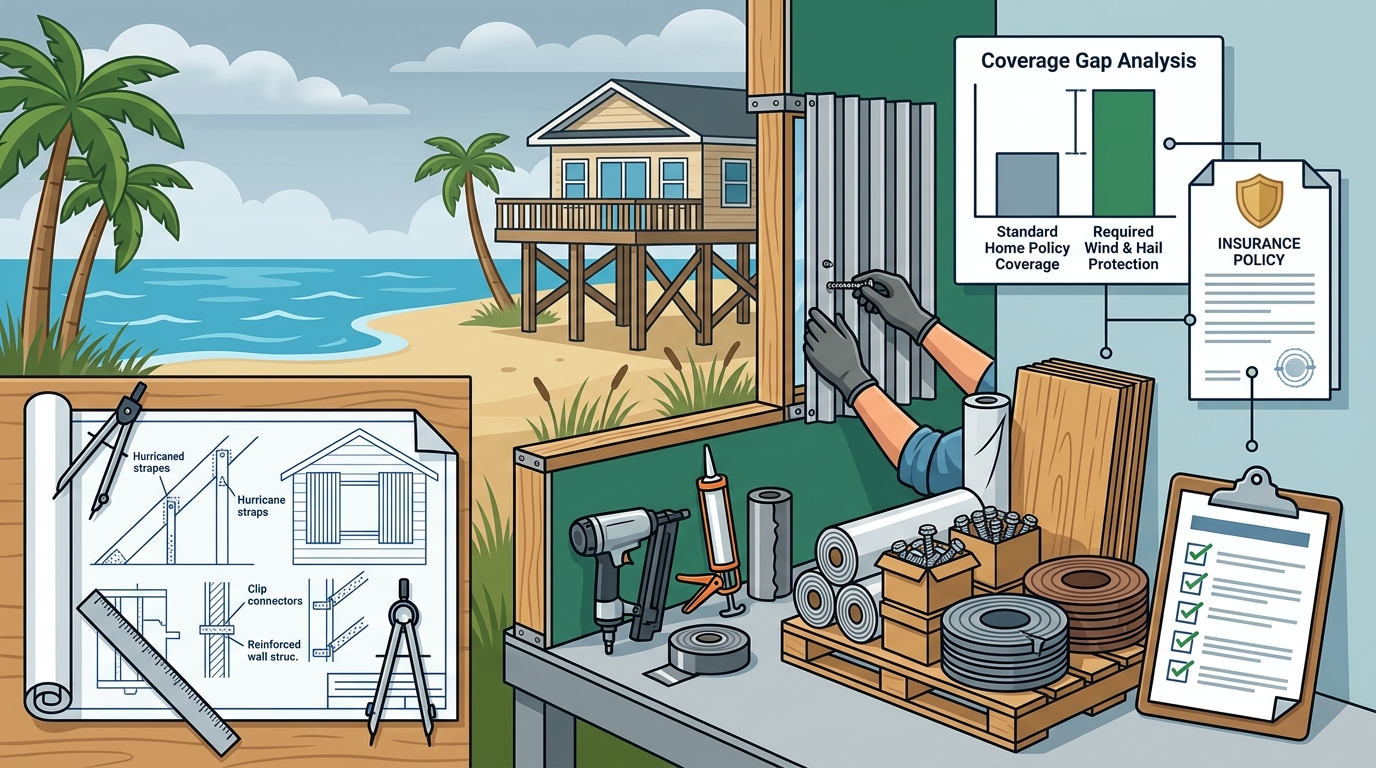
Standard homeowners insurance policies in Texas typically exclude wind and hail damage. This exclusion is particularly relevant for coastal counties like Galveston. Homeowners must purchase a separate windstorm policy or a specific endorsement.
The WPI-8 Policy
The Windstorm Property Insurance Policy (WPI-8) is the standard form used in Texas. It provides coverage for wind, hail, and related perils. According to the Texas Department of Insurance, understanding the specific deductibles in your WPI-8 policy is crucial because wind deductibles are often percentage-based rather than flat amounts.
Deductible Structures
Wind deductibles are calculated as a percentage of the dwelling coverage limit. For a home insured for $500,000 with a 2 percent wind deductible, the homeowner pays the first $10,000 of wind damage. Research from the National Association of Insurance Commissioners indicates that higher deductibles can lower premium costs but require significant out-of-pocket liquidity during a storm event.
Windstorm Included Home Policy
Brad Spurgeon Insurance Agency offers a specialized Windstorm Included Home Policy for Texas Gulf Coast homeowners. This streamlined approach combines essential protections, simplifying the management of your coverage. Visit our Windstorm Insurance page to learn more about this specific product offering.
Step 3: Securing Flood Insurance Coverage
Wind is not the only threat. Storm surges and heavy rainfall cause catastrophic flooding. Standard homeowners policies do not cover flood damage. According to FEMA, 40 percent of businesses that suffer flood damage never reopen.
National Flood Insurance Program (NFIP)
The NFIP provides flood insurance to communities that agree to adopt and enforce floodplain management ordinances. Data from the Government Accountability Office shows that NFIP claims have increased significantly over the last decade due to more frequent severe weather events.
Private Flood Insurance Options
Private insurers offer alternative flood policies that may provide higher coverage limits and faster claim processing. A study by the Center for Risk Management suggests that private flood insurance can be a viable alternative for high-value properties in Galveston.
Elevation Certificates
An elevation certificate determines your home's height relative to the base flood elevation. This document is critical for determining your flood insurance premium. According to the Insurance Information Institute, accurate elevation data can lead to more accurate pricing and better coverage options.
Step 4: Conducting a Comprehensive Policy Review
Insurance needs change as your home and the risk landscape evolve. A yearly review ensures your coverage matches your current reality.
Replacement Cost vs. Market Value
Ensure your dwelling coverage is based on replacement cost, not market value. Construction costs in Galveston have risen due to material and labor shortages. According to the Bureau of Labor Statistics, construction cost indices have shown significant volatility in recent years.
Inventory Management
Maintain a detailed home inventory with photos and receipts. This documentation is vital for proving losses. A report by the Insurance Research Council found that homeowners with detailed inventories receive higher claim settlements.
Liability Coverage
Consider increasing your liability limits. If a storm causes damage to a neighbor's property, you could be held liable. According to the American Bar Association, umbrella policies provide an extra layer of protection for high-net-worth individuals.
Step 5: Preparing for the Claims Process
Knowing how to navigate the claims process before a storm hits can save time and stress. According to the National Association of Insurance Commissioners, prompt reporting of damage is essential for a smooth claims experience.
Documentation
Take photos and videos of your home's exterior and interior before the storm. Document any pre-existing damage. This evidence helps distinguish between old and new damage.
Temporary Repairs
Make reasonable temporary repairs to prevent further damage, such as covering broken windows with plywood. Keep all receipts for materials and labor. According to FEMA guidelines, these expenses are often reimbursable under certain disaster declarations.
Working with Your Agent
Brad Spurgeon Insurance Agency provides dedicated support during the claims process. We help you understand your policy limits and advocate for fair settlements. Our team specializes in navigating the complexities of wind and flood claims in the Galveston area.
Key Takeaways
- Wind Exclusion: Standard homeowners policies in Texas exclude wind damage, requiring a separate windstorm policy or endorsement.
- WPI-8 Policy: The Windstorm Property Insurance Policy is the standard for wind and hail coverage in Texas coastal regions.
- Flood Risk: Flood insurance is mandatory for homes in Special Flood Hazard Areas and highly recommended for all Galveston homeowners.
- Structural Hardening: Reinforcing roofs and windows can reduce wind damage by up to 30 percent, according to IBHS data.
- Deductibles: Wind deductibles are typically percentage-based, requiring significant out-of-pocket funds during a storm event.
- Agency History: Brad Spurgeon Insurance Agency has served the Texas Gulf Coast since 1986, providing specialized insurance expertise.
- Proactive Review: Annual policy reviews ensure coverage keeps pace with rising construction costs and changing risk profiles.
Frequently Asked Questions
What is the difference between windstorm and flood insurance?
Windstorm insurance covers damage caused by wind, hail, and related perils, while flood insurance covers damage from rising water, including storm surges and heavy rainfall. Both are critical for Galveston homeowners.
Do I need flood insurance if I am not in a flood zone?
While not mandatory outside Special Flood Hazard Areas, flood insurance is highly recommended. According to FEMA, 25 percent of flood claims come from properties outside high-risk zones.
How is the wind deductible calculated?
The wind deductible is usually a percentage of the dwelling coverage limit. For example, a 2 percent deductible on a $400,000 home results in a $8,000 deductible for wind damage.
What is the WPI-8 Certificate?
The WPI-8 Certificate is a document that outlines the specific terms and conditions of your windstorm insurance policy. Our agency provides a WPI-8 Certificate Guide to help you understand your coverage details.
How can Brad Spurgeon Insurance Agency help with hurricane preparedness?
We offer specialized windstorm and flood insurance products, including a Windstorm Included Home Policy. We also provide free consultations to review your current coverage and identify gaps.
What should I do immediately after a hurricane?
Ensure your safety first, then document all damage with photos and videos. Contact your insurance agent to report the claim and begin the recovery process.
Why is a policy review important for Galveston homeowners?
Construction costs and risk profiles change. A policy review ensures your coverage limits are sufficient to rebuild your home and protect your assets.
Contact Us for a Free Consultation
Securing your Galveston home against hurricane winds requires both physical hardening and robust insurance coverage. Brad Spurgeon Insurance Agency has served the Texas Gulf Coast since 1986, providing expert guidance on windstorm and flood insurance. We specialize in helping homeowners navigate the complexities of coastal insurance.
Do not wait for the next storm to assess your coverage. Contact us today to schedule a free consultation and ensure your home is protected. Visit our Home Insurance Quote page to get started. You can also explore our Flood Insurance Quote options or learn more about our Windstorm Insurance Quote services. For more information about our agency, visit our About page.