

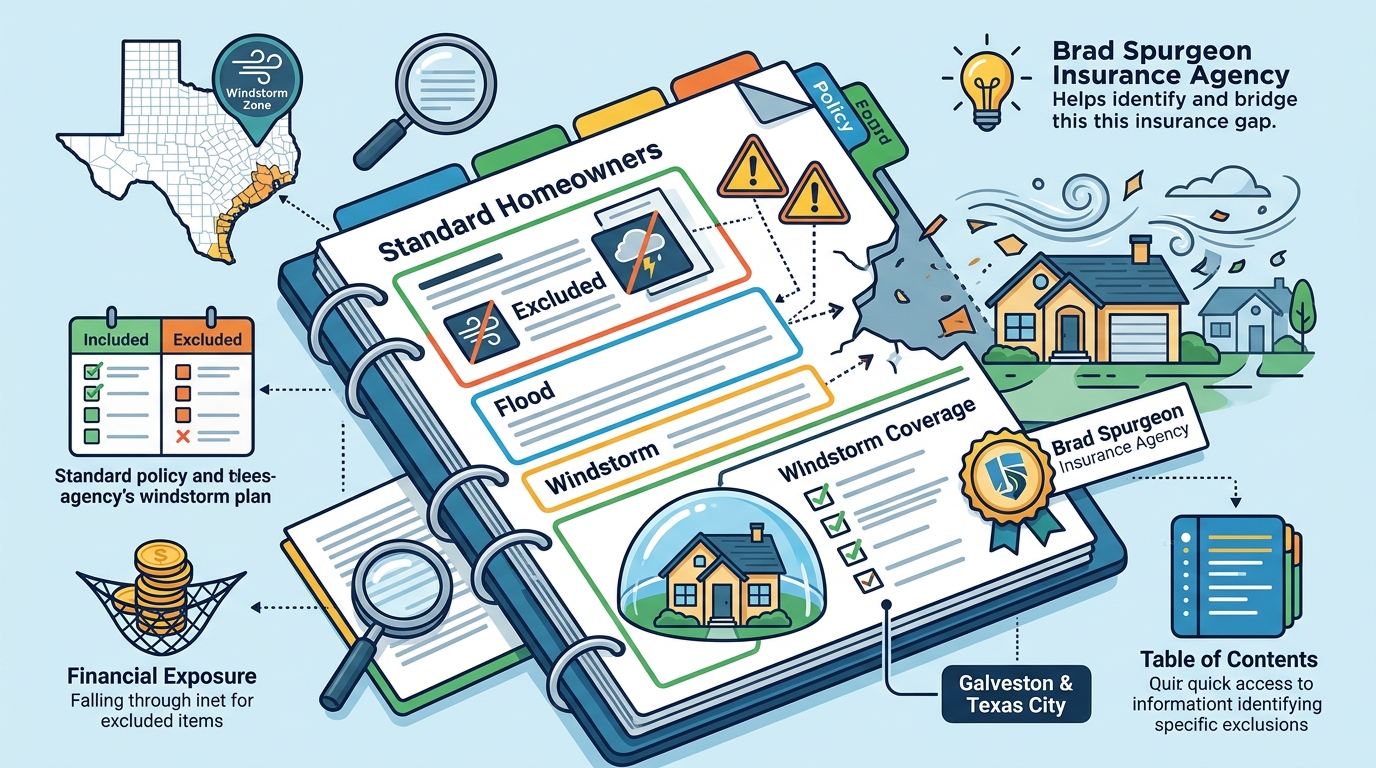
Standard homeowners policies often exclude wind damage in coastal Texas counties, requiring separate windstorm coverage. This gap leaves many residents financially exposed to hurricane-force winds. Brad Spurgeon Insurance Agency helps Galveston and Texas City homeowners identify these specific exclusions to ensure full protection.
The Standard Policy Limit
Home insurance is a type of property insurance that covers a private residence against various perils. In most of the United States, a standard HO-3 policy covers wind damage as part of the dwelling coverage. However, this is not the case in high-risk coastal areas. In Texas, the Texas Windstorm Insurance Association (TWIA) and private carriers often exclude wind and hail from standard policies in designated zones. This means your base policy may pay for fire or theft but not for a roof torn off by a hurricane.
Wind Versus Hail Distinction
Structural Versus Content Damage
When a windstorm hits, it can damage both the structure of your home and the items inside. Standard policies typically cover contents against wind if the wind peril is included. However, if wind is excluded, your contents are also excluded from wind damage. This creates a significant gap in protection. For example, if a hurricane-force wind breaks a window and damages your furniture, a policy that excludes wind will not pay for the window or the furniture. You would need a separate windstorm policy to cover both the structure and the contents.
Deductible Structures
Windstorm policies often use a percentage deductible rather than a flat dollar amount. This means your out-of-pocket cost is a percentage of the total claim amount. For instance, a 2% deductible on a $100,000 claim means you pay $2,000. This structure can make wind claims more expensive for the policyholder. It is important to understand how your deductible works before a storm hits. Brad Spurgeon Insurance Agency can help you review your deductible structure to ensure it aligns with your financial capacity.
Reviewing Your Policy
Reviewing your policy is the best way to identify exclusions. Look for the section titled "Exclusions" or "What This Policy Does Not Cover." This section will list specific perils that are not covered. If wind and hail are listed here, you need a separate windstorm policy. You should also check your coverage limits to ensure they are sufficient to rebuild your home. Inflation can increase construction costs, so your limits may need to be adjusted annually. A professional review can help you catch these gaps before they become a problem.
Key Takeaways
- Standard homeowners policies in coastal Texas often exclude wind and hail damage.
- Windstorm insurance is a separate policy that covers wind, hail, and sometimes storm surge.
- Wind and hail are often treated as separate perils in policy language.
- Windstorm policies often use a percentage deductible, which can increase out-of-pocket costs.
- Reviewing your policy exclusions is essential to identify coverage gaps.
- Brad Spurgeon Insurance Agency provides expert guidance on windstorm coverage for Gulf Coast residents.
Frequently Asked Questions
Does my standard homeowners policy cover wind damage in Galveston?
In most coastal Texas counties, including Galveston, standard homeowners policies exclude wind and hail damage. You will need a separate windstorm policy to cover these perils.
What is the difference between wind and hail coverage?
Wind coverage protects against damage from high winds, while hail coverage protects against damage from ice pellets. Some policies exclude one but not the other, so it is important to check your specific policy language.
How does a percentage deductible work on a windstorm policy?
A percentage deductible means you pay a set percentage of the total claim amount. For example, a 2% deductible on a $50,000 claim means you pay $1,000. This can make wind claims more expensive than standard claims with flat deductibles.
Can I add wind coverage to my existing homeowners policy?
In most coastal Texas counties, you cannot add wind coverage to a standard homeowners policy. You must purchase a separate windstorm policy from a carrier that offers it in your area.
How often should I review my windstorm policy?
You should review your windstorm policy annually, especially before hurricane season. Construction costs and home values can change, so your coverage limits may need to be adjusted to ensure adequate protection.
Protect Your Home with Expert Guidance
Understanding your policy exclusions is the first step to protecting your home. Brad Spurgeon Insurance Agency offers free consultations to help you review your coverage and identify gaps. Contact our team in Texas City to ensure your home is fully protected against wind and other perils. Learn more: Best Lago Mar Homeowners.