
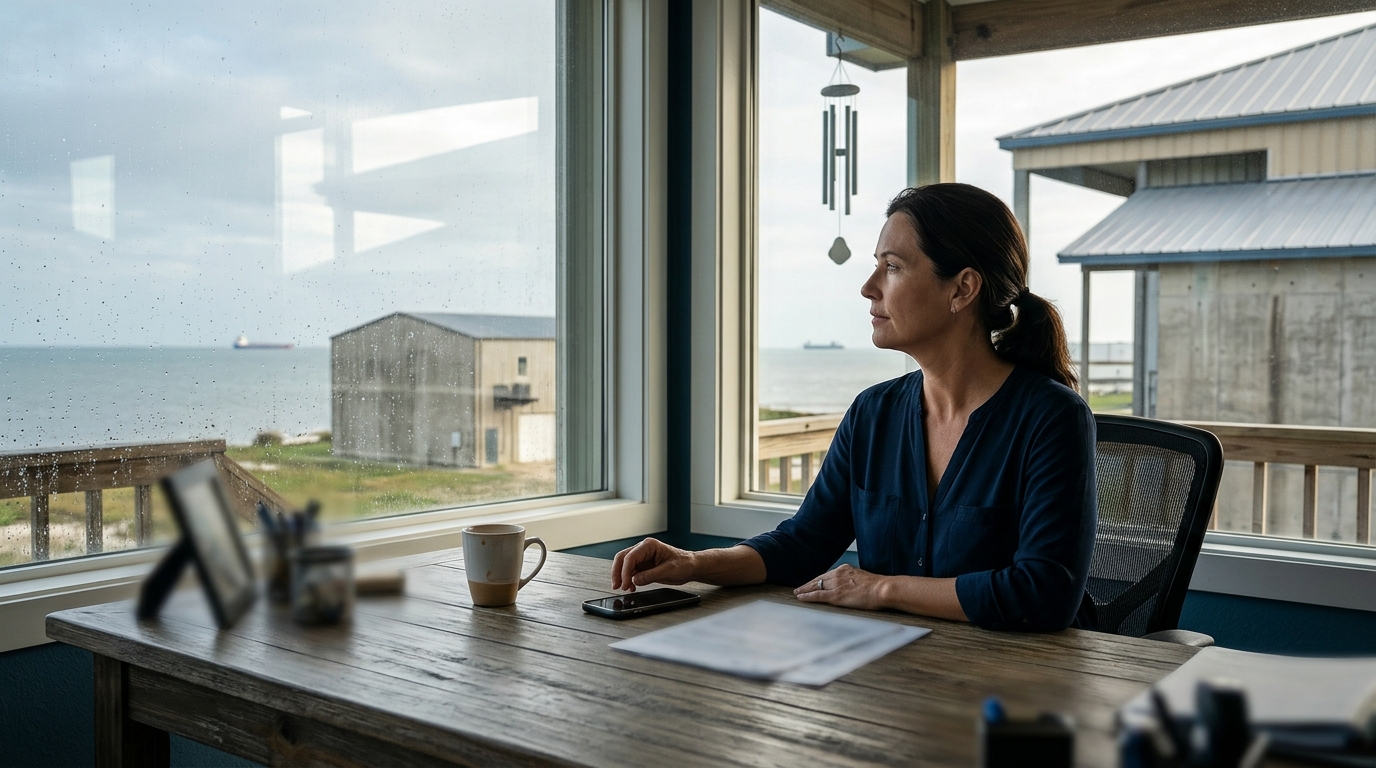
A commercial property non-renewal can be alarming, especially in Texas coastal communities such as Texas City, Galveston County, and nearby Gulf Coast areas. However, a traditional insurer’s decision not to renew your policy does not automatically mean your commercial building is uninsurable or that windstorm protection is unavailable.
The practical issue is usually that you must replace one insurance arrangement with another before the existing policy expires. Depending on the property’s location, construction history, condition, prior loss experience, and available documentation, the replacement may come from a private carrier, a specialty insurer, or the Texas Windstorm Insurance Association (TWIA). A knowledgeable insurance agency can help coordinate the windstorm portion of the risk with the rest of your commercial insurance program. Learn more about the agency’s Home Flood amp Windstorm services.
The direct answer: a non-renewal does not end your options
A non-renewal means the current insurer has decided not to continue the policy at the end of the policy term. It is different from a midterm cancellation and different from a claim denial. The notice should identify the policy expiration date and may state the insurer’s reason, such as changes in underwriting guidelines, coastal catastrophe exposure, roof condition, claim history, or the carrier’s decision to reduce business in a geographic area.
Once you receive the notice, the goal is to arrange replacement coverage with no interruption. That replacement may be broader or narrower than the expiring policy. It may also require separate policies for commercial property, wind and hail, flood, business income, equipment, general liability, or other exposures.
Do not assume that a standard commercial package automatically includes windstorm, hurricane, or hail protection. In coastal Texas, wind and hail may be excluded, subject to a special deductible, or available only through a separate policy or endorsement. Review the declarations page, exclusions, causes-of-loss form, deductibles, sublimits, and business-income provisions rather than relying only on the policy’s title.
Why traditional carriers issue non-renewals
Insurance companies regularly revise their appetite for catastrophe-exposed property. A non-renewal may reflect the insurer’s portfolio strategy rather than a conclusion that your building is unsafe. Common reasons include:
- Exposure to hurricanes, tropical storms, straight-line winds, or wind-driven rain.
- An aging or damaged roof, outdated electrical system, deteriorating exterior, or unrepaired storm damage.
- Prior wind, hail, water, or fire claims.
- Construction, renovation, or roof work that lacks supporting documentation.
- Changes in the carrier’s commercial underwriting guidelines or coastal capacity.
- Insufficient protection against windborne debris, such as vulnerable windows, doors, or garage openings.
- A mismatch between the property’s occupancy, construction type, valuation, or intended use and the insurer’s current risk standards.
Because the reason matters, ask your agent for the complete non-renewal notice and underwriting explanation. A carrier may be willing to reconsider after documented repairs, a professional inspection, updated replacement-cost information, or proof of mitigation, although reconsideration is never guaranteed.
Five steps to take before the policy expires
1. Confirm the exact expiration date
Mark the expiration date shown on the notice and allow sufficient time for underwriting. Commercial windstorm placements can require applications, inspections, loss runs, property reports, photographs, construction records, and lender review. Waiting until the final days may leave fewer choices.

2. Separate the coverage problem into parts
Determine whether the non-renewal affects the entire commercial policy or only a specific peril. Ask whether the expiring policy includes or excludes wind, hail, hurricane, flood, named-storm damage, business interruption, ordinance or law, and equipment breakdown. A replacement plan should identify every exposure rather than replacing only the most visible portion.
3. Assemble the underwriting file
Prepare the building address, occupancy, square footage, year built, construction type, roof age, roof covering, roof replacement date, electrical and plumbing updates, HVAC information, protection systems, prior claims, current statements of value, tenant details, and photographs. Include repair invoices, permits, engineering reports, inspection reports, and existing windstorm certificates if available.
4. Request private-market indications early
A licensed agent who works with multiple insurers may be able to approach specialty commercial markets that use different underwriting criteria from the carrier issuing the non-renewal. Ask for the proposed perils, exclusions, deductibles, valuation basis, coinsurance provisions, business-income terms, and any required improvements.
5. Build a backup plan
If private carriers decline the risk, determine whether the property may qualify for TWIA and whether a separate policy is needed for fire, theft, liability, flood, or other non-wind causes of loss. Keep written declinations or other evidence requested by the agent because TWIA eligibility includes a requirement involving coverage rejection by an authorized insurer.
Private-market windstorm coverage may offer the broadest solution
Private commercial insurers and specialty markets may offer wind and hail coverage either within a commercial package or through a dedicated policy. The available structure depends on the building and the carrier’s underwriting rules. Some markets may consider older buildings, coastal locations, mixed-use properties, retail buildings, warehouses, offices, apartments, and other commercial risks when the information and risk controls are acceptable.
Private coverage can sometimes combine multiple causes of loss, although policy terms vary significantly. Depending on the insurer, a proposal may address wind, hail, fire, theft, vandalism, business income, equipment, liability, and other exposures under one coordinated program or several related policies. The broader the coverage, the more carefully you should compare exclusions and deductibles.
Specialty underwriting may require improvements before binding, such as roof repairs, securing loose exterior items, replacing damaged openings, installing approved protection, correcting electrical deficiencies, or documenting the condition of the building. These requirements are not necessarily a negative; they can identify practical steps that improve insurability and reduce the chance of an uninsured loss.
For Texas City and surrounding Gulf Coast properties, an agency familiar with coastal commercial risks can help present the building accurately to appropriate markets. Private Windstorm can be a resource for reviewing available windstorm, home, and flood insurance solutions. The agency’s broader service information is available through its Windstorm Insurance Inspections Brad page.
How TWIA may help when private coverage is unavailable
TWIA is a state-created association that provides windstorm and hail insurance for eligible residential and commercial properties in the designated Texas catastrophe area. It is commonly described as an insurer of last resort, meaning it may be available when qualifying applicants cannot obtain comparable coverage from authorized private insurers.
TWIA’s current designated area includes the 14 first-tier coastal counties: Aransas, Brazoria, Calhoun, Cameron, Chambers, Galveston, Jefferson, Kenedy, Kleberg, Matagorda, Nueces, Refugio, San Patricio, and Willacy. Parts of Harris County east of Highway 146 are also included. Texas City is in Galveston County, one of the designated first-tier counties. Eligibility still depends on the property and applicant meeting all applicable requirements. ([twia.org](https://www.twia.org/coverage-eligibility/?utm_source=openai))
TWIA does not replace every part of a commercial insurance program. Its windstorm and hail policy should be reviewed carefully for covered property, deductibles, exclusions, limits, and endorsements. Commercial owners will generally need separate insurance for exposures such as fire, theft, general liability, workers’ compensation, automobile liability, and business income if those protections are not included elsewhere.
TWIA applicants must generally show that an authorized insurer actively writing or renewing windstorm and hail coverage in the designated area has declined the required coverage. The agent submitting the application must maintain proof of declination and provide it to TWIA if requested. A surplus-lines insurer’s refusal does not satisfy the same authorized-insurer requirement for this purpose. ([twia.org](https://www.twia.org/declination-requirement/?utm_source=openai))
Commercial eligibility: location, condition, and windstorm certificates
Location and underwriting requirements
For TWIA, the property must be within the designated catastrophe area, and the applicant and property must satisfy the Association’s underwriting requirements. The building must be in an insurable condition, meaning it should be in good repair without unrepaired damage or hazardous conditions. TWIA may inspect properties physically or through remote methods as part of underwriting and may reevaluate continued compliance. ([twia.org](https://www.twia.org/coverage-eligibility/?utm_source=openai))
WPI-8, WPI-8-E, and WPI-8-C certificates
A Certificate of Compliance documents compliance with applicable Texas windstorm building-code requirements. Depending on the work and issuing authority, relevant documentation may include a WPI-8 or WPI-8-E issued through the Texas Department of Insurance, or a WPI-8-C issued by TWIA for certain completed improvements during the period when TWIA accepted those applications.
For commercial structures seeking TWIA wind and hail coverage, applicable construction, additions, alterations, remodeling, enlargements, repairs, and re-roofing generally need to be documented according to the required windstorm standards. TDI explains that commercial structures must follow the adopted construction guidelines when they will be insured through TWIA. ([tdi.texas.gov](https://www.tdi.texas.gov/wind/inspectionproc.html?utm_source=openai))
Search for existing certificates before assuming that one is missing. TDI provides a Windstorm Inspection resource for looking up WPI-8 and WPI-8-E records, while TWIA maintains information concerning WPI-8-C certificates. If completed work lacks documentation, ask a qualified professional whether a completed-improvement process may be available. Do not begin new repairs or renovations without first discussing the inspection and certification process with the appropriate professionals, because work performed without required documentation can complicate future eligibility. ([twia.org](https://www.twia.org/windstorm-certification/?utm_source=openai))
Flood-zone considerations
Some properties in designated flood zones may also need proof of flood insurance through the National Flood Insurance Program when the applicable construction or alteration conditions are met and NFIP coverage is available. Windstorm insurance and flood insurance address different causes of loss. Wind-driven rain entering through a storm-damaged opening, storm surge, rising water, and surface flooding may be treated differently under the applicable policies. Coordinate both coverages instead of assuming one policy covers every hurricane-related loss. ([twia.org](https://www.twia.org/coverage-eligibility/?utm_source=openai))
How to compare replacement proposals
The lowest premium is not necessarily the least expensive option after a serious storm. Compare the proposals line by line, especially the items below:
- Wind and hail limit: Confirm whether the limit reflects replacement cost, actual cash value, stated value, or another valuation method.
- Named-storm or hurricane deductible: Determine whether it is a flat dollar amount or a percentage of the insured value, and identify when it applies.
- Coinsurance: Check whether a coinsurance penalty could reduce claim payment if the building is underinsured.
- Roof settlement: Review whether the roof is paid on replacement cost or actual cash value and whether age-based restrictions apply.
- Business income: Confirm the limit, waiting period, period of restoration, extra expense, and whether a wind exclusion affects the coverage.
- Ordinance or law: Determine whether additional costs to comply with current building codes are covered.
- Debris removal and emergency services: Check sublimits and conditions that may matter after a hurricane.
- Flood: Verify whether flood is excluded and arrange a separate flood policy when appropriate.
- Liability: Make sure general liability and premises-related exposures are insured even if wind coverage is placed separately.
- Lender requirements: Confirm that the replacement arrangement satisfies mortgagee, loss-payee, or loan-covenant requirements.
- Insurer strength and claims process: Review the carrier’s financial profile, licensing, policy form, and claims procedures with your agent.
A separate windstorm policy may be workable, but it requires coordination. The building limit, mortgagee clause, valuation, deductible, loss-payee information, and business-income assumptions should align across the commercial property program.
TWIA and private-market coverage: a practical comparison
| Consideration | TWIA | Private market |
|---|---|---|
| Primary purpose | Provides windstorm and hail coverage for eligible properties when qualifying private coverage is unavailable. | May provide dedicated wind coverage or a broader commercial insurance program, subject to carrier underwriting. |
| Geographic availability | Limited to the designated Texas catastrophe area. | Depends on the insurer, property location, and underwriting appetite. |
| Commercial eligibility | Commercial buildings and business personal property may be eligible if location, condition, certification, declination, and other requirements are met. | Varies by carrier and may depend on construction, occupancy, roof, losses, protection features, and financial information. |
| Proof of private declination | Generally required under TWIA eligibility rules through an authorized insurer’s refusal of qualifying coverage. | Not applicable as a TWIA prerequisite, although carriers may request prior insurance history and loss information. |
| Building documentation | Applicable WPI certification and evidence of code compliance are important, with limited statutory exceptions. | May require inspections, engineering reports, permits, photographs, roof records, and mitigation documentation. |
| Other perils | Do not assume TWIA covers fire, theft, liability, flood, or every commercial property exposure. | May be packaged with other property and liability coverages, but exclusions and deductibles must be reviewed. |
| Best use | A potential safety-net option when the property qualifies and the private market cannot provide the needed wind protection. | Often the first option to investigate when a carrier can offer suitable terms for the building and business. |
Example: replacing coverage for a Texas City retail building
Imagine a retail building in Texas City with an aging roof and a commercial package policy that will not renew on October 1, 2026. The owner should not wait until September to search for coverage. The agent can first confirm the non-renewal reason, order updated loss runs, document the roof’s condition, verify the building’s replacement cost, locate any WPI records, and approach private commercial markets.
If a private carrier offers a package that includes wind and hail, the owner should compare its hurricane deductible, roof terms, business-income limit, flood exclusion, and lender requirements with the expiring policy. If private markets decline the wind risk, the agent can evaluate TWIA eligibility, collect the required authorized-insurer declination evidence, confirm Galveston County location, review the building’s condition, and verify applicable windstorm certification.
The final solution could involve TWIA for wind and hail plus separate commercial property, flood, liability, and business-income coverage. Alternatively, a specialty private carrier could offer a coordinated package. The correct answer depends on the building—not simply on the fact that the prior insurer issued a non-renewal.
Key takeaways for commercial owners
- A traditional insurer’s non-renewal does not automatically make a Texas commercial property uninsurable.
- Start the replacement process as soon as the notice arrives and confirm the exact expiration date.
- Explore private commercial and specialty markets before relying on a state-backed last-resort option.
- TWIA may cover eligible commercial property in its designated coastal area, including qualifying property in Galveston County, but eligibility requirements apply.
- TWIA applicants generally need evidence that an authorized insurer declined qualifying coverage.
- Commercial buildings may need applicable WPI-8, WPI-8-E, or WPI-8-C documentation for TWIA eligibility.
- Keep windstorm, flood, property, liability, and business-income needs coordinated; one policy may not cover every hurricane-related loss.
- Compare deductibles, valuation, roof settlement, exclusions, coinsurance, business-income terms, and lender requirements—not only the premium.
- Correcting roof or building deficiencies before underwriting may improve the property’s insurability and available options.
Frequently asked questions
Can I obtain commercial windstorm coverage after receiving a non-renewal?
Often, yes. A non-renewal means your current policy will end at its stated expiration date; it does not by itself prohibit you from obtaining replacement coverage. An agent can approach private commercial markets and, if appropriate, evaluate TWIA eligibility.
Can TWIA insure a commercial property in Texas City?
Texas City is located in Galveston County, a designated first-tier coastal county within TWIA’s catastrophe area. The property must still satisfy TWIA’s other requirements, including applicable underwriting, property-condition, certification, and private-coverage-declination requirements. ([twia.org](https://www.twia.org/coverage-eligibility/?utm_source=openai))
Does a non-renewal notice automatically qualify me for TWIA?
No. The notice may help document the insurance problem, but TWIA eligibility involves additional conditions. The applicant and property must meet the Association’s requirements, and the agent must maintain proof of declination from an authorized insurer when required. ([twia.org](https://www.twia.org/declination-requirement/?utm_source=openai))
What is a WPI-8 certificate?
A WPI-8 is a Texas windstorm Certificate of Compliance associated with qualifying construction or improvements. WPI-8-E certificates relate to completed improvements processed through TDI, while WPI-8-C certificates were issued by TWIA for certain completed improvements during the applicable program period. These documents provide evidence that applicable windstorm building-code requirements were met. ([twia.org](https://www.twia.org/windstorm-certification/?utm_source=openai))
What if my commercial building does not have a WPI-8?
Do not assume the property is permanently uninsurable. First, search existing TDI and TWIA records and identify the construction or improvement history. For completed work, ask a qualified Texas inspector or licensed professional engineer about the available certification process. Commercial properties generally do not receive the same residential exceptions described in some TWIA guidance, so a professional review is important. ([twia.org](https://www.twia.org/windstorm-certification/?utm_source=openai))
Does TWIA cover fire, theft, flood, and liability?
Do not treat TWIA as a complete commercial insurance program. TWIA is designed for windstorm and hail coverage. Review the policy carefully and arrange separate commercial property, flood, liability, business-income, and other necessary insurance when those exposures are not covered elsewhere.
How quickly can replacement windstorm coverage be obtained?
The timeline varies. A straightforward private-market submission may move quickly when applications, inspections, photographs, loss runs, and valuation information are complete. More complex risks or TWIA placements may require additional underwriting and documentation. Begin before the current policy expires and avoid assuming that a quote, binder request, or application alone constitutes bound coverage.
Should I use a separate windstorm policy and commercial property policy?
That can be an appropriate structure in coastal Texas, but the policies must be coordinated. Confirm matching building values, mortgagee information, deductibles, business-income assumptions, exclusions, and claims responsibilities with your agent.
Protect your commercial property before the non-renewal date
A non-renewal notice is a signal to begin a structured insurance review—not a reason to assume coverage is impossible. Brad Spurgeon Insurance Agency, operating as Private Windstorm, helps Texas City and surrounding Gulf Coast clients evaluate home, flood, and windstorm insurance options. Bring your non-renewal notice, current policy, property details, loss history, roof records, and any WPI documentation to the conversation.
For a commercial windstorm review and guidance on private-market and TWIA options, contact Private Windstorm. You can also review the agency’s other insurance resources, including Auto Insurance Brad Spurgeon, when coordinating your broader insurance needs.
Important: Insurance availability, eligibility, policy wording, deductibles, required inspections, and underwriting rules can change. This article is general information, not a guarantee of coverage or a substitute for reviewing your policy and consulting a licensed Texas insurance professional.