
Understanding the structural divide between state-run insurance pools and private market windstorm coverage is critical for Texas property owners facing increasing storm risks. Recent data indicates that private insurers are retreating from high-risk coastal zones, leaving state-backed entities like the Texas Windstorm Insurance Association (TWIA) to cover a significant portion of the market. This shift has created a complex landscape where policyholders must navigate distinct regulatory frameworks, claim processing speeds, and financial stability metrics to ensure their assets remain protected against catastrophic wind events. (Home Flood amp Windstorm)
Understanding the State Pool Model
A state-run insurance pool operates as a residual market mechanism designed to provide coverage when the private market withdraws. In Texas, the Texas Windstorm Insurance Association (TWIA) serves this specific function for designated coastal counties. TWIA is not a traditional insurance company but rather a state-created entity that offers windstorm and hail coverage only. It does not provide comprehensive home insurance, meaning homeowners must secure a separate base policy for perils like fire or theft.
The primary appeal of the state pool is its ability to offer coverage at a lower premium than private insurers might charge for high-risk zones. This is because TWIA is backed by the full faith and credit of the state of Texas, allowing it to issue bonds to pay claims. However, this model comes with strict geographic limitations. Coverage is restricted to properties within the TWIA service area, which includes Galveston, Brazoria, and other coastal counties. Properties outside these boundaries must seek private market solutions.
Another defining characteristic of the state pool is its regulatory oversight. TWIA operates under the Texas Department of Insurance (TDI), which mandates specific filing procedures for rates and policy forms. This oversight ensures that premiums remain relatively stable but also limits the flexibility of the insurer to innovate or offer customized endorsements. For homeowners, this means a standardized product with less room for negotiation compared to private carriers.
Private Market Dynamics
Private market windstorm coverage is provided by commercial insurance carriers that operate for profit. These companies assess risk based on actuarial data, property construction details, and historical loss patterns. Unlike state pools, private insurers can offer bundled policies that include windstorm coverage alongside standard homeowners insurance. This bundling simplifies the insurance process by consolidating multiple policies into one statement and one deductible structure.
The advantage of the private market is the breadth of coverage options. Private carriers often provide additional living expenses, personal property coverage, and liability protection within a single policy. They may also offer specialized endorsements for hurricane deductibles, which can be structured as a percentage of the home's insured value rather than a flat dollar amount. This flexibility allows homeowners to tailor their risk exposure to their financial comfort level.
However, the private market is highly sensitive to economic conditions and catastrophic loss events. When storms cause significant payouts, private insurers may raise premiums drastically or withdraw entirely from high-risk counties. This volatility creates uncertainty for policyholders who may find themselves without coverage options during peak storm seasons. For those seeking stability, understanding the home insurance landscape is essential to making informed decisions.
Coverage and Limits
One of the most significant differences lies in the maximum coverage limits available. TWIA has statutory limits on the amount of windstorm coverage it can provide per property. For example, coverage limits are capped at specific dollar amounts for different types of structures, such as single-family homes versus manufactured homes. Homeowners requiring coverage beyond these limits must purchase excess insurance through the private market, adding complexity and cost to their protection strategy.
Private insurers, by contrast, often offer higher or unlimited coverage limits depending on the carrier's risk appetite and reinsurance arrangements. This makes private coverage more suitable for high-value properties or those in areas with lower perceived risk. However, private policies may include exclusions or sub-limits for certain types of wind damage, such as damage caused by hurricanes versus tropical storms. It is crucial to read the fine print to understand what constitutes a covered wind event.
Additionally, the definition of "windstorm" can vary between the two models. State pools often have a broader definition that includes all wind-related damage regardless of the storm's origin. Private insurers may distinguish between wind damage from named storms and other wind events, potentially affecting claim eligibility. This distinction can lead to disputes during the claims process, making clear policy language vital.
Claims Processing and Adjusters
The claims process differs markedly between state-run pools and private carriers. TWIA utilizes a network of approved adjusters who are trained specifically in windstorm and hail damage assessment. These adjusters follow strict guidelines set by the association to ensure consistency in damage evaluation. While this standardization can be beneficial, it may also feel rigid to policyholders who are accustomed to the more personalized service of private carriers.
Private insurers often have their own internal adjusters or contracted independent adjusters who evaluate claims based on the specific policy terms. This can lead to faster resolution times for straightforward claims but may also result in more aggressive negotiation tactics regarding the extent of damage. Policyholders with private coverage may have more leverage in the claims process, especially if they have a strong relationship with their agent or carrier.
Another critical factor is the speed of claim payouts. State pools are required by law to process claims within specific timeframes, but the volume of claims after a major storm can cause delays. Private insurers may also experience delays due to high claim volumes, but their financial resources and reinsurance backing can sometimes allow for quicker initial payments. For detailed guidance on managing claims, visit our Report a Claim resources.
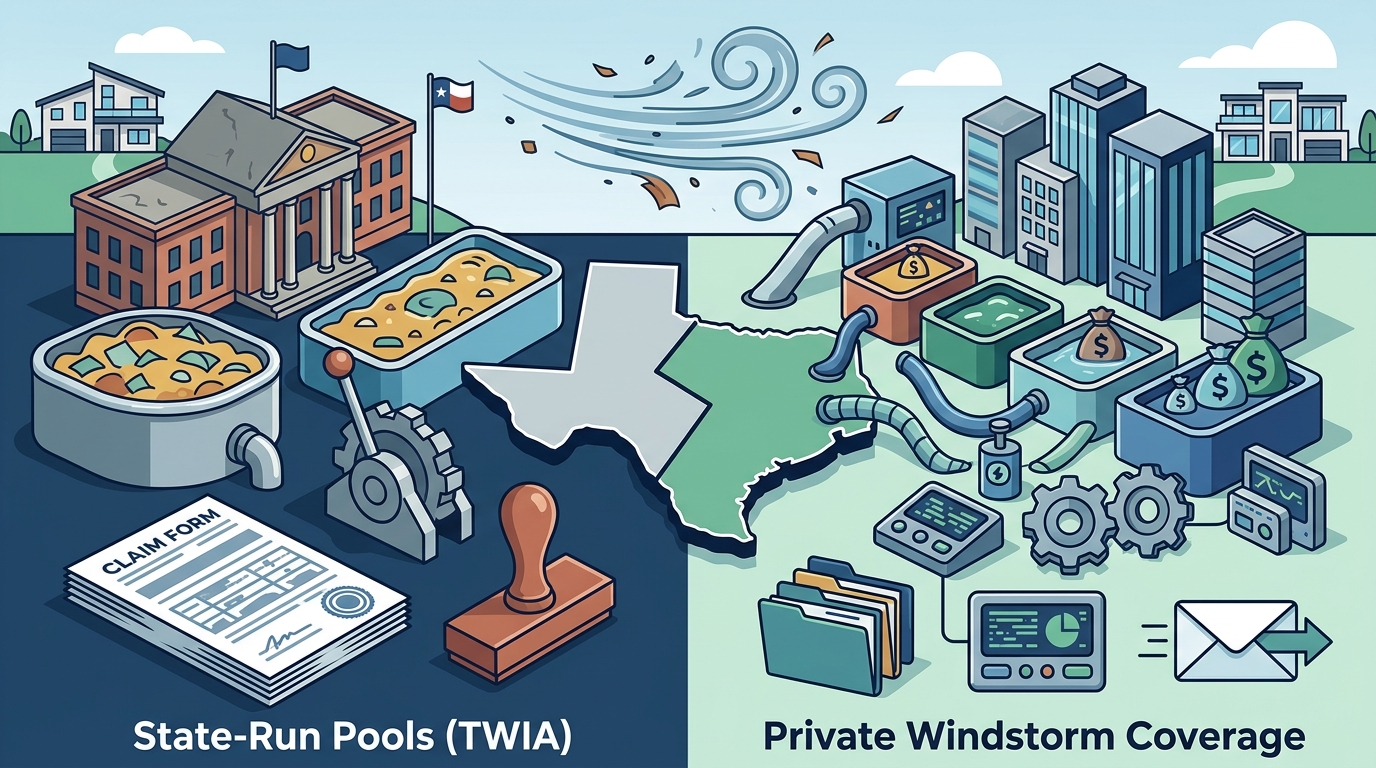
Financial Stability and Reinsurance
Financial stability is a key concern for any insurance policyholder. TWIA's financial strength is derived from its ability to levy assessments on policyholders and issue bonds backed by the state. This structure provides a high degree of confidence that claims will be paid even after catastrophic events. However, it also means that policyholders may face special assessments to cover losses, which can increase the effective cost of the policy over time.
Private insurers rely on reinsurance contracts to manage their risk exposure. These contracts with global reinsurance companies help stabilize premiums and ensure that the carrier has sufficient capital to pay large claims. The financial health of a private insurer is therefore tied to its reinsurance relationships and its own capital reserves. Rating agencies like A.M. Best evaluate these factors to provide credit ratings that indicate financial strength.
Understanding the insurance carriers available in your area can help you gauge the stability of your options. Private carriers with strong ratings and robust reinsurance programs are generally more resilient during market downturns. However, they may also be more likely to adjust premiums or coverage terms in response to changing risk profiles.
Comparison Summary
| Feature | State-Run Pool (e.g., TWIA) | Private Market Coverage |
|---|---|---|
| Coverage Type | Windstorm and hail only | Bundled with homeowners insurance |
| Geographic Limits | Designated coastal counties only | Available in most regions |
| Coverage Limits | Statutory caps apply | Higher or unlimited limits possible |
| Premium Stability | Regulated, potentially lower | Market-driven, volatile |
| Claims Process | Standardized, approved adjusters | Varies by carrier |
| Financial Backing | State credit and assessments | Reinsurance and capital reserves |
Key Takeaways
- State-run pools like TWIA provide essential coverage in high-risk coastal areas where private insurers may withdraw.
- Private market coverage offers bundled policies with higher limits and greater flexibility for customization.
- TWIA coverage is limited to wind and hail, requiring a separate base policy for comprehensive protection.
- Financial stability for state pools relies on state backing and special assessments, while private carriers use reinsurance.
- Geographic restrictions are a major factor, with state pools limited to specific coastal counties.
- Claims processing in state pools is standardized, which can lead to consistency but less personalization.
- Homeowners should evaluate both options based on their property location, value, and risk tolerance.
Frequently Asked Questions
Can I buy windstorm coverage from a private insurer if I live in a TWIA county?
Yes, private insurers can offer windstorm coverage in TWIA counties, but they must comply with state regulations. Some private carriers have withdrawn from these areas due to high risk, making TWIA the primary option for many residents.
What happens if TWIA cannot pay claims after a major storm?
TWIA is backed by the full faith and credit of the state of Texas. If claims exceed its reserves, it can levy special assessments on policyholders and issue bonds to ensure all valid claims are paid.
Is private windstorm coverage more expensive than TWIA?
Private windstorm coverage can be more expensive, especially for high-risk properties. However, it may offer better value through bundled discounts and higher coverage limits. The cost depends on the specific carrier and property details.
Do I need both TWIA and private insurance?
If you live in a TWIA county, you typically need TWIA for wind/hail and a separate base policy for other perils. Some private insurers offer "excess" windstorm policies that sit above TWIA limits, providing additional protection.
How do I report a claim with TWIA?
You can report a claim through the TWIA website or by contacting your insurance agent. TWIA will assign an approved adjuster to evaluate the damage and process the claim according to state guidelines.
What is the difference between a hurricane deductible and a standard deductible?
A hurricane deductible is typically a percentage of the home's insured value (e.g., 2% to 5%) rather than a flat dollar amount. It applies specifically to wind damage caused by named storms, whereas standard deductibles apply to other covered perils.
Can I switch from TWIA to private insurance?
Yes, if a private insurer is willing to write the policy. However, availability may be limited in high-risk areas. It is important to ensure there is no gap in coverage when switching policies.
Secure Your Coverage Today
Navigating the differences between state-run pools and private market windstorm coverage requires expert guidance. At Private Windstorm, we specialize in helping Texas homeowners find the best protection for their unique needs. Whether you need a flood insurance quote, a windstorm policy, or a comprehensive review of your current coverage, our team is here to assist. Contact us today to schedule a free consultation and ensure your home is protected against the next storm.