
Living on the Texas Gulf Coast offers unparalleled beauty, but it also exposes homeowners to significant weather risks. Windstorm insurance is a critical component of property protection in this region, yet the cost of these policies can vary dramatically. Understanding the specific drivers behind these premiums is essential for budgeting and risk management. Recent industry data indicates that coastal property insurance costs have risen sharply due to increased severity of weather events and higher construction material prices. (Home Insurance Flood Windstorm)
Understanding Windstorm Coverage
Windstorm insurance is a specialized policy designed to cover damage caused by high winds, hail, and tornadoes. Standard homeowners insurance policies typically exclude wind damage in high-risk coastal zones. This exclusion exists because the frequency and severity of wind events in these areas create a unique risk profile for insurers.
Windstorm insurance is a separate policy or endorsement that fills this gap. It protects the physical structure of your home and often your personal belongings from wind-related destruction. Without this coverage, a single storm could result in catastrophic financial loss. For homeowners in Texas City and surrounding Gulf Coast communities, securing this protection is not just a recommendation, but a necessity.
Many carriers offer a Windstorm Included Home Policy that simplifies the process by bundling these essential protections. This approach ensures that your primary residence is shielded against the most common coastal threats without requiring multiple disjointed policies.
Property Construction and Design
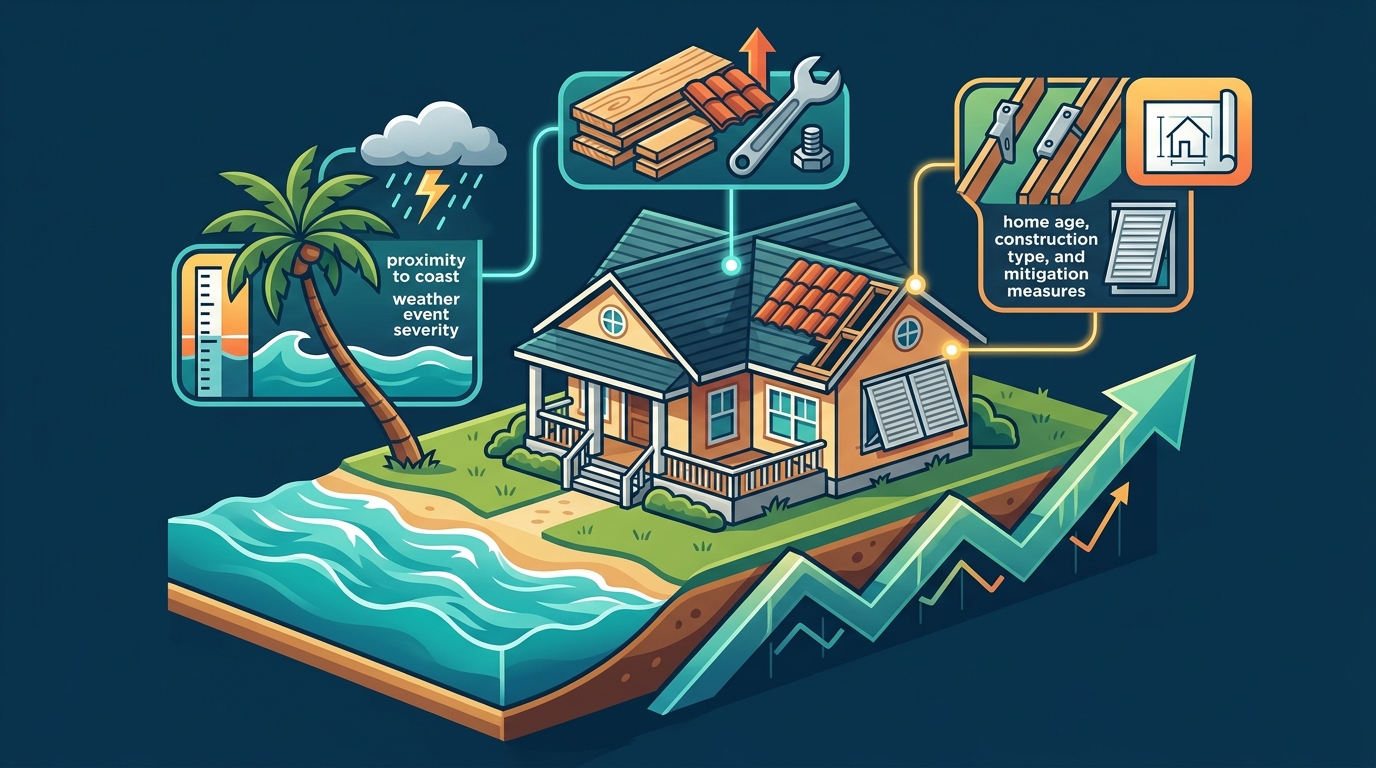
The physical characteristics of your home are among the most significant determinants of your premium cost. Insurers assess the structural integrity of a building to predict its likelihood of surviving a severe wind event.
Roof Type and Age
Your roof is the first line of defense against wind. The age of your roof directly impacts your premium. Older roofs are more susceptible to failure under high winds, leading to higher insurance costs. Additionally, the material used matters. Metal roofs and impact-resistant shingles often command lower premiums because they offer superior durability.
Building Code Compliance
Homes built or renovated under newer building codes are generally cheaper to insure. These codes require stronger connections between the roof and the frame, as well as reinforced windows and doors. If your home was constructed before modern wind-resistant standards were implemented, you may face higher rates due to the increased vulnerability of the structure.
Foundation and Elevation
The way your home sits on its lot also matters. Homes on elevated foundations or pilings often have different risk profiles compared to slab foundations. While elevation can protect against flood damage, it may also expose the structure to different wind dynamics. Insurers analyze these factors to determine the overall stability of the property.
Location and Geographic Exposure
Geography plays a pivotal role in determining insurance costs. Even within the same county, two homes can have vastly different premiums based on their specific location.
Proximity to the Coast
Distance from the shoreline is a primary factor. Homes closer to the water are exposed to higher wind speeds and greater storm surge risks. This proximity increases the likelihood of a claim, which insurers price into the premium. As you move inland, the risk typically decreases, leading to lower costs.
Wind Zone Classification
Insurance carriers use wind zone maps to classify areas based on historical wind data. Texas Gulf Coast communities are often placed in high-risk wind zones. These classifications dictate the base rate for all properties in that zone. Understanding your specific wind zone can help you anticipate your potential costs.
Local Weather History
Recent storm activity in your immediate neighborhood can also influence rates. If your area has experienced multiple claims in a short period, insurers may adjust their pricing models to reflect the increased local risk. This is a common practice in the industry to maintain solvency and cover future losses.
Deductibles and Policy Limits
Your choice of deductible and coverage limits has a direct impact on your monthly or annual premium. These choices allow you to balance your upfront costs with your financial protection.
Wind Deductibles
Windstorm policies often have separate deductibles, which are typically calculated as a percentage of the dwelling coverage limit rather than a flat dollar amount. For example, a 2% deductible on a $500,000 home would require you to pay $10,000 out of pocket before insurance kicks in. Choosing a higher percentage deductible can significantly lower your premium.
Coverage Limits
The amount of coverage you select for your dwelling and personal property also affects the cost. Higher limits provide more protection but come with higher premiums. It is crucial to ensure your limits are sufficient to rebuild your home at current construction costs, not just the market value of the land.
Additional Living Expenses
Many policies include coverage for additional living expenses if your home becomes uninhabitable after a storm. The limit you choose for this coverage adds to the total premium but provides essential financial support during repairs.
Mitigation Strategies and Discounts
Insurers reward homeowners who take proactive steps to reduce risk. Implementing mitigation strategies can lead to substantial discounts on your windstorm premium.
Impact-Resistant Features
Installing impact-resistant windows and doors can lower your premium. These features prevent wind-driven debris from breaking glass, which reduces the likelihood of interior damage and subsequent claims. Many carriers offer specific discounts for these upgrades.
Roof Certification
Some insurers require or offer discounts for roofs that have passed a wind certification inspection. This process involves a professional assessment of the roof's condition and attachment methods. A passing grade demonstrates that your roof is less likely to fail in high winds.
Claims History
Your personal claims history is a major factor. If you have filed multiple wind or hail claims in the past, your premium will likely be higher. Insurers view frequent claimants as higher risk. Maintaining a clean claims history can help keep your rates competitive.
Market Forces and Carrier Availability
External economic factors and carrier availability also influence premium costs. The insurance market is dynamic and responds to broader trends.
Reinsurance Costs
Insurance companies purchase reinsurance to protect themselves against large losses. When reinsurance costs rise, insurers often pass these costs on to policyholders. This trend has been observed globally as climate change increases the frequency of severe weather events.
Carrier Competition
The number of carriers willing to write windstorm policies in a specific area affects pricing. In high-risk zones, fewer carriers may be available, reducing competition and potentially driving up prices. Working with a local agency that has access to multiple carriers can help you find the most competitive rate.
Regulatory Environment
State regulations and insurance pools, such as the Texas Windstorm Insurance Association (TWIA), play a role in pricing. TWIA provides a backstop for windstorm coverage in coastal Texas. Understanding how TWIA rates compare to private market rates is essential for making an informed decision.
Key Takeaways
- Windstorm insurance is essential for coastal homeowners as standard policies exclude wind damage.
- Roof age and type are primary factors, with newer, impact-resistant roofs often qualifying for lower premiums.
- Proximity to the coast significantly increases risk and cost due to higher wind speeds and storm surge potential.
- Wind deductibles are typically a percentage of the dwelling limit, not a flat fee, impacting out-of-pocket costs.
- Mitigation discounts are available for impact-resistant windows, doors, and certified roofs.
- Claims history directly influences rates, with frequent claims leading to higher premiums.
- Local expertise is crucial for navigating carrier options and finding the best value in high-risk zones.
Frequently Asked Questions
What is the difference between windstorm insurance and homeowners insurance?
Homeowners insurance typically excludes wind damage in high-risk coastal areas. Windstorm insurance is a separate policy or endorsement that specifically covers damage caused by high winds, hail, and tornadoes. This separation allows insurers to price the unique risks of coastal living accurately.
How is the windstorm deductible calculated?
Windstorm deductibles are usually calculated as a percentage of your dwelling coverage limit. For example, a 2% deductible on a $400,000 home would be $8,000. This is different from standard homeowners deductibles, which are often flat dollar amounts.
Can I get windstorm insurance if my home is near the beach?
Yes, but it may be more expensive. Homes near the beach are considered high-risk due to exposure to storm surge and high winds. However, specialized carriers and agencies like Brad Spurgeon Insurance Agency Inc. provide access to policies tailored for these high-risk locations.
What discounts are available for windstorm insurance?
Discounts may be available for impact-resistant roofs, windows, and doors. Some carriers also offer discounts for homes built under newer building codes or for policyholders with a clean claims history. Contact your agent to explore specific savings opportunities.
Why are windstorm premiums so high in Texas?
Premiums are high due to the frequency and severity of storms in the region, rising construction costs, and increased reinsurance costs for carriers. Additionally, the high concentration of property in coastal zones increases the overall risk pool.
How often should I review my windstorm coverage?
You should review your coverage annually or after any significant home improvement. Construction costs rise over time, and your home's value may change. Regular reviews ensure you have adequate protection and are not overpaying for unnecessary coverage.
What is the role of TWIA in windstorm insurance?
The Texas Windstorm Insurance Association (TWIA) provides windstorm and hail coverage for homeowners in coastal Texas who cannot find it in the private market. TWIA rates are regulated by the state, but private market options may offer different terms and conditions.
Secure Your Coverage Today
Navigating the complexities of windstorm insurance requires expert guidance. At Brad Spurgeon Insurance Agency Inc., we specialize in helping Texas Gulf Coast homeowners secure the right protection. Our team understands the unique risks of coastal living and works with multiple carriers to find the best rates for your needs.
Whether you need a Home Insurance Quote or specific Windstorm Insurance Quote, we are here to help. Visit our About Our Agency page to learn more about our commitment to service. Contact us today at (409) 945-4746 to schedule a free consultation and protect your home.