
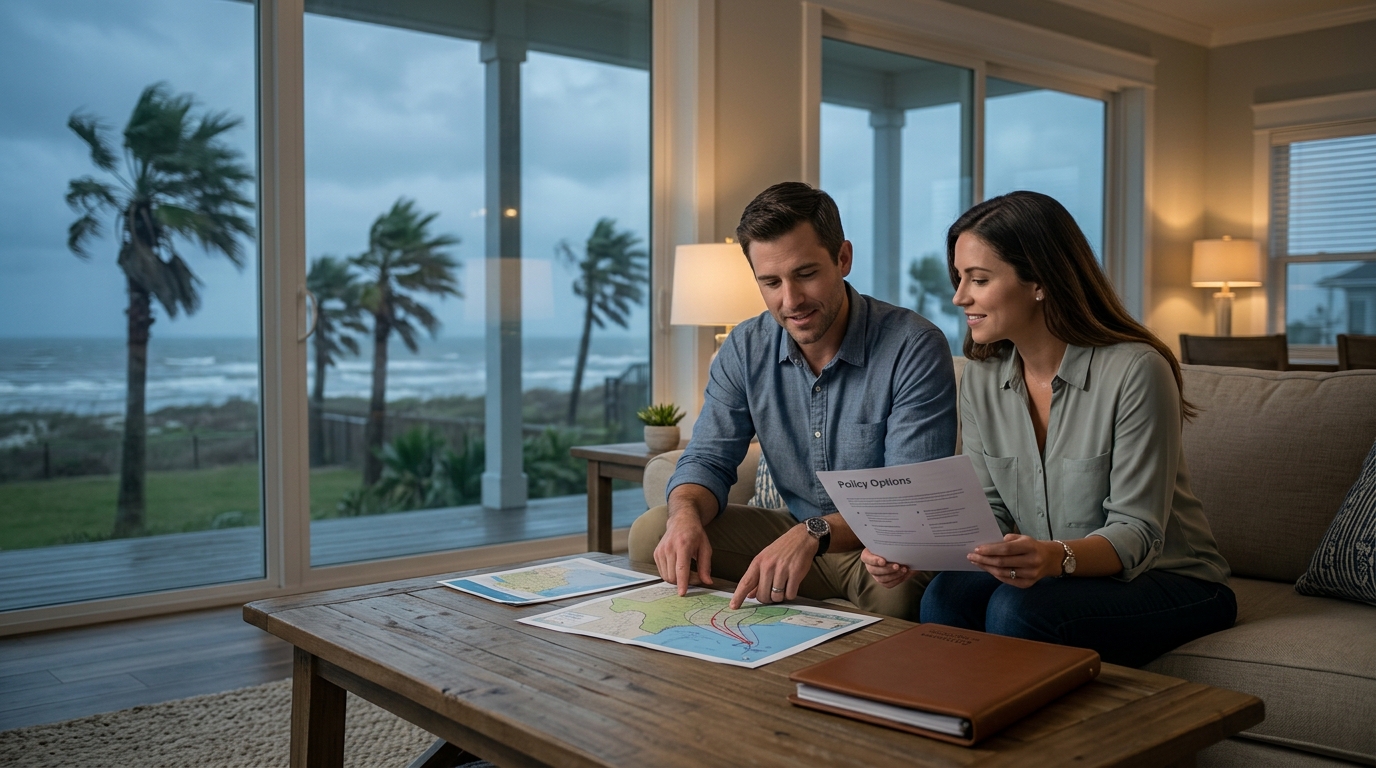
Homeowners in coastal regions face unique risks that standard policies often exclude. Understanding the distinction between state-run insurance pools and private market windstorm coverage is critical for securing adequate protection. Data indicates that wind and hail cause billions of dollars in property damage annually, making the choice of carrier a financial decision that impacts long-term stability. This guide breaks down the operational, financial, and structural differences to help you make an informed decision. (Home Insurance Flood Windstorm)
Understanding the Basics of Windstorm Coverage
Windstorm insurance is a specialized policy designed to cover damage caused by high winds, hail, and tornadoes. Standard homeowners insurance policies typically exclude these perils because the risk is too high for general carriers to absorb without specific underwriting. Windstorm insurance is a specialized policy designed to cover damage caused by high winds, hail, and tornadoes. This coverage is essential for properties located in hurricane-prone areas, such as the Texas Gulf Coast.
When you purchase a policy, you are essentially buying protection against the most destructive forces of nature. The market for this coverage is split between two primary entities: state-run insurance pools and private insurance carriers. Each operates under different regulatory frameworks, financial models, and service philosophies. Choosing between them requires a deep dive into how each entity manages risk and serves its policyholders.
State-Run Insurance Pools Explained
State-run insurance pools, often referred to as "insurers of last resort," are created by state legislatures to provide coverage in markets where private insurers have withdrawn. These pools exist because the private market often deems certain coastal areas too risky to insure profitably. State-run insurance pools are created by state legislatures to provide coverage in markets where private insurers have withdrawn. They step in to fill the gap, ensuring that residents can still obtain mandatory windstorm coverage.
These pools operate similarly to traditional insurance companies but with a public mandate. They are funded by policyholder premiums and, in some cases, by assessments on private insurers. The primary goal is stability and availability rather than profit maximization. However, this model often leads to higher premiums for policyholders because the risk pool is concentrated in high-risk areas. Additionally, state-run pools may have stricter underwriting guidelines to limit their exposure to catastrophic losses.
For homeowners, the appeal of a state-run pool is often its availability. If private carriers refuse to write a policy in your area, the state pool may be your only option. However, this availability comes with trade-offs. Policyholders must carefully review the coverage limits and exclusions, as state-run pools may not offer the same breadth of optional endorsements as private carriers. It is also important to note that state-run pools are subject to political and legislative changes, which can impact their financial health and operational capacity.
Private Market Windstorm Dynamics
Private market windstorm coverage is offered by commercial insurance companies that operate for profit. These carriers use complex actuarial models to assess risk and price policies accordingly. Private market windstorm coverage is offered by commercial insurance companies that operate for profit. They have the flexibility to design products that cater to specific customer needs, often offering more comprehensive coverage options than state-run pools.
One of the key advantages of the private market is competition. Multiple carriers compete for your business, which can drive innovation in product design and customer service. Private insurers often offer bundled policies, such as combining home, auto, and umbrella coverage, which can simplify management and potentially lower overall costs. They also tend to have more robust technology platforms for claims filing and policy management.
However, the private market is also more volatile. During periods of high loss activity, such as after a major hurricane season, private insurers may raise premiums significantly or even withdraw from certain markets. This volatility can make budgeting difficult for homeowners. Additionally, private carriers may have stricter underwriting criteria, requiring homes to meet specific construction standards or wind mitigation discounts to qualify for coverage.
Cost and Premium Structures
Premium pricing is one of the most significant differentiators between state-run pools and private carriers. State-run pools often have a more uniform pricing structure, which can be both a pro and a con. On one hand, it ensures that everyone in a similar risk zone pays a similar rate. On the other hand, it may not reflect individual risk mitigation efforts as effectively as private models.
Private carriers use dynamic pricing models that take into account a wide range of factors, including the home's age, construction materials, distance to the coast, and wind mitigation features. Private carriers use dynamic pricing models that take into account a wide range of factors, including the home's age, construction materials, distance to the coast, and wind mitigation features. This can result in lower premiums for well-mitigated homes but higher premiums for older or less resilient properties.
It is also important to consider deductibles. State-run pools may have higher mandatory deductibles for windstorm coverage, which can impact out-of-pocket costs during a claim. Private carriers often offer more flexible deductible options, allowing homeowners to choose a higher deductible in exchange for lower premiums. Understanding these cost structures is crucial for making an informed decision.

Claims Processing and Customer Service
The claims process is where the differences between state-run pools and private carriers become most apparent. State-run pools often have limited staff and resources, which can lead to longer wait times for claims adjusters. State-run pools often have limited staff and resources, which can lead to longer wait times for claims adjusters. This can be particularly challenging during major storm events when demand for claims services spikes dramatically.
Private carriers, by contrast, often have larger networks of adjusters and third-party administrators to handle claims efficiently. They may also offer more advanced digital tools for filing claims, such as mobile apps for photo submission and real-time status updates. Customer service is another area where private carriers often excel, offering 24/7 support and dedicated account managers for complex policies.
However, the quality of service can vary widely among private carriers. It is essential to research customer reviews and ratings before choosing a private insurer. Look for carriers with a reputation for fair and prompt claims handling. State-run pools, while sometimes slower, are often perceived as more neutral and less likely to deny claims based on technicalities.
Coverage Limits and Policy Flexibility
Coverage limits are another critical factor to consider. State-run pools may have maximum coverage limits that are lower than what private carriers offer. This can be a significant issue for high-value homes that require substantial coverage to rebuild or repair. State-run pools may have maximum coverage limits that are lower than what private carriers offer. Homeowners with expensive properties may need to purchase additional umbrella policies to bridge the gap.
Private carriers often offer higher coverage limits and more flexible policy structures. They may also offer optional endorsements for specific perils, such as flood insurance, which is not included in standard windstorm policies. Flood insurance is a separate policy that covers damage from rising water, which is distinct from wind-driven rain or storm surge. Understanding the distinction between windstorm and flood coverage is essential for comprehensive protection.
Additionally, private carriers may offer more customization options, such as guaranteed replacement cost coverage, which ensures that your home can be rebuilt to its pre-loss condition regardless of the policy limit. This level of flexibility is often not available through state-run pools, which tend to offer more standardized products.
Key Takeaways
- Availability: State-run pools serve as insurers of last resort when private carriers withdraw from high-risk coastal areas.
- Pricing Models: Private carriers use dynamic pricing based on individual risk factors, while state pools often use uniform regional rates.
- Coverage Limits: Private insurers typically offer higher coverage limits and more flexible policy structures than state-run pools.
- Claims Efficiency: Private carriers often have larger adjuster networks and better technology for faster claims processing.
- Regulatory Oversight: State-run pools are subject to legislative changes, which can impact their financial stability and operational capacity.
- Bundle Options: Private carriers frequently offer bundled policies for home, auto, and umbrella coverage, simplifying management.
- Historical Context: Since 1986, agencies like Brad Spurgeon Insurance Agency have specialized in navigating these complex markets for Texas Gulf Coast homeowners.
Frequently Asked Questions
What is the main difference between state-run and private windstorm insurance?
The main difference is the entity providing the coverage. State-run pools are government-created entities that provide coverage when private insurers withdraw, while private carriers are commercial companies operating for profit with more flexible products.
Can I get flood insurance through a windstorm policy?
No, flood insurance is a separate policy that covers damage from rising water. Windstorm coverage only addresses damage from high winds and hail. You typically need a separate flood policy, often through the National Flood Insurance Program or private flood insurers.
Why do private insurers sometimes withdraw from coastal markets?
Private insurers may withdraw due to high loss ratios, increased reinsurance costs, or regulatory changes that make it difficult to price risk accurately. This withdrawal often leads to the creation or expansion of state-run insurance pools.
Do state-run pools offer lower premiums than private carriers?
Not necessarily. While state-run pools aim for affordability, they often have higher premiums due to the concentrated risk in their pools. Private carriers may offer lower premiums for well-mitigated homes but higher premiums for high-risk properties.
How do I choose the best windstorm insurer for my home?
Consider factors such as coverage limits, premium costs, deductible options, claims service reputation, and the insurer's financial strength. Consulting with a local insurance agent who understands the regional market can help you make the best choice.
What is a wind mitigation inspection?
A wind mitigation inspection is an evaluation of your home's construction features that reduce wind damage. This inspection can qualify you for discounts on your windstorm insurance premium, particularly with private carriers.
Are state-run pools financially stable?
State-run pools are generally stable but can be affected by legislative changes and catastrophic loss events. They often have access to reinsurance and state backing to ensure they can pay claims.
Get Your Personalized Quote
Navigating the complexities of windstorm insurance requires expert guidance. Whether you are comparing state-run pools to private carriers or looking for the best rates in Texas City and the Gulf Coast, we are here to help. Our team specializes in homeowners, windstorm, and flood insurance, providing tailored solutions for your unique needs. Get a Home Insurance Quote today to secure the protection your family deserves. Contact us at (409) 945-4746 or visit our About Us page to learn more about our agency's commitment to service.