
Living on the Texas Gulf Coast means accepting a unique set of environmental realities that standard insurance models often fail to address. According to recent industry data, over 60% of coastal homeowners in Texas face significant coverage gaps regarding wind damage because their base policies exclude it. This exclusion is not a mistake by the insurance company but a regulatory requirement specific to high-risk zones. Understanding this distinction is critical for protecting your home against the region's frequent severe weather events.
Understanding Wind Exclusions in Standard Policies
Most standard homeowners insurance policies in Texas are written to cover "all-risk" perils, but they almost universally exclude wind and hail. This exclusion is mandated by state regulations to separate the risk of wind damage from the risk of other perils like fire or theft. Windstorm insurance is a distinct coverage type that must be purchased separately or added as a specific endorsement depending on your location.
If you live in a county along the Texas Gulf Coast, your standard hazard policy will likely deny any claim related to wind damage. This includes damage from hurricanes, tropical storms, and even severe thunderstorms. Without a separate wind policy, you are financially responsible for roof repairs, siding damage, and structural issues caused by high winds. This is why many homeowners in Texas City and Galveston opt for specialized coverage.
Brad Spurgeon Insurance Agency has served the Texas Gulf Coast since 1986, helping families navigate these complex regulatory landscapes. We understand that the difference between a standard policy and a wind-included policy can mean the difference between financial stability and ruin after a storm. Visit our Windstorm Insurance page to learn more about the specific protections available to you.
Identifying Your Risk Zone and Deductibles
Determining if you need a separate policy starts with understanding your geographic location. Texas divides its coastal counties into specific wind zones. If your property is located in a high-risk wind zone, you are legally required to have wind coverage. This often means purchasing a separate wind-only policy or a combined home policy that explicitly includes windstorm coverage.
The cost of this coverage is heavily influenced by your deductible. Unlike standard insurance deductibles which are often a flat dollar amount, wind deductibles are typically a percentage of your home's insured value, ranging from 1% to 5%. For a home insured at $300,000, a 2% wind deductible means you pay the first $6,000 of any wind-related claim. This structure is designed to keep premiums affordable while ensuring homeowners share a portion of the risk.
Understanding your specific zone is the first step in accurate pricing. Our team provides free consultations to help you determine your exact risk profile and deductible requirements based on your property's location.
Comparing Wind-Only vs. Combined Policies
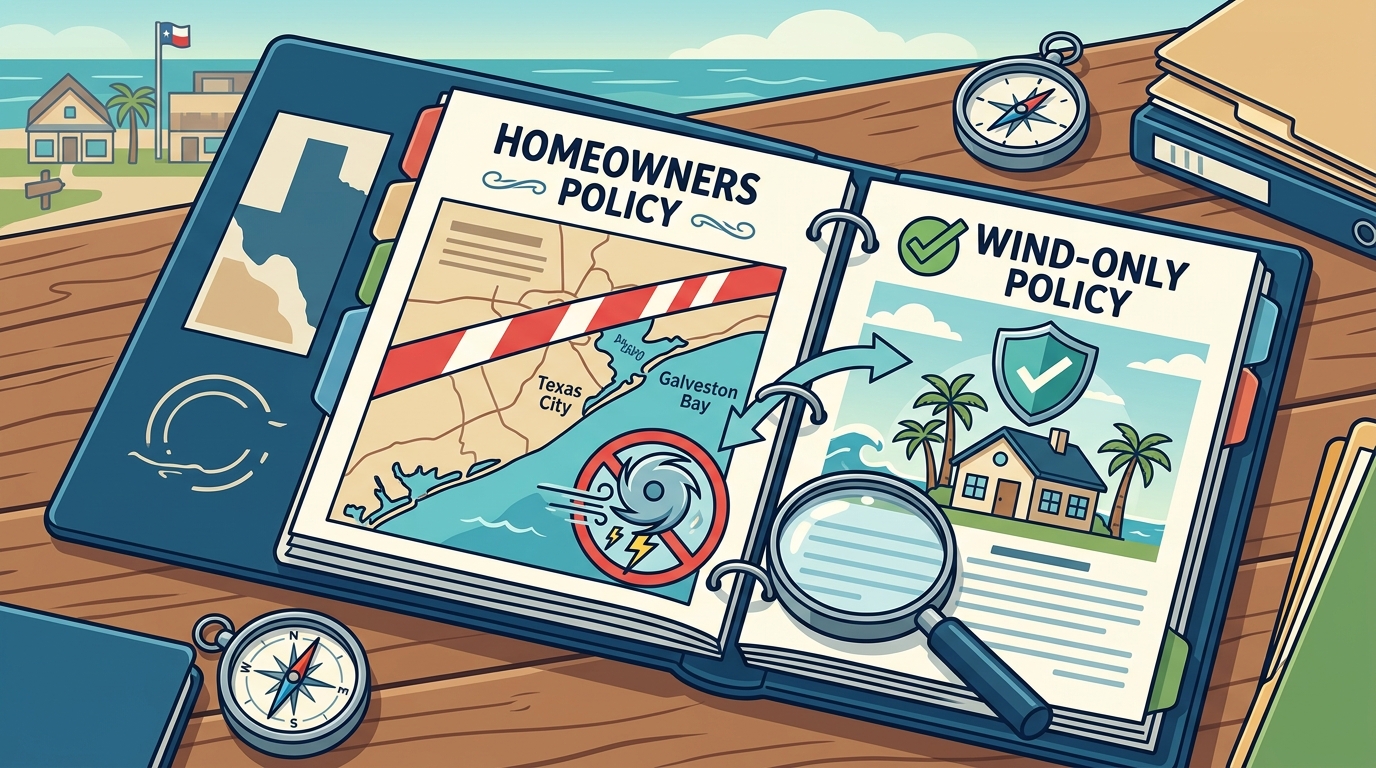
Homeowners in the Gulf Coast region generally have two main options for securing wind coverage. The first is a separate wind-only policy. This is common for homeowners who already have a standard hazard policy from a different carrier. The second option is a combined home policy that includes windstorm coverage. This is often preferred for its simplicity and potential premium discounts.
Choosing the right path depends on your current coverage, your carrier's willingness to write wind risk, and your budget. Some carriers may drop wind coverage entirely during hurricane season, leaving you vulnerable. A stable, combined policy or a dedicated wind policy from a reliable agency ensures continuous protection.
| Feature | Separate Wind-Only Policy | Combined Home Policy |
|---|---|---|
| Coverage Scope | Wind and hail damage only | Comprehensive (Home + Wind) |
| Carrier Flexibility | Can mix carriers for best rates | Must use one carrier |
| Deductible Structure | Percentage-based (1-5%) | Percentage-based (1-5%) |
| Renewal Stability | High (Specialized carriers) | Variable (Market dependent) |
For a detailed breakdown of these options, you can explore our Home Insurance resources. We also provide Flood Insurance guidance, as flood damage is never covered by wind policies, regardless of the cause.
The Claims Process for Wind Damage
When wind damage occurs, the claims process can be complex. Insurers require strict documentation to distinguish between wind damage and other perils like water intrusion from rain entering through a wind-damaged roof. This is why having a clear policy with a responsive agency is vital.
Brad Spurgeon Insurance Agency offers claim reporting services to help you navigate this process efficiently. We understand the local building codes and repair standards required by Texas insurers. Our staff is trained to ensure your claim is processed accurately and quickly, minimizing the stress of recovery.
Regular policy reviews are essential. As your home's value changes, so should your coverage limits. We recommend scheduling an annual policy review to ensure your wind coverage matches your current needs.
Key Takeaways
- Standard Exclusions: Most standard Texas homeowners policies exclude wind and hail damage, requiring separate coverage.
- Regional Requirement: Homeowners in the Texas Gulf Coast wind zones are often legally required to carry windstorm insurance.
- Deductible Impact: Wind deductibles are percentage-based, typically ranging from 1% to 5% of the home's insured value.
- Agency Experience: Brad Spurgeon Insurance Agency has served the Texas City area since 1986, providing specialized guidance.
- Flood Distinction: Wind damage does not cover flood damage; separate flood insurance is required for water intrusion from rising waters.
- Claim Support: Professional assistance with claim reporting ensures accurate documentation and faster recovery.
- Policy Stability: Combined policies or dedicated wind policies from specialized carriers offer greater renewal stability in high-risk zones.
Frequently Asked Questions
What is the difference between wind damage and flood damage?
Wind damage refers to structural harm caused by high winds, such as roof loss or siding damage. Flood damage is caused by rising water from external sources like storm surges or heavy rainfall. Wind policies do not cover flood damage, which requires a separate flood insurance policy.
How is the wind deductible calculated?
Wind deductibles are calculated as a percentage of your home's insured value, not a flat fee. For example, a 2% deductible on a $250,000 home means you pay $5,000 out of pocket before insurance coverage begins for wind-related claims.
Can I get wind coverage if I live outside the coastal zone?
Yes, but requirements vary. While coastal counties have strict mandates, inland areas may have different risk assessments. However, severe weather can travel far inland, making wind coverage advisable for many Texas homeowners.
What is the WPI-8 form?
The WPI-8 is a standard policy form used in Texas for windstorm and hail insurance. It outlines the specific terms, conditions, and exclusions of your wind coverage. You can find more details in our WPI-8 Certificate Guide.
How do I report a wind damage claim?
You can report a claim by contacting your insurance agency directly. Brad Spurgeon Insurance Agency provides online claim reporting and phone support to assist you immediately after a storm.
Does homeowners insurance cover hail damage?
Standard homeowners policies often exclude hail. You need a specific wind and hail endorsement or a separate wind policy to cover hail damage to your roof, siding, or windows.
What is the best time to buy wind insurance?
The best time is before hurricane season begins on June 1st. Carriers may restrict new policies or increase premiums as the season progresses due to higher risk exposure.
Secure Your Home's Protection Today
Do not wait for the next storm to discover your coverage gaps. Whether you need a separate wind-only policy or a comprehensive home insurance solution, Brad Spurgeon Insurance Agency is here to help. Our team of experts is ready to provide a free consultation and help you find the best rates for your specific needs.
Contact us today at (409) 945-4746 or visit our home page to get started. Protect your family and your home with confidence.