
When a commercial property owner in Texas receives a notice of non-renewal from their primary insurer, the immediate threat is not just financial loss but operational paralysis. Windstorm insurance is a critical component of commercial property protection in coastal regions, yet it has become increasingly difficult to secure through traditional channels. Recent market shifts have left many business owners facing a coverage gap that standard policies no longer fill. This guide outlines the precise steps to secure alternative windstorm coverage, understand the Texas Windstorm Insurance Association (TWIA) role, and navigate the complex landscape of surplus lines carriers.
Understanding the Non-Renewal Notice
A notice of non-renewal is not merely a bill increase; it is a termination of the contractual relationship between your business and its insurer. In the Texas Gulf Coast region, this trend has accelerated due to rising reinsurance costs and increased frequency of severe weather events. Brad Spurgeon Insurance Agency has observed that many commercial clients are caught off guard by these notices, assuming their long-standing relationship with a carrier guarantees renewal.
The Texas Department of Insurance mandates that carriers provide specific notice periods, typically 60 days prior to the policy expiration date. This window is your only opportunity to secure new coverage. Failure to act within this timeframe results in a lapse in coverage, which can trigger loan defaults for mortgaged properties and void commercial leases that require continuous insurance. The primary reason for non-renewal is often the property's location within a high-risk wind zone, where traditional carriers have withdrawn entirely to mitigate their exposure.
TWIA Eligibility and Application Process
The Texas Windstorm Insurance Association (TWIA) serves as the state's insurer of last resort for residential and commercial properties in designated coastal counties. Windstorm insurance provided by TWIA is essential for properties that cannot secure coverage from private carriers. To be eligible, the property must be located in one of the 15 coastal counties, including Galveston, Harris, and Brazoria.
Application Requirements
Applying for TWIA coverage requires strict adherence to building codes. The property must meet the 2015 International Building Code (IBC) standards or later, depending on the county. This includes specific requirements for roof-to-wall connections, window protection, and door anchoring. Windstorm insurance policies are not automatic; they require a formal application and inspection process. If your property does not meet these codes, you must undertake renovations before coverage can be issued.
Documentation and Inspection
Once the application is submitted, an inspection is scheduled to verify compliance. This inspection is rigorous and focuses on the structural integrity of the building envelope. Any deficiencies found must be corrected and re-inspected before the policy is bound. For commercial properties, this process can be more complex due to the variety of building types and uses. Working with a knowledgeable agent who understands the inspection criteria can significantly reduce delays.
Surplus Lines and Alternative Markets
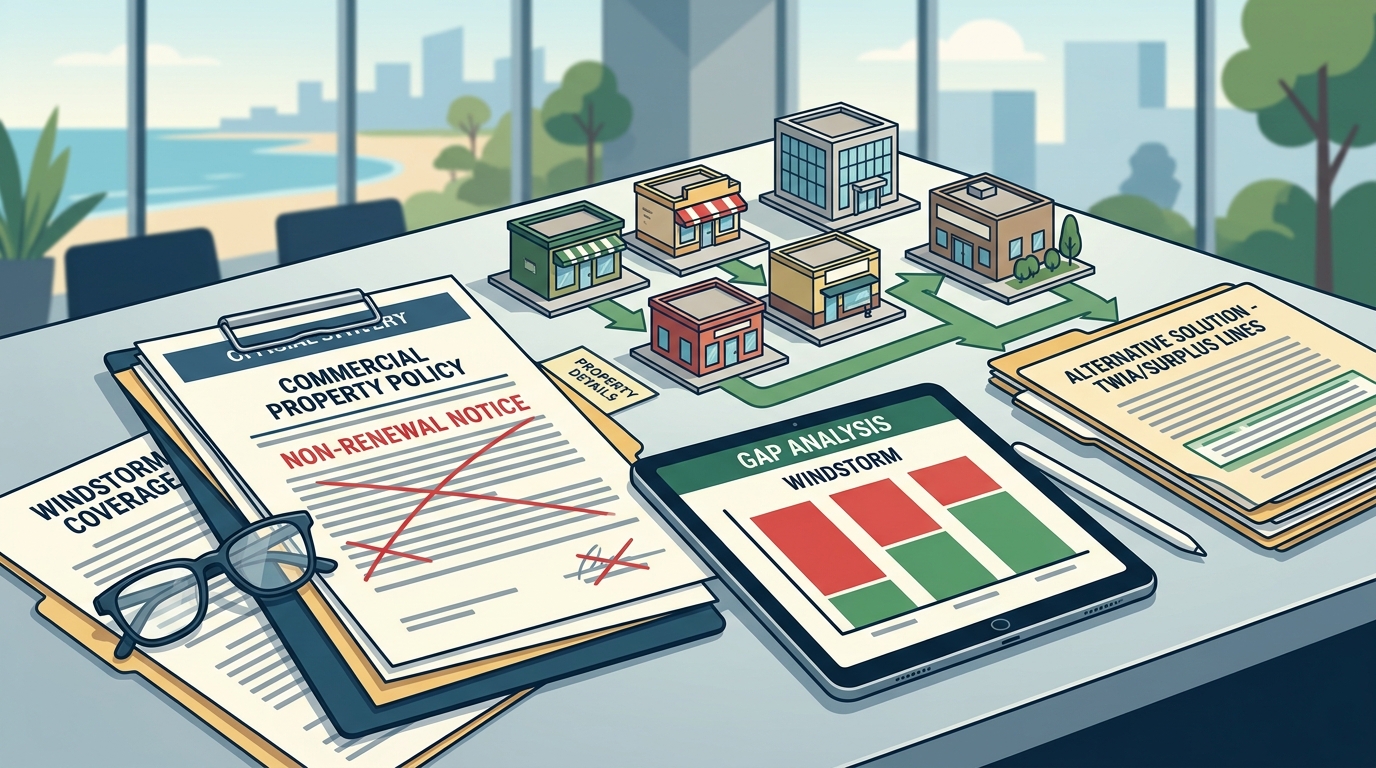
When TWIA is not an option, or when you seek coverage beyond TWIA's limits, surplus lines carriers become the primary alternative. These are non-admitted insurers that are not restricted by the state's rate filings and can offer coverage for risks that admitted carriers will not touch. Windstorm insurance through surplus lines markets often comes with higher premiums but provides essential protection for unique or high-value commercial properties.
Securing surplus lines coverage requires a surplus lines license. Your insurance agent must ensure that the premium tax is paid to the state and that the insurer is eligible to write business in Texas. This process involves a detailed risk assessment, where the carrier evaluates the property's construction, location, and loss history. The underwriting process for surplus lines is more intensive than for standard policies, often requiring additional documentation such as engineering reports or loss mitigation certificates.
Working with Specialized Agents
Not all agents are equipped to handle surplus lines placements. It is crucial to work with an agency that has established relationships with multiple surplus lines carriers. Brad Spurgeon Insurance Agency specializes in navigating these complex markets, ensuring that your commercial property receives the most competitive terms available. Our experience allows us to anticipate underwriting concerns and present your risk profile in the most favorable light.
Comparing Coverage Options
Understanding the differences between TWIA, surplus lines, and traditional commercial policies is vital for making an informed decision. The table below summarizes the key distinctions between these options.
| Feature | TWIA | Surplus Lines | Traditional Carrier |
|---|---|---|---|
| Eligibility | Coastal counties only | Varies by carrier | Wide range |
| Building Codes | Strict compliance required | Flexible, case-by-case | Standard requirements |
| Premium Cost | Regulated, often lower | Market-driven, higher | Competitive |
| Coverage Limits | Capped by statute | Higher limits available | Varies |
| Claims Process | State-regulated | Carrier-specific | Carrier-specific |
When comparing options, consider not just the premium but also the deductibles and coverage limits. TWIA policies have specific deductibles based on wind speed, which can be substantial. Surplus lines policies may offer more flexible deductible structures but at a higher cost. It is essential to evaluate the total cost of risk, including potential out-of-pocket expenses during a claim event.
Managing Claims and Compliance
Once coverage is secured, the focus shifts to maintaining compliance and managing potential claims. Commercial property owners must ensure that their building continues to meet the required building codes. Any renovations or changes to the property must be reported to the insurer to maintain coverage validity. Windstorm insurance policies often require annual inspections or certifications to verify ongoing compliance.
In the event of a windstorm or hail event, prompt reporting is critical. The claims process for commercial properties can be complex, involving adjusters, engineers, and contractors. Having a clear documentation of your property's condition prior to the event can streamline the claims process. Brad Spurgeon Insurance Agency provides support throughout the claims process, helping to ensure that your claim is handled efficiently and fairly.
Key Takeaways
- Act Immediately: The 60-day notice period is your only window to secure new coverage. Delaying action can result in a lapse that jeopardizes your business operations.
- TWIA is a Last Resort: While TWIA provides essential coverage, it requires strict adherence to building codes and is limited to specific coastal counties.
- Surplus Lines Offer Flexibility: For properties that do not qualify for TWIA or need higher limits, surplus lines carriers provide necessary protection, though at a higher cost.
- Compliance is Ongoing: Maintaining coverage requires continuous compliance with building codes. Regular inspections and updates are necessary to avoid policy cancellation.
- Expert Guidance is Crucial: Navigating the post-non-renewal landscape requires specialized knowledge. Working with an agency like Brad Spurgeon Insurance Agency ensures you access the best available markets and terms.
- Documentation Matters: Keep detailed records of your property's condition, renovations, and insurance correspondence to support any future claims.
- Review Annually: Insurance needs change. Annual policy reviews help ensure your coverage remains adequate as your business and the risk landscape evolve.
Frequently Asked Questions
What is the primary reason for commercial windstorm non-renewal?
The primary reason is the property's location in a high-risk wind zone. Traditional carriers are withdrawing from these areas due to increased frequency and severity of storms, making it difficult to maintain profitable portfolios.
Can I get windstorm insurance if my property does not meet current building codes?
TWIA requires strict compliance with current building codes. If your property does not meet these standards, you must undertake renovations to achieve compliance before coverage can be issued. Surplus lines carriers may offer more flexibility but will still require a risk assessment.
How long does the TWIA application process take?
The TWIA application process can take several weeks, depending on the complexity of the property and the speed of inspections. It is crucial to start the process as soon as you receive a non-renewal notice to avoid gaps in coverage.
What is the difference between TWIA and surplus lines coverage?
TWIA is a state-backed insurer of last resort with regulated rates and strict eligibility criteria. Surplus lines carriers are private insurers that offer more flexible terms and higher limits but at market-driven prices. Surplus lines coverage is often necessary for properties that do not qualify for TWIA or need additional protection.
Do I need a special license to purchase surplus lines insurance?
No, the individual business owner does not need a license. However, the insurance agent or broker placing the policy must be licensed to write surplus lines in Texas. This ensures that the premium tax is paid and the insurer is eligible to write business in the state.
How can I prevent a lapse in coverage after a non-renewal?
Start the search for new coverage immediately upon receiving the non-renewal notice. Work with an experienced agent who can access multiple markets, including TWIA and surplus lines, to secure a policy that binds before your current coverage expires.
What documentation do I need for a commercial windstorm claim?
You should maintain detailed records of your property's condition, including photos, videos, and maintenance logs. In the event of a claim, provide all relevant documentation to your adjuster to support your claim and expedite the settlement process.
Secure Your Coverage Today
Receiving a notice of non-renewal is a critical moment for any commercial property owner. However, it is not the end of the road. By understanding your options and acting quickly, you can secure the necessary windstorm insurance to protect your business. Brad Spurgeon Insurance Agency is here to guide you through this process, leveraging our extensive network of carriers to find the best coverage for your needs. Contact us today to schedule a consultation and ensure your business remains protected.