
Standard homeowners insurance policies in Texas often leave critical gaps when it comes to weather-related disasters. For homeowners along the Texas Gulf Coast, understanding the distinction between home, windstorm, and flood insurance is not just a matter of financial prudence; it is a necessity for asset protection. Data from the National Flood Insurance Program indicates that flood damage is the most common natural disaster in the United States, yet standard home policies explicitly exclude flood coverage. This article breaks down the differences, requirements, and strategic advantages of each policy type to help you build a comprehensive defense for your property.
What Is Home Insurance?
Home insurance is a contractual agreement that protects your property and belongings from risks like fire, theft, and certain natural disasters. It serves as the foundational layer of your risk management strategy. However, the term "home insurance" is often used broadly, leading to confusion about what is actually covered. In Texas, particularly in coastal counties, the standard homeowners policy is designed to cover perils such as lightning, wind (in some inland areas), hail, and vandalism. It does not, however, cover damage caused by falling trees, roof wear and tear, or power surges.
For residents in Texas City and surrounding Gulf Coast communities, a standard home policy is insufficient on its own. The unique geographic location exposes properties to specific weather events that standard policies either exclude or limit. Understanding the baseline coverage is the first step in identifying where your policy falls short. You can learn more about our Home Insurance offerings to see how we tailor policies to local risks.
The Windstorm Gap in Texas
Windstorm insurance is a specialized policy or endorsement designed to cover damage caused by high winds, hurricanes, and hail. In many parts of the United States, wind damage is included in standard homeowners policies. In Texas, however, the risk is so high that many insurance carriers require a separate windstorm policy or a specific endorsement to provide this coverage. This is known as the "windstorm gap." Without it, a single hurricane or severe thunderstorm could leave you with a roof full of hail damage and no financial recourse.
The Texas Gulf Coast is uniquely vulnerable to these events. According to the Insurance Information Institute, wind and hail are among the most frequent causes of property damage claims in Texas. Brad Spurgeon Insurance Agency Inc. has served the Texas Gulf Coast since 1986, helping families navigate these complex requirements. We specialize in Windstorm Insurance to ensure your roof and structure are protected against the region's most aggressive weather patterns.
Understanding the WPI-8 Certificate
If you live in a coastal county in Texas, you are likely familiar with the WPI-8 certificate. This document is required by the Texas Department of Insurance for all windstorm and hail insurance policies. It details the specific terms, conditions, and exclusions of your coverage. Understanding this certificate is crucial because it defines the exact scope of your wind protection. We provide a comprehensive WPI-8 Certificate Guide to help you decode the fine print and ensure you are not underinsured.
Why Flood Insurance Is Non-Negotiable
Flood insurance provides coverage for property damage caused by flooding, which is not included in standard homeowners or windstorm policies. Flooding can occur from heavy rains, storm surges, or overflowing bodies of water. Even if you do not live in a designated high-risk flood zone, you are still at risk. The Federal Emergency Management Agency (FEMA) reports that 20% of flood claims come from properties outside high-risk zones. This statistic highlights the importance of having dedicated flood coverage regardless of your exact location.
For Gulf Coast homeowners, the threat of storm surge is a constant reality. A hurricane can push massive volumes of water inland, causing catastrophic damage that wind policies do not address. Flood insurance is available through the National Flood Insurance Program (NFIP) and some private carriers. We offer Flood Insurance quotes to help you secure the necessary protection against water damage. It is essential to distinguish between surface water damage and flood damage, as the latter requires specific coverage.
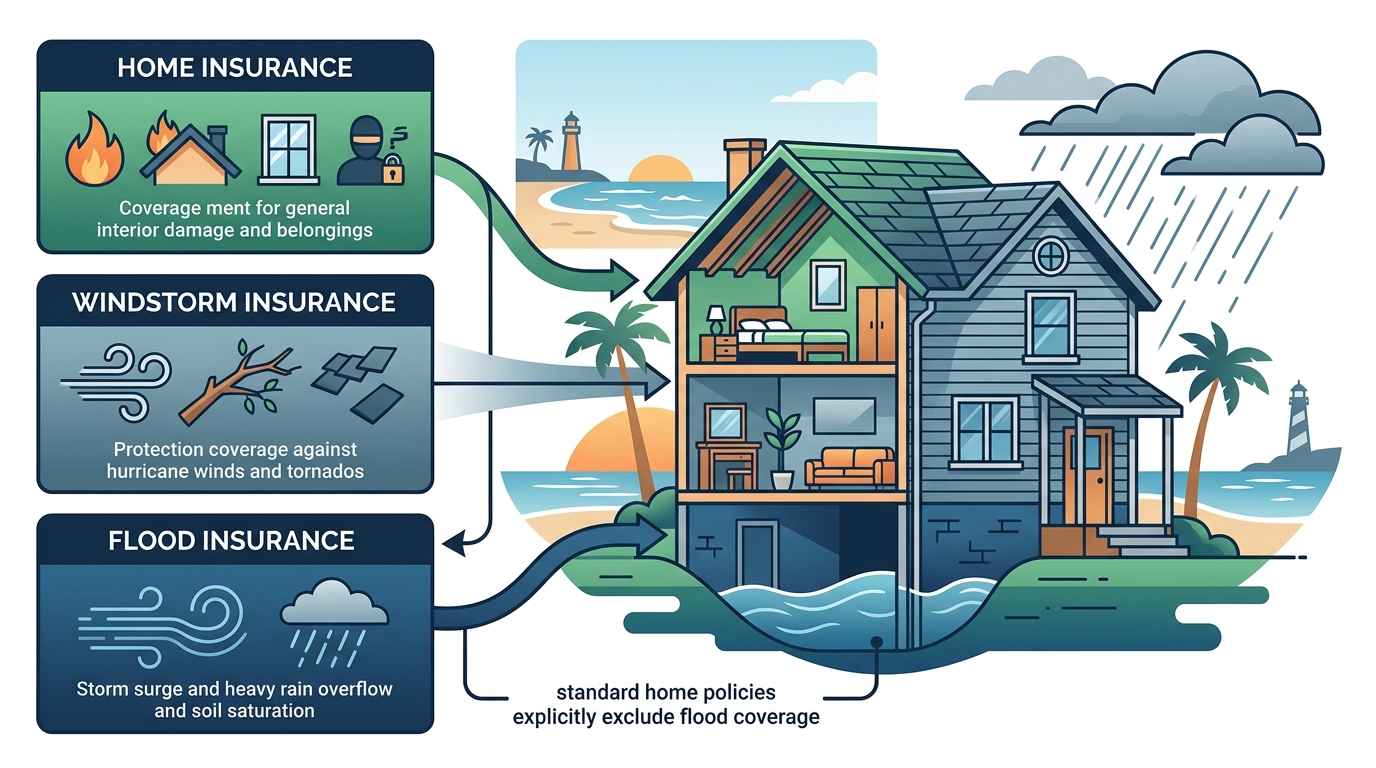
Policy Comparison Matrix
To help you make an informed decision, we have compiled a comparison of the three primary insurance types. This table outlines the key differences in coverage, necessity, and typical exclusions.
| Feature | Home Insurance | Windstorm Insurance | Flood Insurance |
|---|---|---|---|
| Primary Coverage | Fire, theft, liability | Wind, hail, hurricane | Water damage from external sources |
| Required in Coastal TX? | No | Yes (for most coastal counties) | Yes (if in high-risk zone with mortgage) |
| WPI-8 Certificate? | No | Yes | No |
| Standard Policy Inclusion? | Base Policy | Often Excluded | Always Excluded |
| Claim Process | Standard | Specialized Assessment | FEMA/NFIP or Private |
Understanding these distinctions is vital for proper risk management. Many homeowners assume their standard policy covers all weather events, only to discover significant gaps after a disaster. We recommend a Policy Review with our agents to identify any vulnerabilities in your current coverage.
Key Takeaways
- Standard Home Insurance is Limited: It covers fire and theft but typically excludes wind and flood damage in coastal Texas.
- Windstorm Coverage is Specialized: In Texas Gulf Coast counties, wind and hail often require a separate policy or endorsement with a WPI-8 certificate.
- Flood Insurance is Separate: No standard home or wind policy covers flood damage. It must be purchased separately through NFIP or private carriers.
- 3rd Generation Expertise: Brad Spurgeon Insurance Agency Inc. has served the Texas Gulf Coast since 1986, providing specialized guidance for local risks.
- WPI-8 is Mandatory: If you buy windstorm insurance in a coastal county, you will receive a WPI-8 certificate detailing your specific terms.
- Storm Surge Risk: Coastal properties face unique threats from storm surge, making flood insurance critical even for those not in high-risk zones.
- Comprehensive Protection: The most effective strategy involves combining home, windstorm, and flood insurance for full asset protection.
Frequently Asked Questions
Do I need windstorm insurance if I have home insurance?
In many Texas Gulf Coast counties, standard home insurance does not cover wind or hail damage. You likely need a separate windstorm policy or endorsement to be fully protected against hurricanes and severe storms.
What is the WPI-8 certificate?
The WPI-8 is a mandatory document in Texas for windstorm and hail insurance. It outlines the specific terms, conditions, and exclusions of your wind coverage, ensuring transparency between the insurer and the policyholder.
Does home insurance cover flood damage?
No. Standard homeowners insurance policies explicitly exclude flood damage. You must purchase a separate flood insurance policy to cover water damage from external sources like storm surge or heavy rainfall.
How do I get a quote for windstorm insurance?
You can get a quote by contacting Brad Spurgeon Insurance Agency Inc. directly. We specialize in Windstorm Insurance Quotes for the Texas Gulf Coast and can help you navigate the WPI-8 requirements.
What is the difference between flood and water damage?
Flood damage comes from external water sources entering the property, such as rising groundwater or storm surge. Water damage from internal sources, like a burst pipe, is typically covered under standard home insurance.
Why is flood insurance important for coastal homeowners?
Coastal homeowners are at the highest risk for storm surge and flooding. Even if you are not in a designated high-risk zone, the potential for water damage is significant, making flood insurance a critical component of your risk management strategy.
How long does it take for flood insurance to take effect?
There is typically a 30-day waiting period for new flood insurance policies to take effect. This is why it is important to plan ahead and not wait until a storm is forecasted to purchase coverage.
Get Protected Today
Protecting your home in the Texas Gulf Coast requires a comprehensive approach that addresses the unique risks of wind, flood, and general property damage. Do not leave your assets vulnerable to gaps in coverage. Brad Spurgeon Insurance Agency Inc. is here to help you navigate the complexities of Texas insurance regulations and secure the right policies for your needs. Contact us today for a Free Consultation or visit our Home Insurance Quote page to get started. Our team is dedicated to providing the peace of mind that comes with knowing your family and property are fully protected.