
Living on the Texas Gulf Coast offers unparalleled lifestyle benefits, but it also exposes homeowners to significant weather-related risks. Windstorm insurance is a specialized policy designed to cover damage from high winds, hail, and hurricanes, which are typically excluded from standard homeowners policies. Understanding how premiums are calculated is essential for budgeting and securing adequate coverage. This guide details the primary drivers of cost for standalone windstorm protection in high-risk coastal areas.
Understanding Windstorm Coverage
Standard homeowners insurance policies in Texas often exclude wind and hail damage. This exclusion necessitates a separate windstorm policy or a specific endorsement. Windstorm insurance provides critical protection for your home's structure and personal belongings against wind-related perils. Without this coverage, a single storm could result in devastating financial loss. At Brad Spurgeon Insurance Agency, we specialize in helping Gulf Coast residents navigate these complex requirements to ensure they are not left vulnerable.
Windstorm insurance is a specialized policy designed to cover damage from high winds, hail, and hurricanes, which are typically excluded from standard homeowners policies. This distinction is vital for anyone living in a coastal county. The Texas Department of Insurance mandates specific disclosures for these policies to ensure transparency. Homeowners must understand that their standard policy does not automatically include wind coverage.
Location and Risk Zones
Your geographic location is the single most significant factor in determining your premium. Insurance carriers use detailed risk models to assess the likelihood of wind damage based on proximity to the coast. Windstorm insurance premiums increase exponentially as you move closer to the shoreline. This is due to the higher frequency and intensity of storms in these areas.
High-risk coastal areas are designated based on historical storm data and flood zone maps. Homes in these zones face higher premiums because the probability of a claim is greater. For example, properties in Galveston County often face different rate structures than those in inland counties. The Texas Windstorm Insurance Association (TWIA) provides a baseline for these risks, but private carriers may adjust rates based on their own actuarial data. Understanding your specific risk zone is the first step in estimating costs.
Construction and Dwelling Characteristics
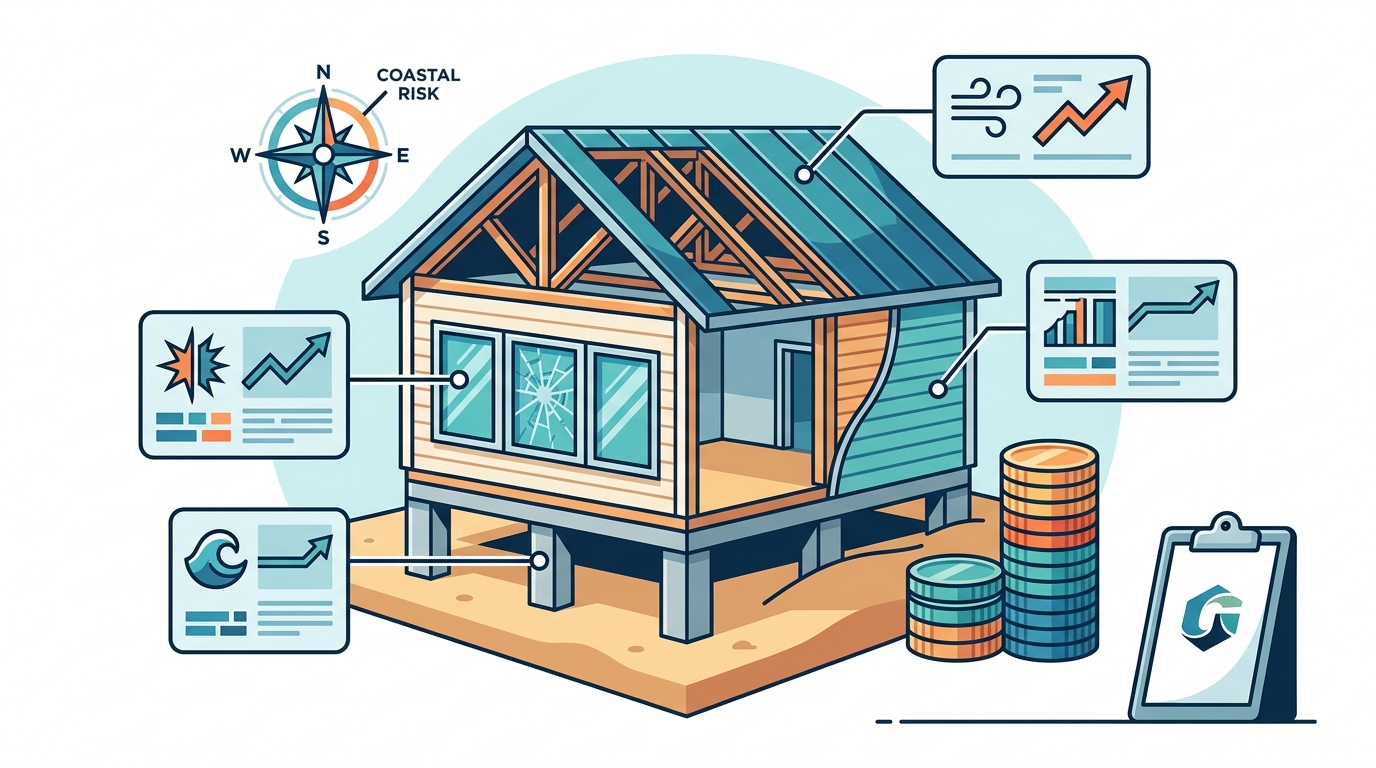
The physical attributes of your home play a crucial role in pricing. Insurance companies evaluate the age, construction type, and roof condition of your property. Windstorm insurance premiums are generally lower for homes built with modern building codes that include wind-resistant features. Older homes may require higher premiums or additional inspections to secure coverage.
Roofing materials are a key determinant of cost. Impact-resistant shingles or metal roofs often qualify for lower premiums because they are less likely to sustain damage during high winds. The roof's age and condition are also scrutinized. A roof that is nearing the end of its lifespan may result in higher premiums or even denial of coverage. Additionally, the home's foundation type and wall construction methods influence the risk assessment. Homes with reinforced structures are viewed as lower risk.
Mitigation and Discounts
Homeowners can actively reduce their premiums by implementing mitigation strategies. Insurance carriers offer discounts for features that reduce the likelihood or severity of damage. Windstorm insurance policies often include incentives for installing hurricane shutters, impact-resistant windows, and reinforced garage doors. These upgrades demonstrate a commitment to risk reduction.
Other mitigation efforts include securing outdoor items and reinforcing the roof-to-wall connection. Some carriers offer discounts for homes that have undergone a professional wind mitigation inspection. This inspection provides a detailed report on the home's resilience, which can lead to significant premium savings. At Brad Spurgeon Insurance Agency, we help clients identify these opportunities to lower their costs while maintaining robust protection.
Deductibles and Limits
The choice of deductible and coverage limits directly impacts your premium. A higher deductible typically results in a lower premium, but it also means you will pay more out-of-pocket in the event of a claim. Windstorm insurance policies often have separate deductibles for wind and hail damage, which may be calculated as a percentage of the dwelling coverage limit rather than a flat dollar amount.
Understanding these deductibles is essential for financial planning. For instance, a 2% wind deductible on a $500,000 home means you would pay $10,000 before coverage kicks in. Homeowners must balance their desire for lower premiums with their ability to absorb potential out-of-pocket costs. Adequate coverage limits are equally important to ensure you can fully rebuild or repair your home after a major storm.
Comparing Providers
Not all insurance carriers price windstorm coverage the same way. Rates can vary significantly between companies based on their risk appetite and operational costs. Windstorm insurance is available through both the Texas Windstorm Insurance Association (TWIA) and private insurance carriers. Each option has its own advantages and disadvantages regarding coverage, pricing, and claims handling.
| Provider Type | Pricing Model | Coverage Scope | Claims Process |
|---|---|---|---|
| TWIA | State-regulated baseline rates | Structure only | State-managed |
| Private Carriers | Market-driven rates | Structure and contents | Carrier-managed |
| Local Agencies | Varies by carrier | Customizable | Agent-assisted |
Working with a local agency like Brad Spurgeon Insurance Agency allows you to compare multiple carriers and find the best fit for your needs. We provide free consultations to help you understand the nuances of each option. Our team is dedicated to finding the most competitive rates while ensuring you have adequate protection.
Key Takeaways
- Location is the primary driver of windstorm insurance premiums, with coastal areas facing higher costs.
- Construction quality, roof age, and materials significantly influence pricing and eligibility.
- Mitigation features like hurricane shutters and impact-resistant roofs can lead to premium discounts.
- Deductibles for windstorm coverage are often percentage-based, requiring careful financial planning.
- Comparing TWIA and private carriers is essential for finding the best value and coverage.
- Brad Spurgeon Insurance Agency has served the Texas Gulf Coast since 1986, providing trusted guidance.
- Regular policy reviews ensure your coverage keeps pace with changes in risk and building codes.
Frequently Asked Questions
What is the difference between windstorm insurance and homeowners insurance?
Homeowners insurance typically excludes wind and hail damage, whereas windstorm insurance specifically covers these perils. This separation is common in high-risk coastal areas like Texas.
How is the windstorm deductible calculated?
Windstorm deductibles are often calculated as a percentage of the dwelling coverage limit, rather than a fixed dollar amount. This means the deductible amount can vary based on your coverage level.
Can I get windstorm insurance if my home is in a flood zone?
Yes, but you will likely need separate flood insurance. Windstorm insurance covers wind damage, while flood insurance covers water damage from rising water. Both are often necessary in coastal areas.
Does the age of my roof affect my premium?
Yes, older roofs may result in higher premiums or require additional inspections. Insurers prefer roofs that are in good condition and meet current building codes.
What is TWIA?
The Texas Windstorm Insurance Association (TWIA) is a state-supported insurer that provides windstorm and hail coverage in coastal Texas. It serves as a provider of last resort.
How can I lower my windstorm insurance premium?
You can lower your premium by installing mitigation features, choosing a higher deductible, and comparing quotes from multiple carriers. Regular maintenance also helps.
Why do I need a local agent for windstorm insurance?
Local agents understand the specific risks and regulations in your area. They can help you navigate complex policies and find the best coverage options.
Contact Us
Securing the right windstorm insurance is critical for protecting your home and financial future. At Brad Spurgeon Insurance Agency, we provide expert guidance to help you navigate the complexities of coastal insurance. Our team is dedicated to finding the best coverage at competitive rates. Contact us today to schedule a free consultation and get a personalized quote. Visit our about page to learn more about our history and commitment to the Gulf Coast community.