
How to Tell if Your Windstorm Insurance Provider Is Actually Protecting Your Home
Windstorm insurance is a specialized property policy designed to cover damage caused by high winds, including hurricanes and severe thunderstorms. To determine if your provider is protecting your home well, you must verify that your policy includes specific windstorm coverage, matches your home's construction type, and offers a deductible structure you can afford. Many standard homeowners policies exclude wind damage in coastal Texas, leaving owners financially exposed. At Brad Spurgeon Insurance Agency, we help Galveston County residents audit their policies to ensure they have true, comprehensive wind protection rather than just a standard hazard policy with exclusions.
Verify Coverage Exclusions and Endorsements
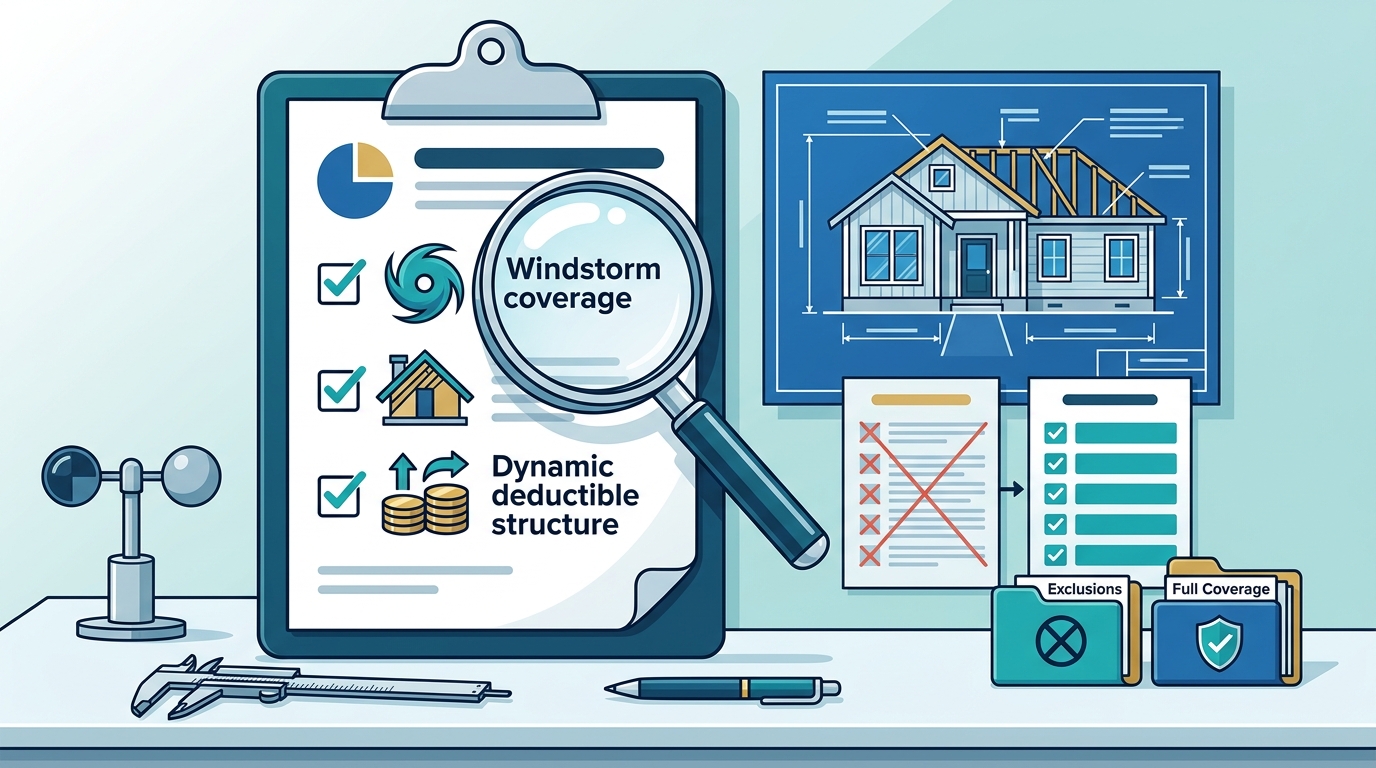
The most common mistake homeowners make is assuming their standard policy covers wind damage. In Texas, particularly in the coastal region, many standard homeowners policies explicitly exclude wind and hail damage. This means that if a storm tears your roof, your standard policy may pay nothing. You must check your declarations page for specific windstorm endorsements or a separate windstorm policy. If your policy is a standard HO-3 form without a wind endorsement, you are likely unprotected against the most significant risk in your area.
Windstorm insurance is a distinct line of coverage that may be required or optional depending on your location and carrier. In the Texas Windstorm Insurance Association (TWIA) service area, coverage is often mandatory, but in private market areas, it is frequently an add-on. You need to confirm that your provider actually writes this coverage. If your agent cannot clearly explain whether wind is included in your base premium or requires a separate rider, you need a second opinion. A reputable agency will proactively identify these gaps before a storm season begins. according to Windstorm Inspections Texas
For example, a homeowner in Texas City might pay for a comprehensive policy but discover after a named storm that their roof damage was denied because wind was excluded. This scenario highlights the critical need to read the exclusions section of your policy. Do not rely on the summary sheet; read the full policy language. If you are unsure, request a policy review from a specialist who understands the nuances of Texas windstorm law.
Match Coverage to Your Home's Construction Type
Insurance carriers assess risk based on how your home is built. The construction type of your dwelling directly impacts your premium and the level of protection you receive. Homes built with brick veneer, concrete, or impact-resistant materials often qualify for better rates and broader coverage than those with standard wood framing. If your provider does not ask about your roof age, siding material, or foundation type, they may not be underwriting your risk accurately. Accurate underwriting ensures that your policy limits reflect the true replacement cost of your home. according to What Your Clients
Replacement cost coverage is a critical component of windstorm protection. This coverage pays to repair or rebuild your home using materials of like kind and quality, without deducting for depreciation. However, some policies offer actual cash value, which pays the current market value of the damaged item. For a home, actual cash value can leave you with a significant shortfall if you need to rebuild. You must ensure your windstorm policy includes replacement cost coverage for the dwelling. This is especially important for older homes where the original construction materials may no longer be available or may not meet current building codes. according to Making repairs after
Consider a home built in the 1990s with asphalt shingles. If the shingles are over 15 years old, some carriers may require a roof inspection before binding coverage. If your provider skips this step, they may later deny a claim or cancel your policy. A thorough provider will inspect your roof, document its condition, and adjust your coverage limits accordingly. This proactive approach ensures that your policy is valid and enforceable when you need it most.
Evaluate Deductible Structure and Affordability
For instance, a family in Galveston might choose a 5% deductible to lower their monthly premium. If a storm causes $20,000 in damage, they pay $10,000 and receive $10,000. This is a manageable outcome. However, if they had chosen a 10% deductible, they would pay $20,000 and receive nothing. The choice of deductible is a personal financial decision, but it must be made with full understanding of the implications. Your provider should explain these scenarios clearly and help you make an informed choice.
Assess the Claims Process and Carrier Reputation
The value of your insurance policy is only as good as the claims process. A provider with a poor claims reputation may deny valid claims, delay payments, or assign low-value adjusters to your case. You should research your carrier's claims handling practices before binding coverage. Look for reviews, complaint ratios, and financial stability ratings. A financially unstable carrier may not be able to pay large claims, leaving you to cover the costs yourself. Your provider should be able to explain their carrier's claims process and provide references from past clients. according to Disaster Preparedness Utah
Independent agencies like Brad Spurgeon Insurance Agency work with multiple carriers, allowing them to compare claims experiences across different insurers. This perspective helps them recommend carriers with strong claims records. If your provider only sells one carrier's products, they may not have the objectivity to advise you on the best option. An independent agent can shop the market and find a carrier that fits your specific needs and budget. This is a key advantage of working with a specialized agency rather than a captive agent. according to How to File
Review Your Policy Regularly and Update Limits
Insurance needs change over time. Home values increase, construction costs rise, and your personal circumstances evolve. If you do not review your policy annually, you may be underinsured. Underinsurance occurs when your coverage limits are lower than the actual cost to rebuild your home. In this case, the insurer may apply a coinsurance penalty, reducing your payout. You must update your dwelling limits to reflect current construction costs. This is especially important after major renovations or additions, which increase the replacement cost of your home. according to FAQs About Homeowners
Personal property coverage also needs regular review. If you have purchased new furniture, electronics, or appliances, your contents coverage may be insufficient. You should maintain an inventory of your belongings and update your policy limits accordingly. Some carriers offer scheduled personal property coverage for high-value items like jewelry or art. This provides specific protection for these items without the need to prove their value at the time of loss. A thorough provider will help you create and maintain this inventory and ensure your limits are adequate.
For example, a homeowner who added a new kitchen and bathroom might not realize that their dwelling limit needs to increase by $50,000. If they do not update their policy, they may face a coinsurance penalty in the event of a claim. This penalty can reduce their payout by thousands of dollars. By reviewing their policy annually, they can avoid this pitfall and ensure they are fully protected. Your provider should remind you to review your policy each year and help you make any necessary adjustments.
Key Takeaways
- Verify that your policy explicitly includes windstorm coverage, as standard homeowners policies in coastal Texas often exclude it.
- Ensure your coverage matches your home's construction type and includes replacement cost, not just actual cash value.
- Evaluate your deductible structure to ensure you can afford the out-of-pocket costs in the event of a claim.
- Research your carrier's claims reputation and financial stability before binding coverage. according to What Your Clients
- Review your policy annually to update dwelling and personal property limits to reflect current values and costs. according to Disaster Preparedness Utah
- Work with an independent agency that can compare multiple carriers and provide objective advice.
Frequently Asked Questions
Is windstorm insurance included in standard homeowners insurance in Texas?
No, in many parts of coastal Texas, windstorm damage is excluded from standard homeowners policies. You must purchase a separate windstorm policy or add a windstorm endorsement to your existing policy. Always check your declarations page to confirm whether wind is covered.
What is the difference between a percentage deductible and a flat deductible?
A percentage deductible is calculated as a percentage of your dwelling coverage limit, while a flat deductible is a fixed dollar amount. Percentage deductibles are common in windstorm insurance and can result in higher out-of-pocket costs for larger homes.
How often should I review my windstorm insurance policy?
You should review your policy at least once a year, or whenever you make significant changes to your home, such as renovations or additions. This ensures that your coverage limits remain adequate and that your policy reflects your current needs.
Can I switch windstorm insurance providers mid-year?
Yes, you can switch providers at any time, but you must ensure that your new policy is bound before your old policy is canceled to avoid a gap in coverage. Your new provider will need to verify that your home meets their underwriting requirements.
What should I do if my windstorm claim is denied?
If your claim is denied, request a detailed explanation from your insurer and review your policy language. You can also file a complaint with the Texas Department of Insurance or seek legal advice. Your insurance agent can help you navigate the appeals process.
Conclusion
Protecting your home from windstorm damage requires more than just buying a policy. It requires understanding the specific exclusions, deductibles, and coverage limits that apply to your situation. By verifying your coverage, matching it to your home's construction, evaluating your deductible, assessing your carrier's reputation, and reviewing your policy regularly, you can ensure that you are truly protected. At Brad Spurgeon Insurance Agency, we specialize in helping Galveston County residents navigate these complexities. We provide personalized guidance to help you find the right windstorm coverage for your home and budget. To schedule a free consultation and review your current policy, today. according to Making repairs after