Galveston Wind Codes: Essential Building Standards for Home Resilience
Living on the Texas Gulf Coast means accepting the reality of extreme weather events. According to the National Weather Service, the Galveston Island region experiences an average of 3 to 5 tropical storms or hurricanes annually. This high frequency of severe weather makes understanding local building codes not just a legal requirement, but a critical financial safeguard for homeowners. Standard homeowners insurance policies rarely cover windstorm damage in this region, making compliance with strict wind resistance standards the primary defense against catastrophic loss.
Understanding Galveston Wind Zones
Galveston County falls within a high-velocity wind zone, a designation that triggers stricter construction requirements than most other parts of Texas. The Federal Emergency Management Agency (FEMA) maps these zones to determine base flood elevations and wind load requirements. For homeowners, this means that the structural integrity of a house is judged against much higher wind speed thresholds, typically ranging from 140 to 170 miles per hour depending on the specific location on the island or mainland.
These standards are not arbitrary. They are derived from historical storm data and engineering models that predict how wind pressure affects building envelopes. When a hurricane makes landfall, the wind does not just push against the house; it creates suction that pulls the roof off and sucks out windows. Galveston's building codes are designed to counteract these specific forces. Homeowners must ensure that every component of their property, from the foundation to the roof deck, is anchored to resist these uplift forces.
Understanding your specific wind zone is the first step in any renovation or new build project. Properties closer to the shoreline often face higher wind speed requirements due to reduced friction from open water. This distinction is vital for contractors and homeowners alike when planning structural upgrades. For a detailed breakdown of how these zones are calculated, you can review the FEMA flood map resources which provide localized data for Texas communities.
Key Building Code Requirements
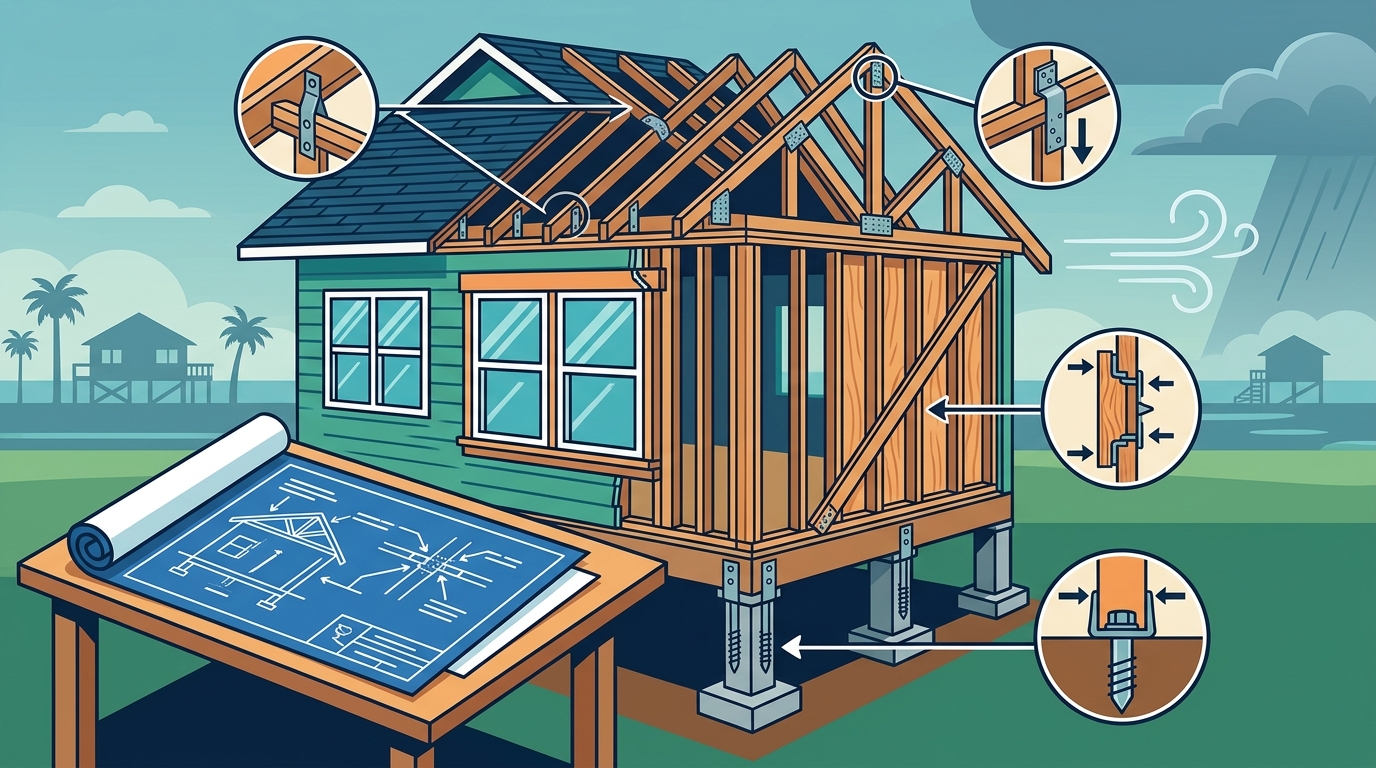
The Galveston Building Code is heavily influenced by the International Building Code (IBC) and the International Residential Code (IRC), but with significant local amendments. These amendments are designed to address the unique coastal environment, including high humidity, salt corrosion, and extreme wind loads. One of the most critical aspects of these codes is the requirement for continuous load paths. This means that the roof must be tied to the walls, the walls to the floor, and the floor to the foundation in a unbroken chain of structural connections.
Another major requirement involves the use of impact-resistant materials or protective coverings for all exterior openings. This includes doors, windows, and skylights. The code mandates that these elements must withstand the impact of wind-borne debris, which can travel at high speeds during a storm. Standard glass windows are generally insufficient for compliance in high-velocity zones. Instead, homeowners must install laminated glass or apply protective shutters that meet specific impact testing standards.
Structural framing materials also face stricter scrutiny. The code often requires larger or more frequent framing members to reduce deflection under wind load. This ensures that the house does not flex excessively, which could lead to the failure of attached components like siding or roofing. For more information on the specific technical specifications of the IRC, you can visit the International Code Council website.
Roofing and Attachment Standards
The roof is the most vulnerable part of a home during a hurricane. If the roof fails, the interior of the house is exposed to rain and wind, leading to extensive water damage. Galveston building codes require roofing systems to be installed with specific attachment methods that exceed standard practices. This often includes the use of ring-shank nails instead of smooth shank nails, which provide greater holding power against uplift forces.
Roof-to-wall connections are another critical area of compliance. The code requires that the roof deck be securely fastened to the top plates of the walls using specific spacing and nailing patterns. In many cases, metal hurricane ties or clips are required to connect the rafters or trusses to the wall framing. These metal connectors distribute the wind load more effectively than traditional wood-to-wood connections, which can split or pull apart under stress.
Additionally, the roofing material itself must be rated for high wind speeds. Asphalt shingles, which are common in many parts of the country, must be installed according to manufacturer specifications that often exceed the minimum code requirements to achieve a high wind rating. Some homeowners opt for metal roofing or tile, which can offer superior wind resistance when installed correctly. For guidance on selecting appropriate roofing materials, consult the National Association of Home Builders roofing guidelines.
Window and Opening Protections
Windows and doors are the weakest points in a home's envelope. When these openings fail, the internal pressure of the house increases dramatically, which can cause the roof to lift off. Galveston codes require that all exterior openings be protected against wind-borne debris. This protection can be achieved through the installation of impact-resistant windows or by applying temporary or permanent shutters.
Impact-resistant windows are constructed with a laminated interlayer that holds the glass together even when shattered. This prevents the window from breaking open and allowing wind and rain to enter. Permanent shutters, such as roll-down or accordion styles, offer a convenient alternative for homeowners who do not wish to replace their existing windows. These shutters must be tested and rated to withstand the same impact forces as the windows themselves.
It is important to note that the code applies to all openings, including garage doors. Garage doors are particularly susceptible to failure because of their large surface area. Galveston requires garage doors to be reinforced with horizontal braces and heavy-duty hinges to prevent them from collapsing under wind pressure. A failed garage door can lead to the rapid pressurization and subsequent failure of the entire roof structure. For more details on garage door reinforcement, see the International Association of Garage Door Professionals standards.
Insurance Implications and WPI-8
Compliance with building codes is directly linked to insurance availability and cost in Galveston. Standard homeowners insurance policies do not cover windstorm or flood damage in this region. Homeowners must purchase separate windstorm insurance, often through the Texas Windstorm Insurance Association (TWIA) or private carriers. The quality of your home's wind resistance features significantly impacts your insurance premiums.
One of the most important documents for Galveston homeowners is the WPI-8 certificate. This form, issued by the Texas Department of Insurance, certifies that a home meets specific wind-resistant construction standards. Homes with a WPI-8 certificate are considered lower risk and may qualify for lower insurance premiums. The certificate is based on a detailed inspection of the home's construction, including the roof, windows, and structural connections.
For homeowners looking to understand their coverage options, Brad Spurgeon Insurance Agency provides specialized guidance on windstorm policies. You can explore our Windstorm Insurance services to find a policy that fits your needs. Additionally, we offer Flood Insurance quotes, which are essential for comprehensive protection in coastal areas.
Compliance and Inspection Process
Ensuring that your home meets Galveston building codes requires a rigorous inspection process. When building a new home or making significant renovations, you must obtain permits from the City of Galveston. These permits ensure that the construction plans comply with local codes before work begins. Inspections are conducted at various stages of the construction process to verify compliance.
For existing homes, obtaining a WPI-8 certificate involves a thorough inspection by a licensed inspector. The inspector will evaluate the roof attachment, window protections, and structural connections to determine if the home meets the required standards. If the home does not comply, the inspector will provide a list of necessary upgrades. These upgrades can be costly, but they are essential for maintaining insurance coverage and protecting your investment.
Regular maintenance is also crucial for maintaining compliance. Over time, roofing materials can degrade, and fasteners can loosen. Homeowners should conduct regular inspections of their property, especially after major storms, to identify and address any potential vulnerabilities. For professional assistance with inspections and claims, contact Brad Spurgeon Insurance Agency for expert support.
Key Takeaways
- Galveston is located in a high-velocity wind zone requiring construction standards for winds up to 170 mph.
- Continuous load paths are mandatory, tying the roof to the foundation to resist uplift forces.
- Roofing must use ring-shank nails and metal hurricane ties to meet code requirements.
- All exterior openings, including garage doors, must be protected against wind-borne debris.
- Standard homeowners insurance does not cover windstorm damage in Galveston.
- A WPI-8 certificate can lower insurance premiums by proving wind-resistant construction.
- Brad Spurgeon Insurance Agency has served the Texas Gulf Coast since 1986.
Frequently Asked Questions
What is the WPI-8 certificate?
The WPI-8 is a certificate issued by the Texas Department of Insurance that verifies a home meets specific wind-resistant construction standards. It is often required for obtaining windstorm insurance in coastal counties.
Do I need separate windstorm insurance in Galveston?
Yes, standard homeowners insurance policies typically exclude windstorm damage. Homeowners in Galveston must purchase a separate windstorm policy, either through the Texas Windstorm Insurance Association or a private carrier.
How do Galveston building codes differ from the rest of Texas?
Galveston's codes are stricter due to its location in a high-velocity wind zone. Requirements for roof attachment, window protection, and structural framing are more rigorous than in inland areas of Texas.
What happens if my home does not meet WPI-8 standards?
If your home does not meet the standards, you may face higher insurance premiums or difficulty obtaining coverage. Upgrades to the roof, windows, and structural connections may be necessary to achieve compliance.
Can I install my own hurricane shutters?
While you can install shutters yourself, they must meet specific impact testing standards to be considered compliant. It is recommended to consult with a professional to ensure proper installation and certification.
How often should I inspect my home for wind resistance?
Homeowners should inspect their property annually and after any major storm. Regular maintenance of roofing, windows, and structural connections is essential for long-term resilience.
What is the contact information for Brad Spurgeon Insurance Agency?
You can reach Brad Spurgeon Insurance Agency at (409) 945-4746 or visit their office at 1118 14th Street North, Texas City, Texas 77590.
Secure Your Galveston Home
Protecting your home from Galveston's extreme weather requires more than just hope; it demands knowledge, compliance, and the right insurance coverage. By understanding the essential wind resistance standards and building codes, you can make informed decisions about your property's safety and financial protection. Whether you are building a new home, renovating an existing one, or seeking the right insurance policy, expert guidance is crucial.
Brad Spurgeon Insurance Agency has been a trusted partner for Texas Gulf Coast homeowners since 1986. We specialize in helping families navigate the complexities of windstorm and flood insurance. Our team is dedicated to providing personalized service and ensuring that you have the coverage you need to weather any storm. Do not wait for the next hurricane to assess your home's resilience. Contact us today to schedule a free consultation and secure your peace of mind.
Get a Home Insurance Quote or Flood Insurance Quote to start protecting your property now.