
When traditional carriers decline a commercial windstorm risk, business owners can secure protection through the surplus lines market. This specialty channel offers access to insurers willing to underwrite high-risk properties that standard markets reject. Brad Spurgeon Insurance Agency helps Texas business owners navigate this complex process, ensuring they find viable coverage options even after non-renewal notices from primary carriers.
Understanding the Surplus Lines Market
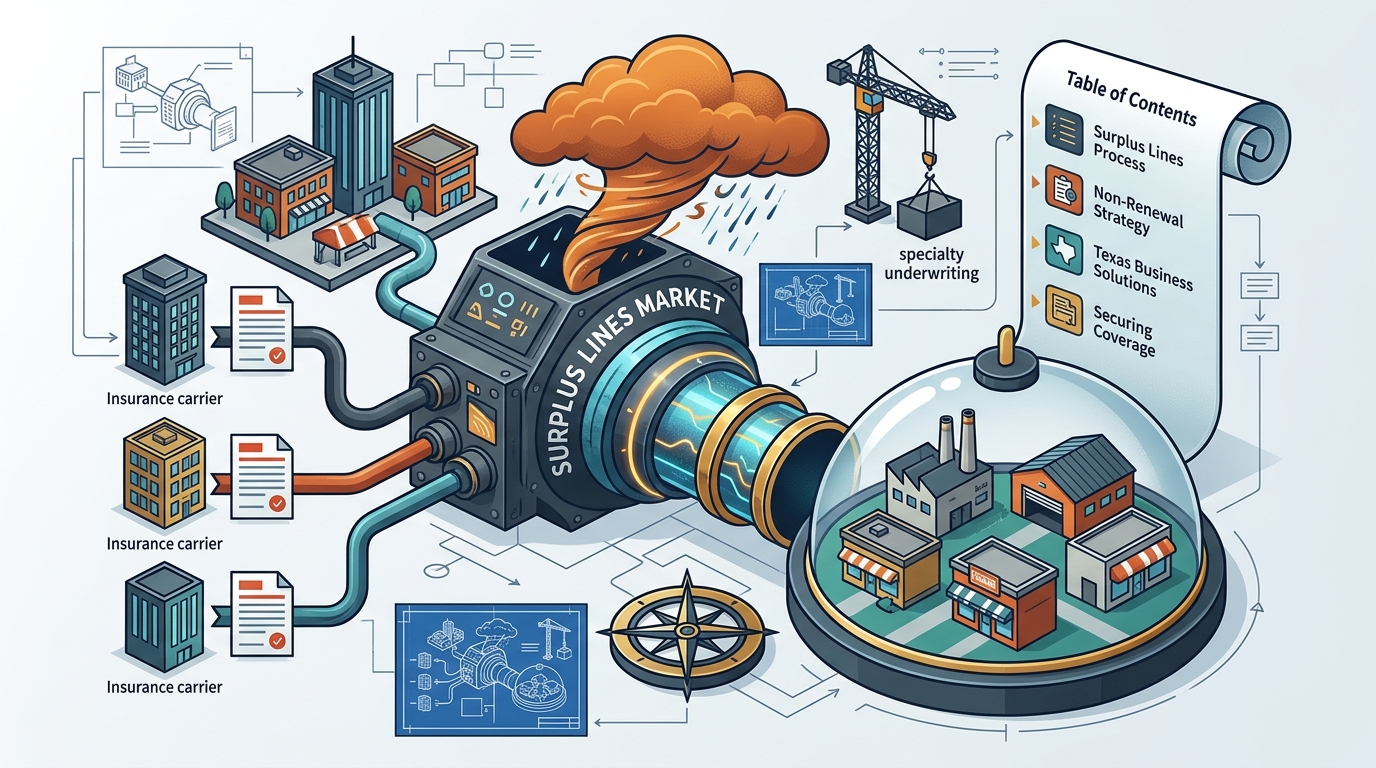
The surplus lines market is a segment of the insurance industry designed to provide coverage for risks that are uninsurable or underinsured in the standard market. It operates under specific state regulations that allow insurers to write policies for high-risk properties. For commercial properties in coastal Texas, this market often becomes the only viable option for windstorm protection.
Surplus lines insurers are typically specialized companies that focus on specific perils or high-risk demographics. They do not compete for the standard, low-risk business insurance market. Instead, they fill the gap left by traditional carriers who may withdraw from high-exposure areas due to catastrophic loss potential. This structure ensures that even the most challenging commercial risks can find a home in the insurance ecosystem.
Why Traditional Carriers Decline Commercial Risks
Traditional insurance carriers use strict underwriting guidelines to determine which risks they will accept. These guidelines often exclude properties in high-hurricane zones or those with specific construction vulnerabilities. When a carrier issues a notice of non-renewal, it is usually because the property no longer meets their risk appetite criteria.
Commercial properties face unique challenges compared to residential homes. Larger square footage, higher replacement costs, and potential for business interruption losses make commercial risks more expensive to insure. Carriers may also consider the property's claims history and its proximity to the coast. Understanding these factors helps business owners anticipate when they might need to look beyond standard markets for coverage.
The Role of Licensed Surplus Lines Agents
Accessing the surplus lines market requires working with a licensed surplus lines agent. These agents have specialized knowledge of the specialty market and the regulatory requirements for placing high-risk policies. They act as intermediaries between the business owner and the surplus lines insurers, negotiating terms and securing coverage.
At Brad Spurgeon Insurance Agency, our team understands the nuances of the Texas insurance landscape. We can help identify which surplus lines carriers are willing to underwrite your specific commercial property. This expertise is crucial because the surplus lines market is not a one-size-fits-all solution. Each insurer has different requirements and pricing structures, and finding the right match requires professional guidance.
Regulatory Requirements and Compliance
Surplus lines insurance is subject to specific state regulations that differ from standard insurance markets. In Texas, for example, there are requirements for demonstrating that the risk is unavailable in the standard market before placing it in surplus lines. This process, known as the diligent search, must be documented and reported to the state.
Business owners must be aware that surplus lines policies may have different terms and conditions than standard policies. Deductibles are often higher, and coverage limits may be more restrictive. Additionally, surplus lines policies are not eligible for state guaranty fund protection in the same way standard policies are. Understanding these regulatory and policy differences is essential for making informed decisions about your business's risk management strategy.
Strategies for Securing Coverage After Non-Renewal
Receiving a non-renewal notice does not mean your business is left without protection. It is a signal to start the search for alternative coverage early. Business owners should begin the process at least 30 to 60 days before the current policy expires to allow sufficient time for underwriting and binding.
Working with an experienced agency like Brad Spurgeon Insurance Agency can streamline this process. We can help prepare the necessary documentation, including property details, construction information, and claims history, to present to surplus lines carriers. Early engagement with specialty markets increases the likelihood of securing favorable terms and avoiding a coverage gap that could jeopardize your business operations.
Key Takeaways
- The surplus lines market provides coverage for high-risk commercial properties that traditional carriers decline.
- Surplus lines insurers specialize in underwriting risks that are uninsurable in the standard market.
- Traditional carriers may decline commercial risks due to high replacement costs and hurricane exposure.
- Working with a licensed surplus lines agent is essential for navigating the specialty market.
- Surplus lines policies are subject to specific state regulations and may have higher deductibles.
- Starting the search for alternative coverage early is critical after receiving a non-renewal notice.
- Professional guidance helps ensure compliance with regulatory requirements and secures appropriate coverage.
Frequently Asked Questions
What is the surplus lines market?
The surplus lines market is a specialty insurance segment that provides coverage for high-risk properties that are unavailable in the standard insurance market. It operates under specific state regulations and is often the only option for commercial properties in high-hurricane zones.
Why would a traditional carrier non-renew my commercial windstorm policy?
Traditional carriers may non-renew policies due to changes in their risk appetite, high replacement costs, or the property's location in a high-hurricane zone. They use strict underwriting guidelines to determine which risks they will accept, and commercial properties often face stricter scrutiny.
How do I access the surplus lines market?
You must work with a licensed surplus lines agent who can place your policy with specialty insurers. These agents have the expertise and regulatory knowledge to navigate the surplus lines market and secure coverage for high-risk properties.
Are surplus lines policies more expensive than standard policies?
Surplus lines policies often have higher premiums and deductibles than standard policies. This is because they cover higher-risk properties that are more likely to experience catastrophic losses. The exact cost depends on the specific property and the insurer's underwriting criteria.
What is the diligent search requirement?
The diligent search requirement is a regulatory process that must be completed before placing a policy in the surplus lines market. It involves demonstrating that the risk is unavailable in the standard market by contacting a certain number of standard carriers and documenting their declinations.
Can I switch back to a standard carrier later?
It is possible to switch back to a standard carrier if your risk profile improves or if a standard carrier becomes willing to underwrite your property. However, this depends on the specific circumstances and the underwriting guidelines of the standard carriers.
How long does it take to secure surplus lines coverage?
The time it takes to secure surplus lines coverage can vary, but it is generally recommended to start the process at least 30 to 60 days before the current policy expires. This allows sufficient time for underwriting, documentation, and binding the new policy.
Next Steps for Business Owners
If you have received a non-renewal notice or are concerned about your commercial windstorm coverage, it is time to take action. Contact Brad Spurgeon Insurance Agency to discuss your options and explore the surplus lines market. Our team is dedicated to helping Texas business owners secure the protection they need, even in challenging insurance environments. Reach out to us today to schedule a consultation and ensure your business remains protected against windstorm risks.