Homeowners in Galveston, TX, face unique coastal risks that standard policies often ignore. The National Flood Insurance Program (NFIP) is the primary federal mechanism for managing this exposure. It provides a standardized, accessible safety net for properties in high-risk zones. Brad Spurgeon Insurance Agency helps local residents navigate these federal options to ensure their homes are fully protected.
1. Guaranteed Availability in High-Risk Zones
Federal backing ensures that coverage is available even when private insurers withdraw. Many private carriers limit their exposure in coastal areas like Galveston due to high catastrophe risk. The NFIP is a federal program that guarantees availability to eligible properties in participating communities. This means you can secure coverage even if the private market refuses to write a policy for your specific address. It acts as a reliable backstop for homeowners in the most vulnerable flood zones. according to Introduction to the
2. Standardized Coverage Limits and Clarity
Uniform policy terms make it easier to compare and understand your protection. The NFIP uses a standardized policy form, which reduces confusion about what is covered. Residential building coverage is available up to $250,000, and contents coverage up to $100,000. This clarity helps homeowners understand exactly what their policy will pay out in the event of a loss. It removes the ambiguity often found in complex private insurance contracts.
3. Access to Community Rating System Discounts
Galveston’s participation in the CRS can lower your premium costs. The City of Galveston participates in the Community Rating System (CRS), a voluntary federal program. This program rewards communities for enforcing higher floodplain management standards beyond the NFIP minimum. As a result, eligible policyholders in Galveston may qualify for discounts on their flood insurance premiums. This makes the federal program more affordable for residents who live in well-managed floodplain areas.
4. Protection for Renters and Small Businesses
The program extends beyond homeowners to protect renters and commercial entities. While often associated with homeowners, the NFIP also offers coverage for renters and small businesses. Renters can purchase contents coverage to protect their personal belongings from flood damage. Small businesses can insure their buildings and inventory, which is crucial for economic resilience in coastal areas. This broad eligibility ensures that the entire community has access to financial protection.
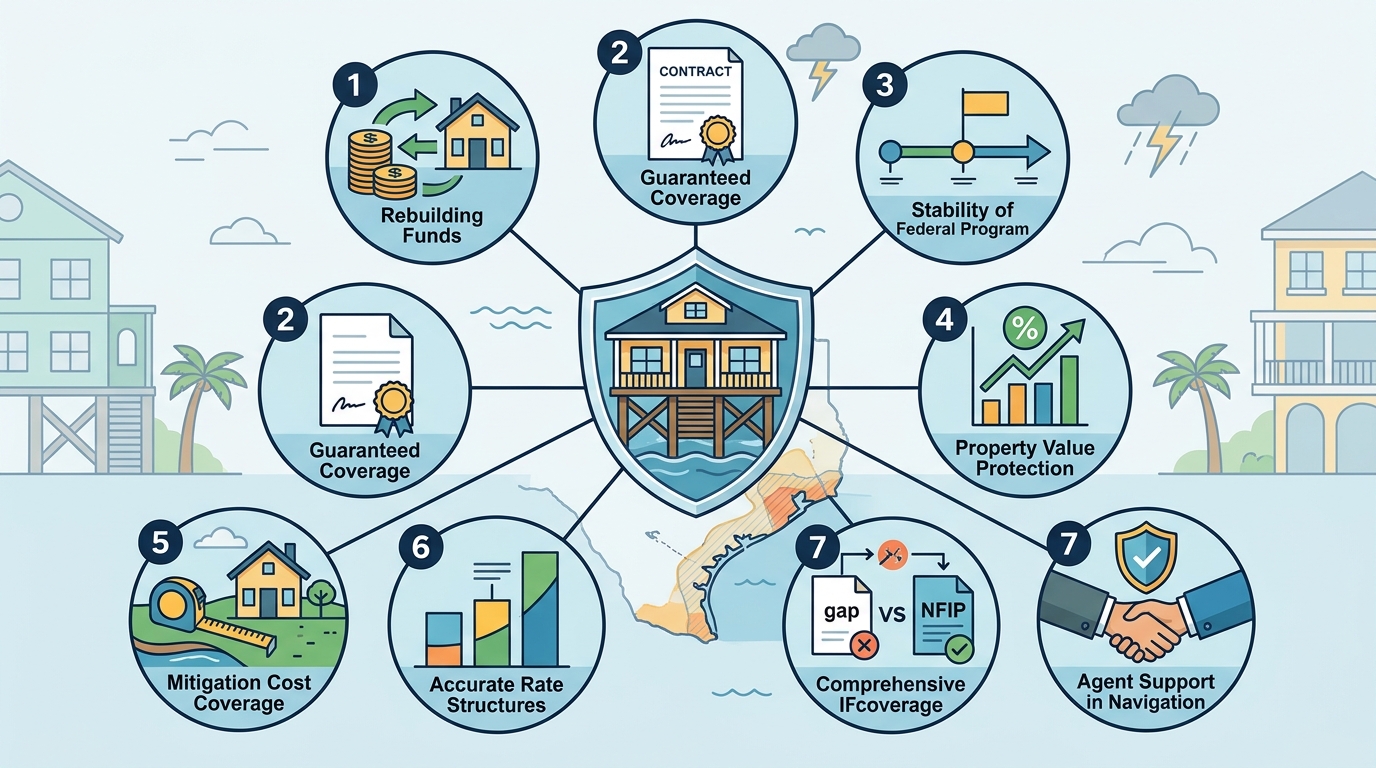
5. Simplified Claims Process for Federal Disasters
Claims are processed through a uniform federal framework after declared disasters. When a flood is declared a federal disaster, the NFIP claims process follows established federal guidelines. This can streamline the documentation and payment process for policyholders. While private insurers may have varying procedures, the NFIP provides a consistent approach to handling large-scale losses. This consistency can be a significant benefit during the stressful recovery period after a major storm.
6. Mandatory Purchase Requirement for Federally Backed Loans
It is often required for mortgages in Special Flood Hazard Areas. If you have a federally backed mortgage and your home is in a Special Flood Hazard Area (SFHA), you are legally required to purchase flood insurance. The NFIP is the most common way to meet this mandate. One study suggested that at least 77% of all mortgages in SFHAs in 2003 were subject to this requirement. Understanding this requirement helps homeowners avoid lapses in coverage that could jeopardize their loan status.
7. Encourages Community Floodplain Management
The program incentivizes local governments to adopt better flood risk reduction strategies. Participation in the NFIP requires communities to adopt and enforce floodplain management regulations. This encourages cities like Galveston to implement measures that lower residents' flood risk over time. By tying insurance availability to community standards, the program promotes long-term resilience. Homeowners benefit from living in communities that are actively working to mitigate flood hazards.
Choosing the Right Coverage
When selecting flood insurance, consider your property's specific risk zone and the value of your home and contents. If your home is in a high-risk zone, the NFIP provides a solid baseline. However, if your property value exceeds the federal limits, you may need to supplement with private coverage. Brad Spurgeon Insurance Agency can help you assess your needs and determine the best combination of policies for your situation.
Frequently Asked Questions
Does standard homeowners insurance cover flood damage?
No, standard homeowners insurance policies typically do not cover flood damage. You must purchase a separate flood insurance policy, such as one from the NFIP, to be protected against water rising from outside sources.
How much does NFIP flood insurance cost?
Costs vary based on your property's location, flood zone, and coverage limits. Premiums are calculated using the Risk Rating 2.0 methodology, which considers multiple risk factors. You can get a specific quote by consulting with an insurance agent.
Can I buy NFIP insurance if I am not in a high-risk flood zone?
Yes, you can purchase NFIP flood insurance even if your home is in a low-risk zone. While the premium may be lower, it is still wise to have coverage if there is any potential for flooding.
What is the waiting period for NFIP flood insurance?
There is a 30-day waiting period for new NFIP policies. This means coverage does not take effect until 30 days after the first premium payment. If you are buying a home, you can waive this waiting period if the policy is required by a lender.
Does the NFIP cover basement damage?
Generally, no. The NFIP does not cover damage to items in a basement, such as carpets, wall coverings, or personal property. However, it does cover the foundation and structural elements of the building.