
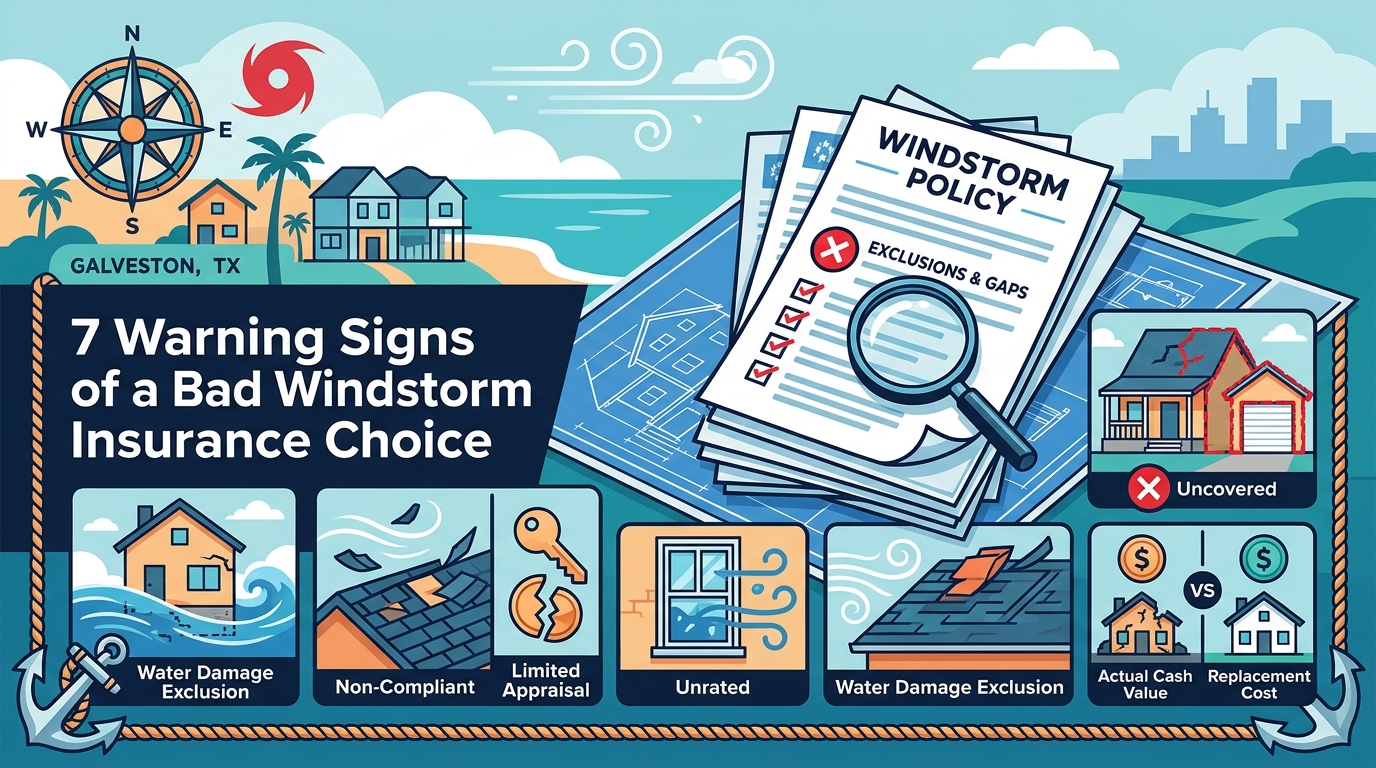
7 Warning Signs of a Bad Windstorm Insurance Choice for Coastal Texas Homeowners
Choosing the wrong windstorm insurance policy can leave coastal Texas homeowners financially exposed during hurricane season. Many residents assume that any policy covering wind damage is sufficient, but specific structural gaps often emerge only after a storm makes landfall. This guide outlines seven distinct warning signs that indicate a policy may not provide the protection your home actually needs.
1. The Policy Excludes Wind Damage Entirely
Standard homeowner policies often exclude wind, requiring a separate windstorm policy. In Texas, many standard HO-3 policies do not cover wind damage to the structure itself. If your primary policy states that wind is an excluded peril, you must purchase a separate windstorm policy to be covered. Without this specific endorsement or separate policy, a claim for roof or siding damage caused by high winds will be denied. Always verify that wind coverage is explicitly included in your documentation.
2. The Deductible Is a Percentage of the Home Value
3. The Policy Does Not Cover Flood Damage
Wind and flood are distinct perils, and wind policies do not cover water intrusion. A common misconception is that a windstorm policy covers water damage resulting from a storm. In reality, wind insurance covers damage from the wind itself, while flood insurance covers water rising from outside the home. If your policy does not explicitly include flood coverage or if you have not purchased a separate flood policy, water damage from storm surge or heavy rain is not covered. This gap is one of the most expensive mistakes coastal homeowners make.
4. The Coverage Limit Is Below Replacement Cost
Underinsuring your home leads to significant out-of-pocket expenses during reconstruction. If your dwelling coverage limit is lower than the actual cost to rebuild your home, you are underinsured. Inflation and rising construction costs can quickly make an older policy limit insufficient. If a total loss occurs, the insurer will only pay up to the policy limit, leaving you to cover the difference. Regularly reviewing your coverage limits against current construction costs is essential for adequate protection.
5. The Policy Has Strict Inspection Requirements
Failure to meet inspection standards can void your coverage. Some windstorm policies require periodic inspections of the roof and structure to maintain coverage. If you fail to schedule or pass these inspections, the insurer may reduce your coverage or deny a claim. Understanding the specific inspection requirements and timelines in your policy is crucial. Ignoring these administrative details can result in a policy that looks valid on paper but is unenforceable in practice.
6. The Policy Excludes Specific Coastal Perils
Some policies exclude damage from specific coastal events like storm surge. While wind policies cover wind, they often explicitly exclude storm surge, which is a flood peril. Homeowners in low-lying areas of Galveston or Texas City need to understand exactly which perils are excluded. If your policy excludes storm surge and you do not have separate flood insurance, you are unprotected against one of the most destructive forces in a hurricane. Reviewing the exclusions section of your policy is as important as reviewing the inclusions.
7. The Insurer Has a Poor Claims History in Texas
An insurer's reputation for paying claims matters as much as the premium cost. Some insurers are known for delaying or denying claims in Texas after major hurricanes. Researching an insurer's claims history and customer reviews can reveal patterns of poor service. A low premium is not worth it if the insurer is unlikely to pay your claim when you need it most. Choosing an insurer with a strong track record of timely and fair claims payments is a critical factor in selecting the right policy.
Choosing the Right Policy
When evaluating windstorm insurance options, prioritize coverage clarity and insurer reliability over the lowest premium. Ensure your policy explicitly covers wind, has a deductible you can afford, and is paired with appropriate flood coverage. Working with a local agency that understands the specific risks of the Gulf Coast can help you navigate these complexities and secure a policy that truly protects your investment.
Frequently Asked Questions
Does a standard homeowner policy cover wind damage in Texas?
No, many standard homeowner policies in Texas exclude wind damage. You typically need a separate windstorm policy or a specific endorsement to be covered for wind-related losses.
What is the difference between wind and flood insurance?
Wind insurance covers damage caused by high winds, such as roof and siding damage. Flood insurance covers water damage from rising water, such as storm surge or heavy rain. They are separate perils and require separate policies.
How are windstorm deductibles calculated?
Windstorm deductibles are often calculated as a percentage of the dwelling coverage amount, rather than a flat dollar amount. This means the deductible amount can be significantly higher than in standard policies.
Do I need flood insurance if I have windstorm insurance?
Yes, if you live in a coastal area or a flood zone, you need separate flood insurance. Windstorm insurance does not cover water damage from flooding or storm surge.
How often should I review my windstorm insurance policy?
You should review your policy annually, especially before hurricane season. This ensures your coverage limits are adequate for current construction costs and that you understand any changes in your policy terms.
Can I switch windstorm insurance carriers mid-season?
Yes, you can switch carriers at any time, but there may be waiting periods for new policies. It is best to switch before a storm is forecast to avoid any gaps in coverage. Learn more: Best Lago Mar Homeowners.