
For homeowners in Texas City, Galveston County, and other Gulf Coast communities, the most important windstorm insurance question is often not simply, “How much is the premium?” It is, “What type of insurance structure is protecting my home—and what will I be responsible for after a major storm?”
Coastal homeowners may obtain wind and hail protection through a private insurance company or, when private coverage is unavailable, through a state-created residual market association such as the Texas Windstorm Insurance Association (TWIA). These options can look similar on a declarations page, but they are built for different purposes and may differ in eligibility rules, policy features, deductibles, claims administration, and financial structure.
Texas Department of Insurance explains that coastal homeowners may need a separate windstorm policy because a standard homeowners policy may not cover wind and hail damage. Windstorm insurance is also distinct from flood insurance: wind-driven rain and storm surge may be treated differently under separate policies, so reviewing the entire insurance program is essential. ([tdi.texas.gov](https://www.tdi.texas.gov/tips/what-is-windstorm-insurance.html?utm_source=openai)) For broader background on homeowners insurance and coverage availability, review the Insurance Information Institute homeowners insurance statistics and learn more about home, flood, and windstorm insurance services from Brad Spurgeon Insurance Agency.
The Short Answer: Residual Market Safety Net vs. Commercial Alternative
A state-run or state-authorized insurance pool is generally a residual market mechanism. It exists to provide a way to obtain coverage when authorized private insurers will not voluntarily insure a property. In Texas, TWIA describes itself as an insurer of last resort for eligible properties in designated coastal areas. TWIA policies provide wind and hail coverage only, rather than a complete homeowners policy. ([twia.org](https://www.twia.org/property-owners/get-windstorm-insurance/?utm_source=openai))
Private-market windstorm coverage is offered by a commercial insurance company that chooses which properties to insure and sets underwriting terms based on its own risk models, reinsurance costs, business strategy, and filed policy forms. Texas Department of Insurance lists numerous companies that wrote residential wind coverage in the TWIA catastrophe area in 2024, demonstrating that private options can exist even in high-risk coastal locations. Availability changes, however, and a company listed as writing coverage in one year may alter its appetite, restrictions, or renewal practices later. ([tdi.texas.gov](https://tdi.texas.gov/company/windstorm-insurance-companies-residential.html?utm_source=openai))
In practical terms, TWIA may be the dependable fallback when private coverage is not available, while a private policy may offer a broader choice of limits, endorsements, deductibles, and policy design when your property qualifies.
How the Two Windstorm Insurance Markets Work
State-run or state-created residual markets
Residual markets are created or authorized by state law to serve property owners who cannot obtain coverage through the traditional insurance market. Their purpose is access to essential coverage, not unrestricted product customization. TWIA is one example of this model and serves eligible property owners in designated Texas catastrophe areas.
TWIA applications must be submitted through a licensed insurance agent registered with TWIA. The association’s eligibility rules include location in the designated catastrophe area, a private-market declination, applicable construction certification, an insurable property condition, and proof of flood insurance when required for certain properties. ([twia.org](https://www.twia.org/property-owners/get-windstorm-insurance/?utm_source=openai))
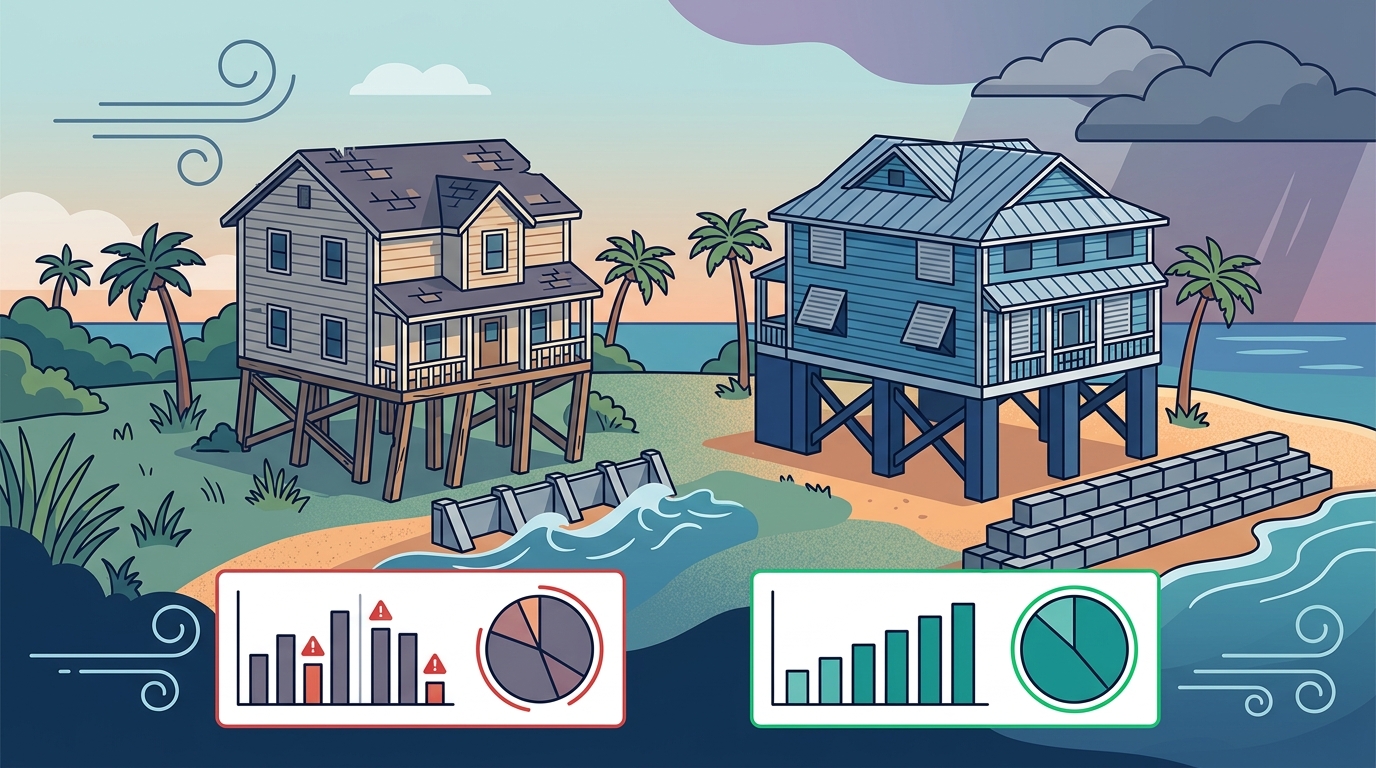
Private commercial windstorm coverage
A private carrier evaluates the property before offering coverage. Underwriters may consider the home’s age, roof, construction materials, elevation, prior losses, distance from the coast, protective features, occupancy, replacement cost, and other risk characteristics. The insurer may accept the risk, offer modified terms, require repairs or mitigation, or decline it.
The private market can be especially useful when a homeowner needs coverage that does not fit a standardized residual-market form—for example, higher dwelling limits, broader additional living expense protection, scheduled structures, special deductibles, or endorsements tailored to a high-value or unusual property. The exact availability and scope depend on the carrier and policy form; an agent should compare the actual contracts rather than relying on the carrier name alone. Texas Department of Insurance advises coastal consumers to ask their agent about both private windstorm options and TWIA. ([tdi.texas.gov](https://www.tdi.texas.gov/tips/what-is-windstorm-insurance.html?utm_source=openai))
Eligibility and Availability: Who Can Obtain Each Type?
| Question | Residual market option such as TWIA | Private-market carrier |
|---|---|---|
| Where is it available? | Only within the association’s designated service or catastrophe area. | Only where the carrier is licensed, approved, and willing to write the risk. |
| Must private coverage be unavailable? | Generally, the applicant must show that an authorized private insurer has declined coverage. | No; the carrier may voluntarily offer coverage if the property meets its underwriting requirements. |
| Are building certifications relevant? | Yes. Texas properties generally must satisfy applicable windstorm construction and certification requirements, subject to limited exceptions. | Building standards and inspections may also affect eligibility, premium, deductibles, and mitigation credits. |
| Can a policy be unavailable before a storm? | Yes. TWIA warns that coverage cannot be obtained at the last minute when a hurricane is in the Gulf of Mexico. | Private carriers may also impose binding restrictions, waiting periods, moratoriums, or storm-related underwriting pauses. |
For a Texas City homeowner, location alone does not answer the eligibility question. The property’s precise location, construction history, windstorm certificate, roof condition, prior claims, flood-zone status, and mortgage requirements may all matter. TDI’s windstorm program includes Texas first-tier coastal counties and specified areas of Harris County; construction certification requirements also changed for qualifying applications beginning April 1, 2026, when the 2024 International Residential Code or 2024 International Building Code became the applicable standard for new Windstorm Certificate of Compliance applications. ([tdi.texas.gov](https://tdi.texas.gov/wind/adopted-codes.html?utm_source=openai))
Coverage, Limits, and Deductibles: Read the Policy, Not Just the Quote
Windstorm coverage is not a complete homeowners policy
TWIA states that its policy covers wind and hail losses only. It does not replace coverage for every other property peril. Fire, theft, liability, certain water losses, and other risks generally require a separate homeowners, dwelling, or specialty policy. Flood damage also requires separate evaluation because flood and wind are different insurance perils. ([twia.org](https://www.twia.org/property-owners/get-windstorm-insurance/?utm_source=openai))
That means a homeowner could have three coordinated insurance questions:
- What policy covers the structure and belongings for non-wind perils?
- What policy covers wind and hail?
- What policy covers flooding, including storm surge or rising water?
Reviewing only the windstorm premium can create a false sense of security if the companion home or flood policy has inadequate limits, exclusions, or deductibles. You can review home insurance options and separately evaluate flood insurance coverage.
Deductibles can change the real cost of a claim
A deductible is the amount the policyholder absorbs before insurance pays. Depending on the contract, it may be a flat dollar amount or a percentage of the insured value. For example, a 2% deductible on a home insured for $350,000 could produce a $7,000 deductible before covered damage payments begin. A flat $5,000 deductible may look higher on one quote and lower on another depending on the dwelling limit and the type of loss.
Do not compare premiums without comparing:
- Whether the deductible applies per occurrence, per location, or by coverage part.
- Whether wind and hail have a separate deductible from other covered losses.
- Whether the deductible is flat or percentage-based.
- Whether the deductible applies to the dwelling, other structures, contents, or all covered property.
- Whether endorsements or mitigation features change the deductible.
Coverage limits and replacement cost
Ask whether the dwelling limit reflects realistic reconstruction cost rather than the home’s market value or tax appraisal. Coastal construction costs can rise sharply after a widespread catastrophe, when labor and materials are in high demand. Compare ordinance-and-law coverage, debris removal, additional living expense, contents, detached structures, temporary repairs, and code-upgrade provisions where applicable.
Private coverage may provide more ways to adjust limits and endorsements, but flexibility is not automatically better if it produces unaffordable out-of-pocket exposure. A lower premium with a deductible that the household cannot fund is not a complete risk-management solution.
How Pricing Is Determined
Private carriers price windstorm risk through commercial underwriting. Their rating may reflect property-specific characteristics, catastrophe models, geographic exposure, reinsurance costs, operating expenses, and the carrier’s desired portfolio mix. A carrier may be less expensive than TWIA for one property and more expensive for another.
TWIA rates are set by its board and subject to review by the Texas Department of Insurance. TWIA says its premiums use factors such as the amount of insurance, construction type, deductible, optional coverages, modeled and actual windstorm losses, operating expenses, bond repayment, and contributions to its catastrophe reserve. As of March 31, 2026, TWIA reported an average residential policy premium of approximately $2,877; an average is not a quote and does not predict the price for a particular Texas City property. ([twia.org](https://www.twia.org/rates/?utm_source=openai))
TWIA also states that it does not use credit scoring or territorial rating and that credits may be available for items certified as meeting newer windstorm building codes. ([twia.org](https://www.twia.org/rates/?utm_source=openai)) Private carriers may use different rating factors and mitigation-credit rules, so the same roof, shutters, elevation, or construction certification may affect two quotes differently.
The best comparison is therefore not “pool versus private equals cheaper versus more expensive.” The useful comparison is total financial exposure:
- Annual premium.
- Windstorm deductible.
- Flood premium and flood deductible.
- Homeowners-policy premium and deductible.
- Coverage limits and sublimits.
- Excluded or limited property features.
- Potential inspection, repair, or mitigation costs.
- Mortgage-required insurance and escrow obligations.
Claims Handling and Financial Considerations
Claims experience depends on the contract and the event
It is tempting to assume a private carrier will always handle claims faster than a state association, or that a residual market claim will always be slow. Neither is guaranteed. Actual claim performance can depend on the severity and geographic reach of the storm, the availability of adjusters and contractors, documentation, disputed causation, the policy language, and the volume of claims filed at once.
Texas homeowners should document the property before storm season, keep receipts and inventories, photograph roof and exterior conditions, protect the property from further damage when safe, and report a loss according to the policy’s instructions. TDI states that TWIA claims can be initiated by calling TWIA, filing online, or contacting an agent; TDI also identifies a one-year period for filing a TWIA claim and a 60-day period from acceptance to request appraisal over a disputed claim amount. Confirm the current requirements in the policy and with TWIA or your agent because claim procedures and deadlines are important. ([tdi.texas.gov](https://www.tdi.texas.gov/tips/what-is-windstorm-insurance.html?utm_source=openai))
Financial strength is a separate comparison category
A private carrier’s ability to pay claims depends on its financial condition, regulatory oversight, reinsurance program, and catastrophe exposure. A residual market association also depends on its premiums, reserves, reinsurance, financing mechanisms, assessments, and statutory structure. Residual market availability does not mean the coverage is risk-free for the association or for policyholders after a major catastrophe.
TWIA’s rates include provisions related to its catastrophe reserve and outstanding bonds, and its financial structure is governed by Texas law. ([twia.org](https://www.twia.org/rates/?utm_source=openai)) When comparing a private quote, ask about the issuing carrier’s financial-strength information, policy form, exclusions, and claims contact. When considering TWIA, understand that it is a wind-and-hail component, not a substitute for the rest of the household’s insurance program.
A Practical Framework for Choosing Between TWIA and Private Coverage
- Start with the property’s insurance map. Identify which policy covers wind, hail, fire, liability, contents, additional living expense, and flood. Do not assume one policy covers all storm damage.
- Confirm the property’s eligibility. Check the designated catastrophe area, windstorm certification, construction dates, roof condition, flood-zone requirements, and any mortgage conditions.
- Request private-market quotes before defaulting to the pool. A private carrier may be available even if a prior insurer declined the risk. Conversely, a private quote may contain restrictions that make it less suitable than it first appears.
- Compare identical limits. Use the same dwelling limit, contents limit, other-structures limit, additional-living-expense limit, deductible assumptions, and key endorsements whenever possible.
- Calculate the storm-year cash requirement. Add the wind deductible, flood deductible, non-wind homeowners deductible, temporary housing expenses, and likely emergency repair costs.
- Review exclusions and causation language. Ask how the policy treats wind-driven rain, storm surge, rising water, interior water damage, fences, detached structures, roof surfacing, matching materials, and code upgrades.
- Coordinate the policies. A windstorm policy, homeowners policy, and flood policy should be reviewed together to identify gaps, overlapping deductibles, and conflicting limits.
- Re-shop periodically. Private-market availability, premiums, carrier underwriting, building standards, and state rules can change. TDI maintains consumer resources and lists of companies writing residential wind coverage in the catastrophe area. ([tdi.texas.gov](https://tdi.texas.gov/company/windstorm-insurance-companies-residential.html?utm_source=openai))
When a state pool may be the practical choice
TWIA may be appropriate when private carriers decline the property, the available private terms are not workable, or the homeowner needs an eligible source of wind and hail coverage to satisfy a lender. It may also be the starting point for older, highly exposed, or difficult-to-insure properties.
When private coverage may be preferable
A private policy may be worth considering when it offers stronger limits, broader endorsements, a deductible structure that fits the household budget, coordinated coverage for multiple perils, or service features that matter to the homeowner. The decision should be based on the complete policy and carrier—not on the premium alone.
Key Takeaways
- State-run insurance pools and private windstorm carriers serve different roles: the pool is generally a residual-market safety net, while the private carrier voluntarily underwrites selected risks.
- In Texas, TWIA is designed for eligible coastal applicants who cannot obtain wind and hail coverage in the private market.
- TWIA coverage is limited to wind and hail; it does not replace homeowners, flood, fire, liability, or other needed insurance.
- Private-market policies may provide more customization, but they can also impose stricter underwriting, higher premiums, storm moratoriums, or nonrenewal risk.
- The lowest premium is not necessarily the lowest total cost. Deductibles, exclusions, policy limits, and uncovered flood damage can dominate the financial outcome after a storm.
- Windstorm eligibility in Texas can depend on location, private-market declinations, construction certification, building codes, property condition, and flood-insurance requirements.
- Texas City homeowners should compare complete insurance programs with a licensed local agent before hurricane season, not while a storm is approaching.
Frequently Asked Questions
What is the primary difference between a state-run insurance pool and private windstorm coverage?
A state-run or state-created pool is generally a residual-market option intended to provide coverage when private insurers will not voluntarily insure an eligible property. Private windstorm coverage is offered by a commercial carrier that selects risks and designs pricing and policy terms within applicable regulations.
Is TWIA the same as homeowners insurance?
No. TWIA states that its policies cover wind and hail losses only. Homeowners generally need separate coverage for other perils such as fire, theft, personal liability, and many types of water damage. A separate flood policy may also be necessary.
Is state-pool windstorm insurance always cheaper?
No. A pool premium may be competitive for a particular property, but the meaningful comparison includes deductibles, coverage limits, exclusions, required companion policies, and out-of-pocket costs. TWIA rates are based on factors including coverage amount, construction, deductible, optional coverages, modeled losses, expenses, and catastrophe-reserve considerations. ([twia.org](https://www.twia.org/rates/?utm_source=openai))
Can a homeowner move from TWIA to a private carrier?
Yes, if a private carrier is willing to insure the property and the proposed policy meets the homeowner’s needs and lender requirements. Keep the existing coverage in force until the replacement policy is confirmed, issued, and effective. Ask the agent to check for differences in deductibles, exclusions, limits, cancellation terms, and flood requirements.
What does a Texas homeowner need to qualify for TWIA?
Requirements generally include property location in the designated catastrophe area, a private-market declination, applicable windstorm construction certification, an insurable condition, and flood insurance when required for certain properties. Requirements can vary by property type and circumstance, so confirm eligibility with a licensed agent and TWIA. ([twia.org](https://www.twia.org/property-owners/get-windstorm-insurance/?utm_source=openai))
Does windstorm insurance cover storm surge or flooding?
Do not assume it does. TWIA provides wind and hail coverage, while flood coverage is a separate part of a coastal insurance plan. Ask how the policies define wind damage, flood, storm surge, rising water, and resulting interior damage, and obtain separate flood coverage when appropriate.
Can I buy TWIA coverage immediately before a hurricane?
No. Texas Department of Insurance warns that TWIA coverage cannot be obtained if a hurricane is in the Gulf of Mexico. Binding restrictions may also apply to private policies. Review coverage well before hurricane season or before a named storm threatens the coast. ([tdi.texas.gov](https://www.tdi.texas.gov/tips/what-is-windstorm-insurance.html?utm_source=openai))
Why should Texas City homeowners work with a local insurance agent?
A local agent can help coordinate home, flood, and windstorm policies; verify property eligibility; compare private-market alternatives; explain deductibles and exclusions; and identify documentation or certification issues before a loss occurs. Local guidance is particularly valuable when a home is near the coast, has an older roof, has prior storm damage, or carries a mortgage with specific insurance requirements.
Compare Your Texas Coastal Windstorm Options
The right choice between TWIA and private windstorm coverage depends on your property, budget, construction history, mortgage requirements, desired limits, and tolerance for deductibles and exclusions. Brad Spurgeon Insurance Agency serves Texas City, TX, and surrounding communities with tailored home, flood, and windstorm insurance guidance.
Before the next storm, request a free consultation to review whether your current policies work together and whether private-market windstorm coverage may be available. The goal is not merely to obtain a policy—it is to build an insurance plan that clearly addresses wind, flood, and the other risks facing your home.