
Living on the Texas Gulf Coast means accepting a unique set of environmental risks that standard insurance models often fail to address adequately. Recent meteorological data indicates that wind-related claims in Texas have surged, with the National Weather Service reporting that wind damage accounts for a significant percentage of all property insurance payouts in coastal counties. This surge has fundamentally altered how carriers structure their risk exposure, leading to a complex landscape where standard homeowners policies frequently exclude or severely limit wind coverage. Understanding this shift is critical for protecting your most valuable asset.
Understanding Windstorm Exclusions
Many homeowners in Texas City and surrounding Gulf Coast communities operate under the false assumption that their standard homeowners insurance policy covers wind damage. This is a dangerous misconception. Windstorm insurance is a specialized form of coverage that protects against damage caused by high winds, hail, and tornadoes, which are typically excluded from standard hazard policies. In Texas, the regulatory environment requires carriers to offer wind coverage separately or through a specific endorsement, often leading to confusion among policyholders.
The Texas Department of Insurance has long monitored the separation of wind and hail coverage from standard homeowners policies. This separation exists because the financial risk associated with wind events is so high that it requires distinct actuarial modeling. When a hurricane or severe thunderstorm hits, the cost of repairing roofs, siding, and structural elements can be astronomical. Standard policies often cap these payouts or exclude them entirely, leaving homeowners with significant out-of-pocket expenses.
If you reside in a county designated as a high-risk wind zone, your insurer may require you to purchase a separate windstorm policy or a specific wind-hail endorsement. This is not merely a bureaucratic hurdle but a financial necessity. Without this specific coverage, a single wind event could result in total financial ruin for your property. We specialize in navigating these complex requirements to ensure our clients are fully protected against the unique threats of the Gulf Coast.
Evaluating Your Property Risk
Determining whether you need a separate wind-only policy begins with a clear assessment of your property's location and construction. The first step is to identify your county's wind zone designation. Texas is divided into various wind zones, with Zone 3 representing the highest risk areas along the immediate coastline. If your property is located in Zone 3, you are almost certainly required to have specific wind coverage.
Next, consider the age and construction of your home. Older homes with older roofing systems are more susceptible to wind uplift and structural failure. Modern building codes have improved resilience, but older properties may not meet current wind-resistant standards. This distinction affects both your eligibility for coverage and your premium costs. Wind-only policies are designed to fill the gap left by standard homeowners insurance, specifically targeting the high-cost, high-frequency risks of coastal weather events.
You should also review your current policy declarations page. Look for the "Perils Insured" section. If wind and hail are listed as excluded perils, or if there is a specific sub-limit for wind damage, you need immediate attention. Many policies have a separate deductible for windstorms, which can be a percentage of your home's insured value rather than a flat dollar amount. Understanding this deductible structure is vital for financial planning.
Comparing Policy Options
Homeowners in the Gulf Coast region generally have three main options for securing wind coverage. Each option comes with distinct advantages, limitations, and cost structures. Understanding these differences is crucial for making an informed decision that balances protection with affordability.
| Option | Description | Best For | Pros & Cons |
|---|---|---|---|
| Separate Wind-Only Policy | A standalone policy that covers only wind and hail damage. | Properties in high-risk zones with existing hazard coverage. | Pros: Comprehensive wind protection. Cons: Requires managing two separate policies and deductibles. |
| Wind-Hail Endorsement | An add-on to your standard homeowners policy. | Homeowners in moderate-risk zones seeking simplified billing. | Pros: Single policy, single deductible. Cons: May have lower coverage limits than standalone policies. |
| Combined Home & Wind Package | A bundled approach often including flood coverage. | Full-service protection for coastal properties. | Pros: Streamlined claims process. Cons: Higher overall premium costs. |
The choice between these options depends heavily on your insurer's offerings and your specific risk profile. Some carriers in Texas have moved away from writing wind coverage altogether, forcing homeowners to seek coverage through surplus lines markets or state-backed entities like the Texas Wind Insurance Association (TWIA), though TWIA is currently undergoing significant structural changes. Navigating this shifting landscape requires expert guidance.
We at Brad Spurgeon Insurance Agency Inc. have been serving the Texas Gulf Coast since 1986. Our deep relationships with multiple carriers allow us to find the best possible wind coverage for your specific property. We understand that no two homes are alike, and neither are their insurance needs. Our team conducts a thorough review of your property's characteristics to recommend the most cost-effective and comprehensive solution.
The Claim Process Reality
One of the most critical aspects of wind coverage is the claims process. After a wind event, the volume of claims can overwhelm adjusters, leading to delays and disputes. Having a separate wind policy can sometimes streamline this process, as it isolates the wind damage from other potential issues like water intrusion or hail damage.
It is essential to document all damage immediately after a storm. Take photos and videos of the exterior and interior of your property. Do not make permanent repairs until an adjuster has inspected the damage. Temporary repairs to prevent further damage are usually covered, but keep all receipts. Wind damage claims require precise documentation to distinguish between wind-related destruction and pre-existing wear and tear.
If you have a separate wind policy, ensure you contact your agent immediately after a storm. We can help you navigate the initial reporting process and ensure that your claim is filed correctly. Our agency provides claim support services to our clients, helping them advocate for fair settlements. We know the local adjusters and the specific requirements of the carriers we work with, which can significantly speed up the resolution of your claim.
Key Takeaways
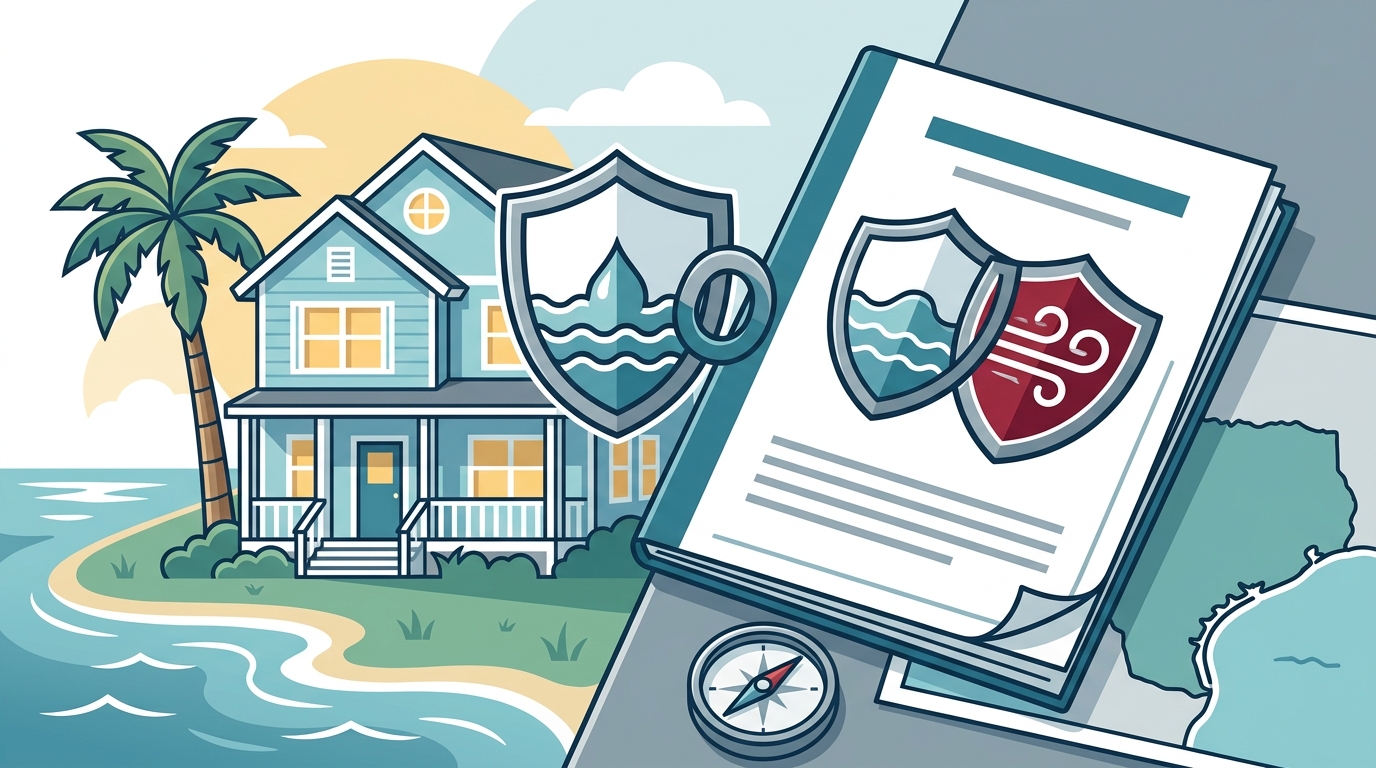
- Standard Exclusions: Most standard homeowners policies in Texas exclude wind damage, requiring separate coverage or endorsements.
- Zone 3 Risks: Properties in Texas Wind Zone 3 face the highest risk and often require specific windstorm policies.
- Deductible Structures: Wind deductibles are often percentage-based (e.g., 2-5% of home value), not flat rates.
- Agency Experience: Brad Spurgeon Insurance Agency has served the Gulf Coast since 1986, providing specialized wind and flood coverage.
- Documentation: Immediate and thorough documentation of damage is critical for successful wind claims.
- Carrier Landscape: Many major carriers have exited the Texas wind market, making specialized agency representation vital.
- Comprehensive Protection: Combining wind, flood, and hazard coverage ensures complete protection against coastal perils.
Frequently Asked Questions
What is the difference between wind-only and wind-hail coverage?
Wind-only coverage specifically protects against damage caused by high winds and tornadoes. Wind-hail coverage includes both wind and hail damage. In many parts of Texas, these are bundled together because hail often accompanies wind storms. However, some policies may offer them separately, allowing you to tailor your coverage to your specific risk profile.
Do I need a separate wind policy if I live in Texas City?
Yes, if you live in Texas City or other high-risk coastal areas, you likely need separate wind coverage. Standard homeowners policies often exclude wind damage in these zones. We recommend reviewing your current policy with a local expert to ensure you are not exposed to significant financial risk.
How is a wind deductible calculated?
Wind deductibles in Texas are typically calculated as a percentage of your home's insured value, ranging from 2% to 5%. This is different from standard deductibles, which are usually a flat dollar amount. For a home insured at $300,000 with a 2% wind deductible, you would pay the first $6,000 of any wind-related claim.
Can I get wind coverage if my current insurer won't provide it?
Yes. Many major carriers have restricted or exited the Texas wind market. We work with multiple specialized carriers and surplus lines providers to secure wind coverage for homeowners who cannot get it through their primary insurer. Our agency has access to a wide network of carriers willing to write wind policies in high-risk zones.
What is the WPI-8 form?
The WPI-8 is a specific policy form used in Texas for windstorm and hail insurance. It outlines the specific terms, conditions, and exclusions of the wind coverage. Understanding this form is crucial for knowing exactly what is and is not covered. We provide guidance on the WPI-8 certificate to help our clients understand their policy details.
Does flood insurance cover wind damage?
No. Flood insurance covers damage caused by flooding, which is defined as water overflowing from a body of water or rapid accumulation of water on land. It does not cover wind damage. You need separate wind coverage for wind-related destruction and flood coverage for water-related damage. Both are essential for comprehensive Gulf Coast protection.
How often should I review my wind coverage?
You should review your wind coverage annually, especially after a major storm season. Home values change, and insurance carriers frequently adjust their underwriting guidelines and rates. An annual review ensures that your coverage limits are adequate and that you are getting the best possible rate for your specific risk profile.
Secure Your Coverage
Do not wait for the next storm to discover a gap in your coverage. The Texas Gulf Coast is a unique place to live, but it comes with unique risks that require specialized insurance solutions. Whether you need a separate wind-only policy, a wind-hail endorsement, or a comprehensive home insurance package, we are here to help.
As a third-generation family agency, we take pride in providing personalized service and expert guidance. We understand the complexities of Texas insurance law and the specific needs of Gulf Coast homeowners. Contact us today for a free consultation and quote. Let us help you protect your home and your peace of mind.
Get a Home Insurance Quote or Get a Windstorm Insurance Quote now. You can also reach us directly at (409) 945-4746 or visit our office at 1118 14th Street North, Texas City, Texas 77590.