
Securing adequate windstorm coverage in Texas is no longer a simple transaction but a rigorous compliance process. Windstorm insurance is a specialized policy type that covers damage to property caused by high winds, hail, and associated debris, excluding standard perils like fire or theft. For homeowners along the Gulf Coast, understanding the strict eligibility criteria is the first step toward financial protection. The Texas Department of Insurance mandates specific construction standards to ensure that policies remain viable in high-risk zones. Without meeting these benchmarks, homeowners may find themselves uninsurable through standard carriers, forcing them into the Texas Windstorm Insurance Association (TWIA) or facing significant coverage gaps. (Home Flood amp Windstorm)
Understanding Windstorm Coverage
Standard homeowners insurance policies in Texas explicitly exclude windstorm and hail damage. This exclusion exists because the risk profile for coastal properties is significantly higher than for inland homes. Consequently, homeowners must purchase a separate windstorm policy or a specific endorsement to their homeowners policy. This distinction is critical for anyone living in the coastal counties of Texas, including Galveston, Brazoria, and Chambers. (Home Insurance Flood Windstorm)
The complexity of these policies stems from the unique regulatory environment in Texas. Unlike most other states, Texas has a dedicated entity, the Texas Windstorm Insurance Association (TWIA), which acts as the insurer of last resort. However, TWIA does not write all policies. Many private carriers also offer windstorm coverage, but they adhere to strict underwriting guidelines. These guidelines are designed to mitigate risk by ensuring that only structurally sound homes qualify for coverage. (Home Insurance Flood Windstorm)
For residents in Texas City and surrounding communities, the difference between being insurable and uninsurable often comes down to the age of the home and its current structural integrity. Older homes, particularly those built before modern building codes were enforced, face higher scrutiny. They may require extensive inspections and upgrades before a carrier will issue a quote. This is where the expertise of a local agency becomes invaluable. We specialize in navigating these complex requirements to find the best path for our clients. (Windstorm Insurance Inspections Brad)
Construction Standards & Compliance
The cornerstone of windstorm insurance eligibility is the physical condition of the property. Insurance carriers and TWIA both enforce rigorous construction standards to minimize the likelihood of catastrophic loss during a storm. These standards are not arbitrary; they are based on decades of data regarding how different building materials perform under extreme wind loads.
Roofing Requirements
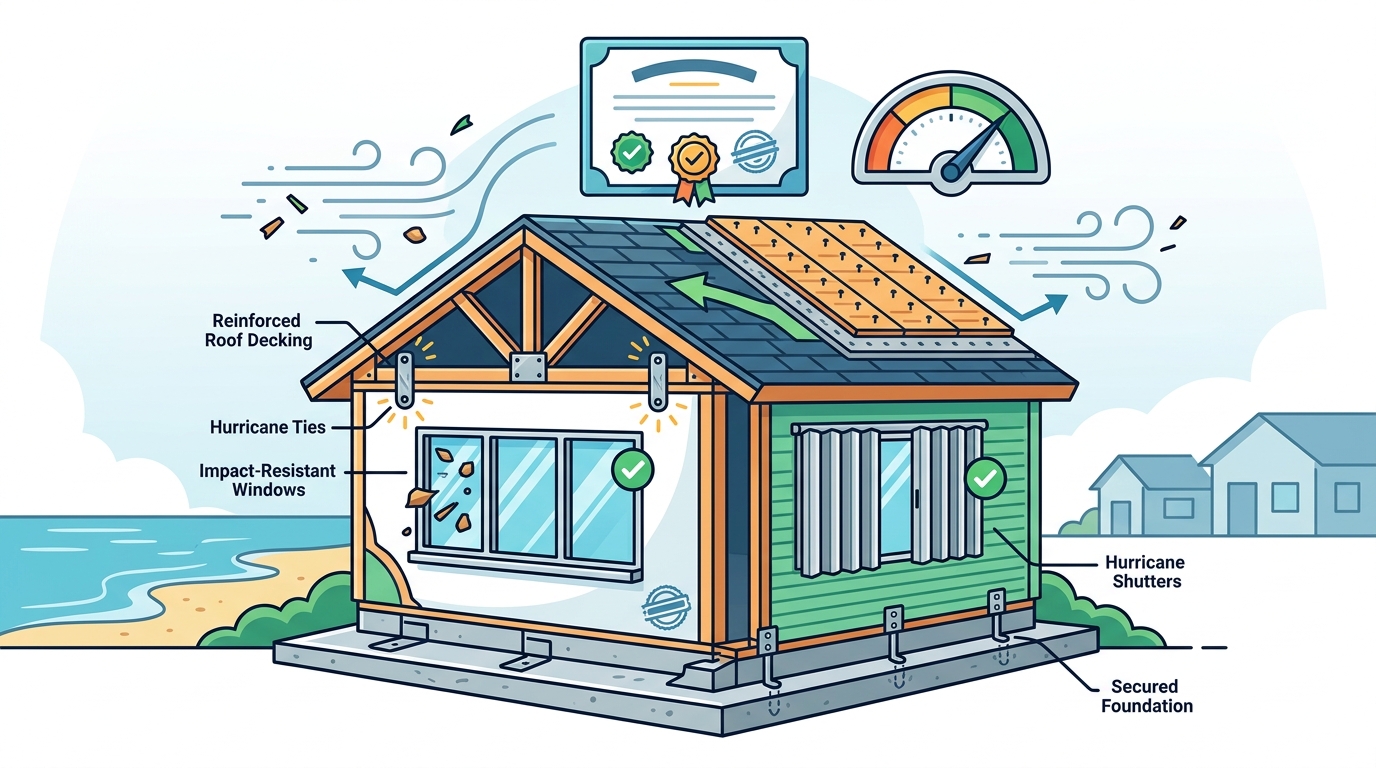
The roof is the most critical component of a home's defense against windstorms. To be eligible for coverage, the roof must typically be less than three years old. If the roof is older, the homeowner must provide a roof certification from a licensed inspector. This certification confirms that the roof is in good condition, with no missing shingles, loose flashing, or structural weaknesses.
Furthermore, the roofing material itself must meet specific impact resistance standards. In many coastal zones, Class 4 impact-resistant shingles are required or strongly recommended. These shingles are designed to withstand hail impacts without cracking or breaking, which reduces the risk of water intrusion during a storm. Homes with flat roofs or roofs with a low pitch face even stricter requirements, as they are more susceptible to wind uplift.
Window and Door Protection
Another key eligibility factor is the protection of windows and doors. In high-wind zones, standard glass windows are considered a liability. Carriers often require that all windows and sliding glass doors have approved impact-resistant shutters or laminated glass. This requirement is not just a suggestion; it is a mandatory condition for many policies. Homes without these protections may be denied coverage or subject to significantly higher deductibles.
Additionally, the garage door must be reinforced to withstand wind pressure. A weak garage door can fail during a storm, leading to pressurization of the home and potential roof failure. Inspectors will check for proper bracing and anchoring systems to ensure the garage door can handle the expected wind loads.
Eligibility Checklist for Homeowners
Before applying for windstorm insurance, homeowners should conduct a preliminary self-assessment. This checklist helps identify potential red flags that could delay the underwriting process or lead to denial. Addressing these issues proactively can save time and money in the long run.
- Roof Age: Is the roof less than three years old? If not, schedule a professional inspection.
- Wind Mitigation Features: Does the home have impact-resistant windows or shutters?
- Garage Door Bracing: Is the garage door reinforced against wind uplift?
- Property Location: Is the home located in a designated wind-borne debris region?
- Previous Claims: Have there been any prior wind or hail claims on the property?
If the answer to any of these questions is "no" or "unknown," it is advisable to consult with an insurance professional before submitting an application. At Brad Spurgeon Insurance Agency, we offer free consultations to help homeowners understand their specific eligibility status. Our team can guide you through the necessary steps to make your home compliant with current standards.
Comparing Policy Options
Once eligibility is established, homeowners must choose between different types of windstorm coverage. The two primary options are private carrier policies and TWIA policies. Each has distinct advantages and disadvantages depending on the home's characteristics and the homeowner's risk tolerance.
| Feature | Private Carrier Policy | TWIA Policy |
|---|---|---|
| Eligibility | Strict construction standards apply. | More flexible for older homes. |
| Premium Cost | Varies by carrier and risk profile. | Set by state regulation. |
| Deductibles | Often percentage-based (e.g., 2-5%). | Fixed dollar amount options. |
| Claims Process | Managed by the private insurer. | Managed by TWIA. |
| Availability | Subject to carrier capacity. | Guaranteed for eligible homes. |
Private carriers often offer more comprehensive coverage options, including higher limits and additional endorsements. However, they may deny coverage to homes that do not meet their strict construction standards. TWIA, on the other hand, provides a safety net for homes that cannot secure private coverage. It is important to note that TWIA policies have specific deductibles and coverage limits that may not match those of private policies.
For many homeowners, the best approach is to start with a private carrier quote. If the home does not qualify, then TWIA becomes the viable alternative. Our agency works with multiple carriers to ensure that we find the most suitable option for each client. We also assist with the TWIA application process for those who need it.
Key Takeaways
- Roof Age Limit: Most carriers require a roof to be less than three years old for automatic eligibility.
- Impact Resistance: Windows and doors must have approved impact-resistant features or shutters.
- TWIA Role: The Texas Windstorm Insurance Association serves as the insurer of last resort for coastal properties.
- Inspection Requirement: A professional roof certification is mandatory for older homes.
- Garage Reinforcement: Garage doors must be braced to withstand wind pressure.
- Local Expertise: Working with a local agency like Brad Spurgeon Insurance Agency ensures compliance with Texas-specific regulations.
- Proactive Compliance: Addressing construction issues before applying can prevent coverage denial.
Frequently Asked Questions
What is the primary difference between windstorm insurance and homeowners insurance?
Homeowners insurance typically excludes wind and hail damage, while windstorm insurance specifically covers these perils. In Texas, windstorm coverage is often required as a separate policy or endorsement for coastal properties.
Can I get windstorm insurance if my roof is older than three years?
Yes, but you will likely need to provide a roof certification from a licensed inspector. The certification must confirm that the roof is in good condition and meets current construction standards.
What is the Texas Windstorm Insurance Association (TWIA)?
TWIA is a state-created entity that provides windstorm and hail insurance to homeowners in coastal Texas who cannot obtain coverage from private carriers. It acts as the insurer of last resort.
How do I know if my home is in a wind-borne debris region?
Your insurance agent can determine this based on your property's location. Generally, homes within certain distances of the coastline are considered to be in a wind-borne debris region, which requires stricter construction standards.
What happens if my home does not meet windstorm eligibility standards?
If your home does not meet the standards, you may be denied coverage by private carriers. In this case, you can apply for coverage through TWIA, which has more flexible requirements.
Do I need windstorm insurance if I live inland?
While the risk is lower, windstorm damage can still occur inland. However, the strict eligibility criteria and mandatory windstorm policies primarily apply to coastal counties in Texas.
How often do windstorm insurance premiums increase?
Premiums can increase annually based on claims history, changes in construction costs, and regulatory adjustments. It is important to review your policy regularly to ensure you are getting the best rate.
Get Your Quote Today
Navigating the complexities of windstorm insurance eligibility can be overwhelming. At Brad Spurgeon Insurance Agency, we are dedicated to helping homeowners in Texas City and the Gulf Coast secure the protection they need. Our team of experts is ready to assess your home's compliance, compare policy options, and guide you through the application process.
Do not wait until a storm is on the horizon to secure your coverage. Contact us today to schedule a free consultation and get a personalized quote. We are here to help you protect your home and your peace of mind.