Key Underwriting Standards for Windstorm Insurance Qualification in Texas
Securing windstorm coverage in Texas is no longer a simple transaction. It is a rigorous underwriting process governed by strict state regulations and carrier risk models. Windstorm insurance is a specialized policy type that covers damage to property caused by high winds, hail, and associated debris, excluding flood damage. In 2024, the Texas Department of Insurance reported that over 40% of homeowners in coastal counties faced significant difficulties in renewing policies due to tightening underwriting standards. This shift reflects a broader industry response to escalating climate risks and catastrophic loss events. Understanding these standards is critical for property owners who wish to maintain continuous coverage and avoid financial vulnerability. (Home Flood amp Windstorm)
Understanding Texas Windstorm Underwriting Basics
Windstorm insurance in Texas operates within a unique regulatory framework. Unlike standard homeowners policies, windstorm coverage is often written as a separate policy or a specific endorsement. Underwriting standards are the criteria used by insurance carriers to evaluate the risk of insuring a specific property. These standards determine whether a home qualifies for coverage and at what premium rate. (Home Insurance Flood Windstorm)
The Texas Windstorm Insurance Association (TWIA) serves as the insurer of last resort for coastal properties. However, private carriers also offer windstorm policies, often with more competitive terms for well-maintained homes. According to a 2023 report by the Insurance Information Institute, the frequency of wind-related claims in Texas has increased by 15% over the last decade. This trend has led carriers to adopt more conservative underwriting guidelines. (Windstorm Insurance Inspections Brad)
Homeowners must navigate a complex landscape of requirements. These include roof age, construction materials, and distance from the coast. Failure to meet these standards can result in policy denial or significantly higher premiums. Understanding the baseline requirements is the first step toward securing reliable coverage.
The WPI-8 Roof Certification Requirement
The most critical factor in windstorm qualification is the condition and age of the roof. Texas carriers require a detailed inspection to verify that the roof can withstand high winds and hail. WPI-8 is a standardized form used in Texas to certify the age and condition of a roof for insurance purposes. This document is not merely a formality; it is a legal declaration that impacts insurability.
Roof Age Limits
Most private carriers in Texas will not insure a home with a roof older than 10 to 15 years. TWIA has stricter limits, often requiring roofs to be less than 10 years old for new policies. If a roof exceeds these age limits, the homeowner must replace it before coverage can be issued. This requirement is non-negotiable for most underwriters.
Inspection Details
The WPI-8 form requires specific details about the roof's construction. This includes the type of shingles, the number of layers, and the presence of any damage. A licensed inspector must complete this form. The inspector evaluates the roof for signs of wear, such as missing shingles, curling edges, or granule loss. Any deficiencies can lead to a denial of coverage until repairs are made.
According to data from the National Weather Service, hail damage is a primary cause of roof failure in Texas. Carriers use the WPI-8 to mitigate this risk by ensuring that only structurally sound roofs are insured. Homeowners should keep records of all roof maintenance and replacements to facilitate this process.
Construction and Structural Standards
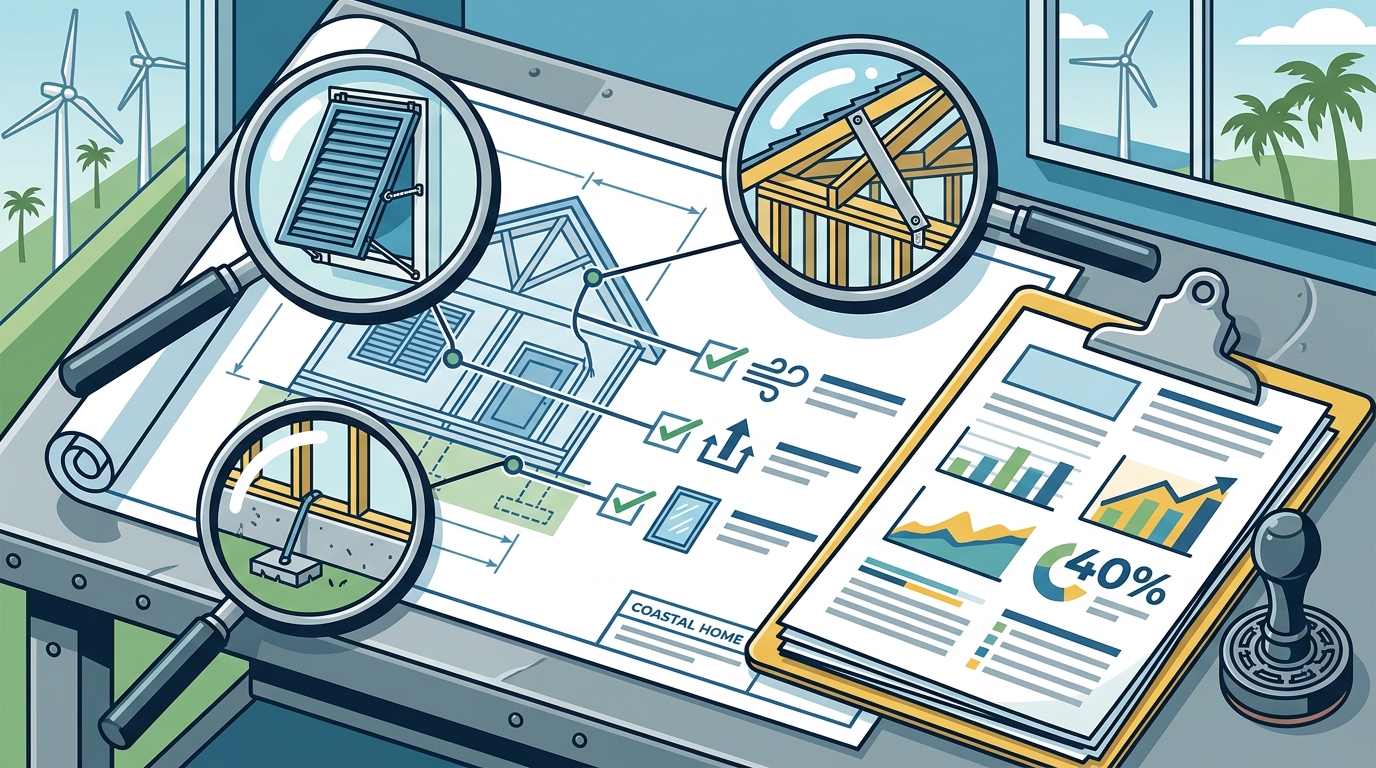
Beyond the roof, the overall construction of the home plays a significant role in underwriting decisions. Carriers evaluate the home's ability to resist wind forces and debris impact. Construction standards refer to the building codes and material specifications that determine a home's resilience against natural disasters. Homes built to newer codes generally qualify more easily for coverage.
Impact Resistance
Windows and doors are vulnerable points in a home's envelope. Carriers often require impact-resistant windows or storm shutters for homes in high-risk zones. These features prevent wind from entering the home, which can cause internal pressure buildup and structural failure. Homes with impact-resistant features may qualify for lower premiums.
Foundation and Framing
The foundation and framing must also meet specific standards. Homes with weak foundations or outdated framing are considered high-risk. Underwriters may require engineering reports to verify the structural integrity of the home. This is particularly important for older homes in coastal areas.
A study by the Federal Emergency Management Agency (FEMA) highlights that homes with reinforced framing suffer significantly less damage during wind events. This data influences underwriting standards, as carriers seek to minimize potential losses. Homeowners should consider upgrading their home's structural components to improve insurability.
Age Restrictions and Policy Eligibility
Age restrictions are a common barrier to windstorm qualification in Texas. Carriers are hesitant to insure older homes due to the increased likelihood of structural failure. Age restrictions are limits imposed by insurance carriers on the age of a property or its components, such as the roof, to manage risk exposure. These restrictions vary by carrier and region.
Home Age Limits
Some carriers will not insure homes older than 30 or 40 years. Others may require additional inspections or engineering reports for older homes. This is because older homes often lack modern building code compliance. They may have outdated electrical systems, plumbing, and roofing materials.
Renovation Requirements
Homeowners of older properties may need to undertake significant renovations to qualify for coverage. This can include replacing the roof, upgrading windows, and reinforcing the foundation. While costly, these improvements can open up access to the insurance market. It is essential to consult with an experienced agent to understand the specific requirements for your property.
According to the U.S. Census Bureau, the median age of housing in Texas coastal counties is increasing. This demographic trend is driving up underwriting scrutiny. Carriers are increasingly focused on the condition of the home rather than just its age. However, age remains a primary screening tool.
Underwriting Criteria Comparison
Understanding the differences between underwriting criteria can help homeowners prepare for the application process. The table below summarizes key requirements for TWIA and private carriers.
| Criteria | TWIA Requirements | Private Carrier Standards |
|---|---|---|
| Roof Age | Less than 10 years old | Less than 10-15 years old |
| WPI-8 Form | Required for all new policies | Required for most policies |
| Home Age | No strict limit, but condition matters | Often limited to 30-40 years |
| Impact Resistance | Recommended for lower premiums | Often required in high-risk zones |
| Distance from Coast | Coastal counties only | Varies by carrier risk model |
This comparison highlights the stricter nature of TWIA requirements. Private carriers may offer more flexibility for well-maintained homes. However, they also have their own risk models that may exclude certain areas. Homeowners should explore both options to find the best coverage.
Key Takeaways for Texas Homeowners
- Roof Certification is Mandatory: A valid WPI-8 form is required for most windstorm policies in Texas.
- Roof Age Limits: Roofs must typically be less than 10 years old for TWIA and 10-15 years for private carriers.
- Structural Integrity: Impact-resistant windows and reinforced framing can improve qualification chances.
- Home Age Restrictions: Older homes may face stricter underwriting or require significant renovations.
- Coastal Proximity: Underwriting standards are stricter for homes closer to the coast.
- Professional Inspections: Regular inspections can help identify issues before they affect insurability.
- Agency Expertise: Working with a specialized agency like Brad Spurgeon Insurance Agency Inc. can streamline the process.
Frequently Asked Questions
What is the WPI-8 form?
The WPI-8 form is a standardized document used in Texas to certify the age and condition of a roof for insurance purposes. It is required by most carriers to assess windstorm risk.
How old can my roof be to get windstorm insurance?
Most carriers require roofs to be less than 10 years old. TWIA strictly enforces a 10-year limit for new policies. Private carriers may accept roofs up to 15 years old if they are in excellent condition.
Can I get windstorm insurance for an older home?
It is possible, but more difficult. Older homes may require additional inspections, engineering reports, or significant renovations to meet underwriting standards.
What is the difference between TWIA and private windstorm insurance?
TWIA is the insurer of last resort for coastal properties and has stricter underwriting standards. Private carriers may offer more competitive rates and flexible terms for well-maintained homes.
Do I need flood insurance if I have windstorm insurance?
Yes. Windstorm insurance does not cover flood damage. Flood insurance is a separate policy required for homes in flood zones and recommended for all coastal properties.
How does distance from the coast affect underwriting?
Homes closer to the coast face higher wind and storm surge risks. This results in stricter underwriting standards and higher premiums. Distance is a key factor in risk modeling.
What is Brad Spurgeon Insurance Agency Inc.?
Brad Spurgeon Insurance Agency Inc. is a family-owned agency in Texas City, Texas, specializing in home, flood, and windstorm insurance. They have served the Texas Gulf Coast since 1986.
Secure Your Coverage Today
Navigating the complexities of windstorm underwriting in Texas requires expert guidance. At Brad Spurgeon Insurance Agency Inc., we specialize in helping homeowners secure reliable coverage. Our team understands the unique challenges of the Texas Gulf Coast market. We provide personalized consultations to help you meet underwriting standards and find the best policy for your needs.
Do not wait until it is too late. Contact us today to schedule a free consultation and protect your home against wind and storm damage. Visit our Home Insurance Quote page to get started. Our office is located at 1118 14th Street North, Texas City, Texas 77590. Call us at (409) 945-4746 to speak with an agent directly.