For Texas Gulf Coast residents, private windstorm insurance is the superior choice for named storm protection because it offers broader wind coverage and lower deductibles than standard homeowners policies. Standard homeowners insurance often excludes wind damage or imposes high percentage deductibles, leaving significant financial gaps during hurricanes. Private windstorm policies are designed specifically for high-risk coastal zones, providing essential coverage that standard policies deny or limit severely. According to the Texas Department of Insurance, homeowners in these areas may not be able to get private insurance that covers windstorm and hail damage.
Understanding Named Storm Coverage
Named storm coverage is a specific insurance provision that addresses damage caused by hurricanes, tropical storms, or other named weather events. In many standard homeowners policies, this coverage is either excluded entirely or subject to strict limitations. When a storm is named, such as Hurricane Harvey or Hurricane Beryl, standard policies may trigger a separate deductible or reduce the payout amount. This creates a critical risk for homeowners in coastal areas where named storms are a frequent occurrence.
Private windstorm insurance, often referred to as private windstorm or PWI, is a specialized property insurance product designed to cover wind and wind-driven rain damage. Unlike standard policies, private windstorm coverage is not typically subject to the same named storm exclusions. It functions as a standalone policy or a rider that ensures you are protected against the specific perils that threaten coastal properties. Understanding the distinction is vital for anyone living in the Texas Gulf Coast region.
Standard Homeowners Policies and Named Storm Limits
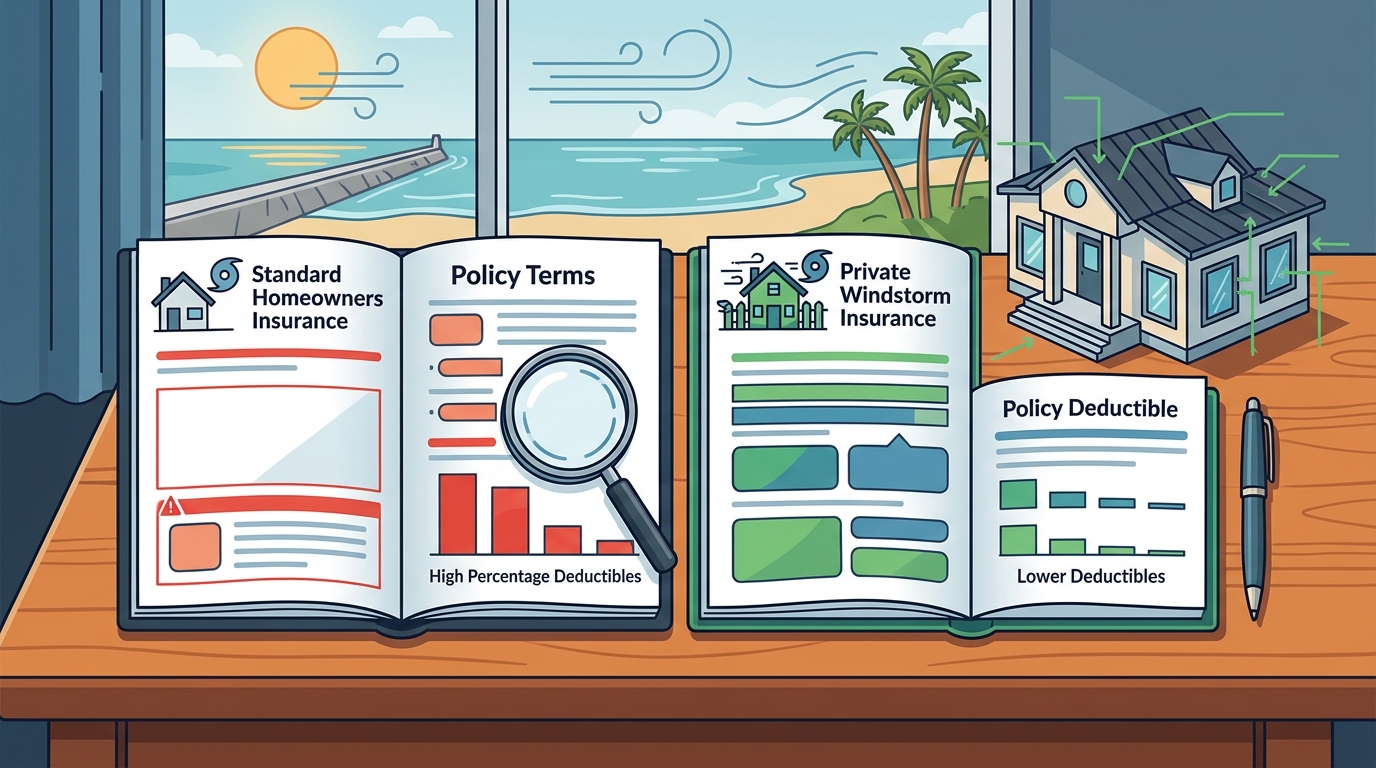
Standard homeowners insurance, often called HO-3 or HO-5, is the most common type of policy in the United States. However, for coastal Texas residents, these policies have significant limitations regarding wind damage. Many standard carriers exclude wind and hail damage from their base coverage in high-risk areas. When they do offer wind coverage, it is often subject to a named storm deductible. This deductible is usually a percentage of the dwelling coverage, such as 2% or 5%, rather than a flat dollar amount.
For a home with $500,000 in dwelling coverage, a 2% named storm deductible means you pay $10,000 out of pocket before the insurance company pays a cent. This financial burden can be overwhelming for many families. Furthermore, standard policies may exclude wind-driven rain damage, which is a major cause of interior damage during hurricanes. If your roof is breached by wind, standard policies might cover the roof but not the water damage inside the home. This gap in coverage is a primary reason why coastal homeowners seek alternative options.
Private Windstorm Insurance and Named Storm Protection
Private windstorm insurance is a specialized policy that focuses exclusively on wind and wind-driven rain damage. It is designed for properties in high-risk coastal zones where standard carriers are unwilling to provide full coverage. Private windstorm policies typically offer broader protection against named storms. They often include coverage for wind-driven rain, which is crucial for preventing interior damage. The deductibles for private windstorm policies are usually flat dollar amounts, such as $5,000 or $10,000, rather than percentages. This makes the out-of-pocket cost more predictable and manageable.
At Brad Spurgeon Insurance Agency, we specialize in helping Texas City and Galveston residents navigate these complex coverage options. Our team understands the specific risks associated with named storms in the region. We can help you determine if a private windstorm policy is necessary for your property. By combining a standard homeowners policy with a private windstorm policy, you can ensure comprehensive protection against all perils, including those excluded by your base policy.
Comparison of Coverage Features
| Feature | Standard Homeowners Policy | Private Windstorm Policy |
|---|---|---|
| Wind Damage Coverage | Often excluded or limited in coastal zones | Comprehensive coverage for wind damage |
| Named Storm Deductible | Percentage of dwelling value (e.g., 2-5%) | Flat dollar amount (e.g., $5,000-$10,000) |
| Wind-Driven Rain | Frequently excluded | Typically included |
| Cost | Generally lower premium | Higher premium but lower deductible |
Choosing the Right Policy for Your Home
Choosing between standard homeowners insurance and private windstorm insurance depends on your specific location and risk profile. If you live in a low-risk area, a standard homeowners policy may be sufficient. However, if you reside in a coastal zone, such as Galveston or Texas City, you likely need additional windstorm coverage. A standard policy alone may leave you underinsured during a named storm. You should consider adding a private windstorm policy to fill the gaps in your standard coverage.
Choose a standard homeowners policy if you live in a low-risk area and want basic protection against common perils like fire and theft. Choose private windstorm insurance if you live in a high-risk coastal zone and need comprehensive protection against wind and wind-driven rain damage. For most Texas Gulf Coast residents, the best approach is to combine both. This ensures you have coverage for all perils while managing your deductible costs effectively. Consulting with an experienced agent can help you tailor your coverage to your specific needs.
Frequently Asked Questions
Can I switch from a standard policy to a private windstorm policy mid-season?
Switching insurance policies mid-season is possible but can be complex. You may need to cancel your existing windstorm coverage and purchase a new private windstorm policy. There may be waiting periods or specific underwriting requirements. It is best to consult with an agent to understand the implications of switching during hurricane season.
Does private windstorm insurance cover flood damage?
No, private windstorm insurance does not cover flood damage. Flood insurance is a separate policy, typically provided through the National Flood Insurance Program (NFIP) or private flood insurers. You need both windstorm and flood insurance for comprehensive coastal protection.
How much does private windstorm insurance cost?
What is the difference between a named storm deductible and a standard deductible?
A standard deductible is a flat dollar amount you pay for any covered loss. A named storm deductible is a percentage of your dwelling coverage that applies only to losses caused by named hurricanes or tropical storms. Named storm deductibles are typically higher and can be a significant financial burden.
Do I need a WPI-8 certificate for private windstorm coverage?
Yes, if your home is in a high-risk coastal zone, you may need a WPI-8 certificate to obtain windstorm coverage. This certificate verifies that your home meets specific wind resistance standards. Brad Spurgeon Insurance Agency can guide you through the process of obtaining this certificate.
Conclusion
Named storm coverage is a critical component of your insurance strategy if you live in the Texas Gulf Coast region. Standard homeowners policies often fall short in providing adequate protection against wind and wind-driven rain damage. Private windstorm insurance offers a more robust solution, with broader coverage and more predictable deductibles. By understanding the differences between these two types of policies, you can make an informed decision that protects your home and family. For personalized advice and quotes, contact our team today. Learn more: Best Lago Mar Homeowners.