
What Your Homeowners Policy Excludes for Wind Damage
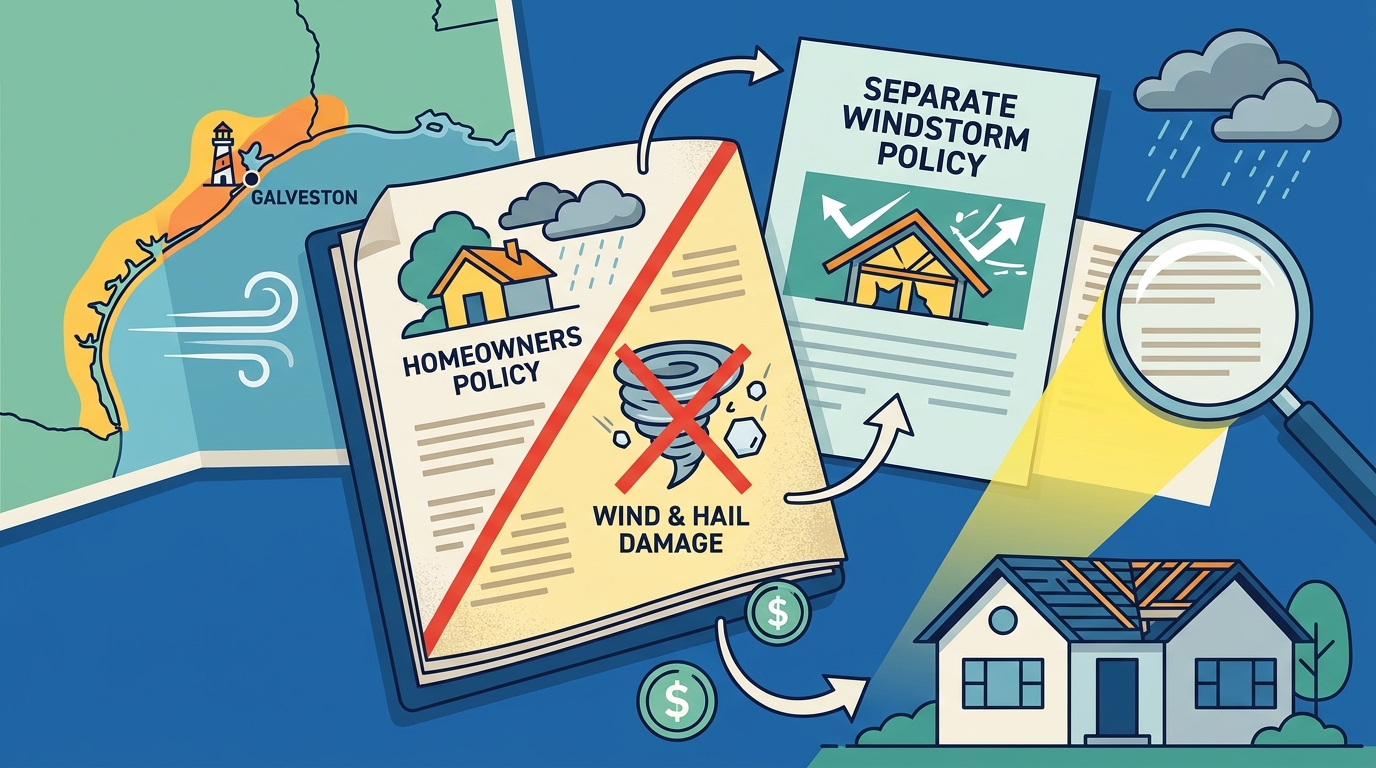
Standard homeowners policies often exclude wind damage if it occurs in high-risk coastal zones or if the wind speed exceeds a specific threshold. In Texas, many standard policies exclude wind and hail damage entirely, requiring a separate windstorm policy. This distinction is critical for Gulf Coast residents, as a standard policy may leave you with zero coverage for the most common regional peril. Understanding these exclusions prevents costly surprises during a claim. For additional details, review the Best Lago Mar Homeowners.
The Standard HO-3 Policy and Wind Exclusions
Home insurance is a type of property insurance that covers a private residence, but its scope varies significantly by location. The standard HO-3 policy, often called the special form, typically covers wind damage to the dwelling structure. However, in designated high-risk areas, such as the Texas coastal zone, insurers frequently exclude wind and hail perils from the standard policy. This means that if you buy a standard policy in Galveston or Texas City, you might assume you are covered for a hurricane, but the policy may explicitly state that wind damage is not covered. The implication is that you must purchase a separate windstorm policy to fill this gap. Without it, a Category 2 storm could destroy your roof, and your standard policy would pay nothing for the wind-related damage.
Wind-Driven Rain and the Hail Distinction
Wind-driven rain is a specific peril that is often excluded from standard homeowners policies, even when wind damage to the structure is covered. Many policies exclude damage caused by rain that enters the home through openings created by wind, such as a broken window or a torn roof shingle. This creates a complex scenario where the roof is damaged by wind, but the water damage inside the house is not covered because it is classified as water intrusion. Additionally, hail is often treated separately from wind. While some policies cover hail damage to the roof, others may exclude it or apply a higher deductible. The implication is that you need to read the specific exclusions in your policy declaration page. A policy that covers wind but excludes wind-driven rain leaves you vulnerable to interior water damage, which is often more expensive to repair than the exterior damage.
Separate Windstorm Policies in Texas
Deductibles and Coverage Limits
How to Verify Your Coverage Gaps
Verifying your coverage gaps requires a detailed review of your policy declarations and exclusions. Start by checking the coverage form. If it is an HO-3, look for a specific exclusion for wind and hail. If you are in a coastal zone, this exclusion is likely present. Next, check if you have a separate windstorm policy. If you do not, you are unprotected against wind damage. Finally, review your flood coverage. Standard policies and windstorm policies do not cover flood damage. You must have a separate flood insurance policy, often through the National Flood Insurance Program (NFIP), to be covered for water damage from rising water. The implication is that a comprehensive insurance strategy involves multiple policies working together. Brad Spurgeon Insurance Agency can help you review your current policies and identify any gaps in your coverage. By understanding what is excluded, you can ensure that you are fully protected against the specific risks of living on the Gulf Coast.
Key Takeaways
- Standard homeowners policies in Texas coastal zones often exclude wind and hail damage entirely.
- Wind-driven rain is frequently excluded, even if wind damage to the structure is covered.
- A separate windstorm policy is required in many coastal areas to cover wind and hail damage.
- Windstorm deductibles are often a percentage of the dwelling limit, not a flat amount.
- Flood damage is never covered by standard homeowners or windstorm policies; a separate flood policy is needed.
- Always review your policy declarations to confirm which perils are excluded.
- Consult with a local insurance agent to ensure your coverage matches your specific risk profile.
Frequently Asked Questions
Does my standard homeowners policy cover wind damage in Galveston?
It depends on the specific policy and carrier. Many standard policies in the Texas coastal zone exclude wind and hail damage. You must check your policy declarations to see if wind is excluded. If it is, you need a separate windstorm policy.
What is the difference between wind damage and flood damage?
Wind damage is caused by the force of the wind, such as a torn roof or broken windows. Flood damage is caused by rising water, such as storm surge or heavy rain. Standard policies and windstorm policies do not cover flood damage. You need a separate flood insurance policy for that.
How much does a separate windstorm policy cost?
The cost varies based on your location, home value, and deductible. In high-risk coastal areas, windstorm premiums can be significant. It is best to get a quote from a local agent to determine the exact cost for your property.
Can I buy a windstorm policy from the same company as my homeowners policy?
Yes, many insurers offer both standard homeowners and separate windstorm policies. However, you must ensure that the windstorm policy is specifically designed for your location and that it covers the perils excluded by your standard policy.
What happens if I file a claim for wind damage without a windstorm policy?
If your standard policy excludes wind damage, your claim will likely be denied. You would be responsible for paying for all repairs out of pocket. This is why it is critical to verify your coverage before a storm season begins.